Joint training of NATO Special Operations Forces
"Trojan Footprint 2026," the largest NATO exercise dedicated to Special Operations Forces (SOF), has recently ended.
Agenția Media a Armatei, 03.06.2026, 14:00
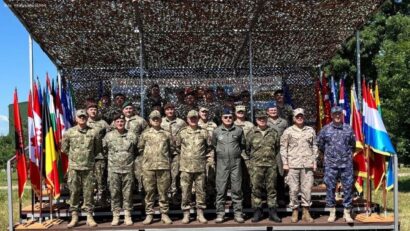
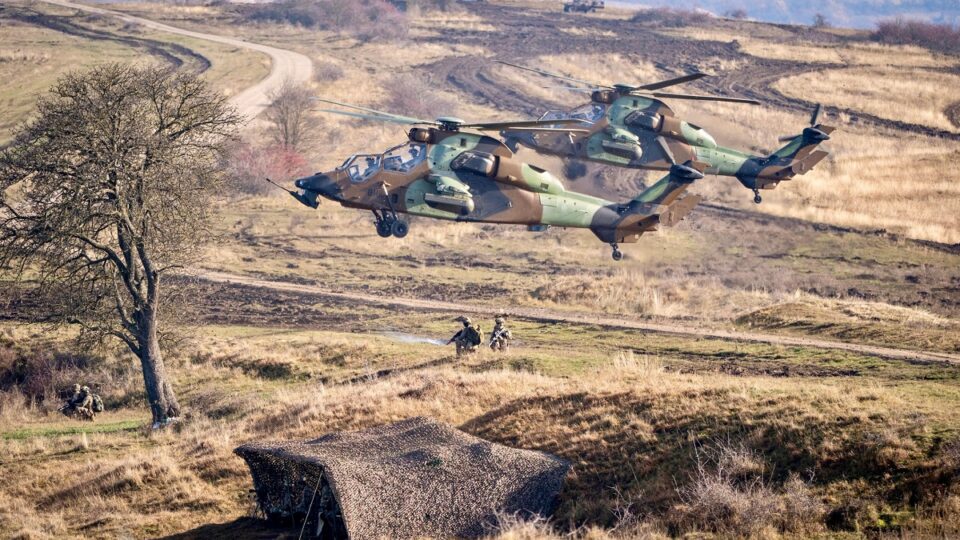
Over 3,000 SOF personnel from 23 allied and partner countries took part in training activities conducted in various locations across the region. This year’s exercise was coordinated by the United States Special Operations Command Europe. The training event aimed to test the special forces’ ability to respond quickly to regional security challenges, with the goal of increasing interoperability, cohesion, and reaction capacity in multinational operations.
In Romania, one segment of “Trojan Footprint 2026” took place in the Black Sea, in a maritime area near Mangalia, where Rear Admiral Massimiliano Rossi, Chief of Staff at NATO Allied Command foes, was present. He explained that special operations forces contribute to the maritime interdiction operation. He stated that when confronting a “shadow fleet” or dealing with such a fleet, it is a maritime mission. The special forces support the maritime component during neutralization phases, but he emphasized that the major challenge occurs after neutralization. The true problem, he pointed out, is how to manage captured ships and that it is necessary to find a nation willing to pursue legal actions and move forward, which he identified as the real challenges.
Another segment of the exercise was held in the Comănești area, Bacău County, where operators from the 53rd Commando Battalion, alongside their Italian partners, conducted an urban combat exercise. The activities focused on improving ground infiltration techniques and testing procedures for action in hostile and complex environments, helping to strengthen the interoperability of participating units. At the end of the training segment, one of the Italian operators shared that the exercise represented a good opportunity to demonstrate the capacity of the Italian and Romanian Special Operations Forces, as well as NATO SOF, to collaborate effectively and highlight their ability to cooperate in a difficult and multidisciplinary environment. He said that in the first phase of the exercise, many combined activities were carried out to train together and share procedures and tasks. NATO’s objective, he added, is generally to support this type of training, making such exercises beneficial for all NATO Special Operations Forces units and forming the foundation for future collaboration among allied nations.
Another expert from the Italian special forces underlined the importance of cooperation with Romanian partners. He expressed confidence in the Romanian partners because they work in a similar way, and that these activities present an excellent opportunity to share, test, and practice standard operating procedures and tactics. He described the experience as valuable because they share the same approach and intentions. He stated that this is why he appreciates such activities, especially with Romanian special forces. Although cooperation can be challenging due to the language barrier, he noted that to some extent, everyone within the Alliance can communicate using English as the primary language. He described the shared training period with Romanian comrades as extraordinary and said it was a wonderful experience he would always cherish.
The “Trojan Footprint 2026” exercise demonstrated cooperation and interoperability among allied special forces in an increasingly complex security environment. (EE)