The Generation Learning the Same Language of Defense Together
At the “Henri Coandă” Air Force Academy in Brașov, in central Romania, the Erasmus+ international semester brings together military students from Romania, Bulgaria, and Poland
România Internațional, 20.05.2026, 10:35
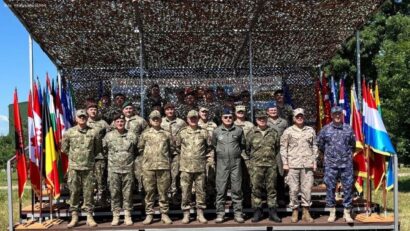
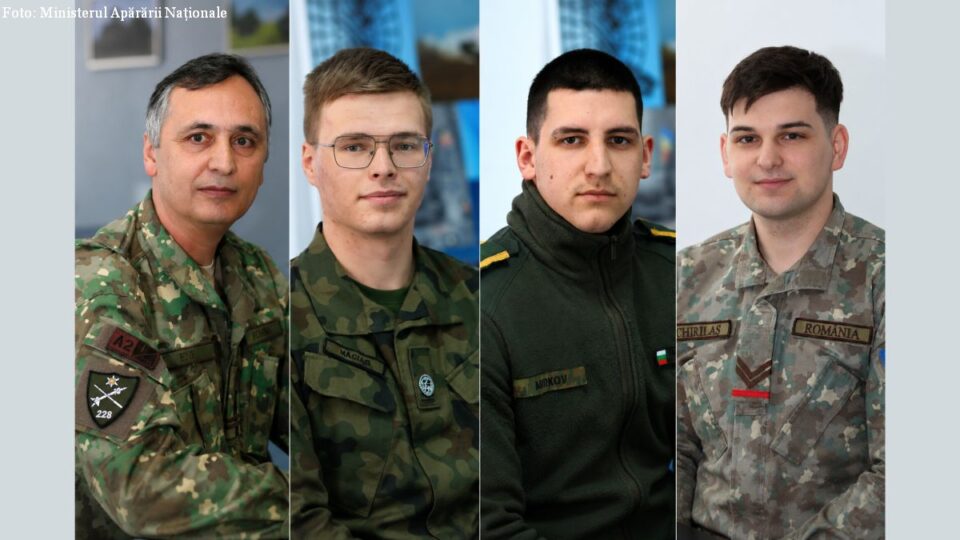
At the “Henri Coandă” Air Force Academy in Brașov, in central Romania, the Erasmus+ international semester brings together military students from Romania, Bulgaria, and Poland. Future specialists in missiles, radar, and air defence systems participate together in the same courses, labs, and practical activities, in a program that brings them closer not only professionally but also personally.
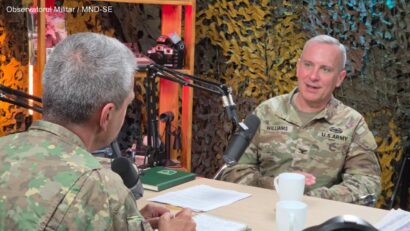
Lieutenant Colonel Cristian Ene, senior instructor in the Department of Missiles and Air Defence Artillery, says the program has evolved significantly since last year’s pilot edition: “This semester began last year as a pilot semester. At that time, the subjects differed from our students’ curriculum, but were somewhat similar. Starting this year, the subjects are the same”, she told us.
The courses follow the same curriculum as that of second-year Romanian students. But beyond the technical subjects and the 240 hours of training, the experience also involves adapting to an international environment where English becomes part of daily life. Piotr Maciąg, a Polish student specializing in radio and radar engineering, says this is the biggest difference he has noticed at the Brașov Academy: “I’m from Poland and this is my first time in Romania, on an Erasmus program. I have to say that the biggest difference is that I hear English all the time. For me, it’s very important to improve my English communication skills. Otherwise, almost everything is very similar to our academy. The education, the housing—everything I find here is similar to what we have in our country.”
The Polish student says that, for him, the city has also become a familiar landmark: “Brașov is very beautiful. To me, it’s very similar to Kraków, except that it’s nestled among the mountains. And that’s a bonus.”
For Antonio Mirkov, a Bulgarian student on his first Erasmus+ experience, integrating into the Romanian academic environment happened faster than he expected: “I really like the academy and the atmosphere here. Interacting with the other cadets is, I don’t know why, somehow easier than at the military academies in Bulgaria. Here, the cadets are friendlier, and many of them are quick to help you.”
Antonio Mirkov also says he appreciates the teaching style of the Romanian instructors, as well as daily life in Brașov: “The teachers are calmer here, and the material they prepare for the courses is very well organized. I really like it here; I like the food at the academy, in the cafeteria, and also in town.”
Romanian students who accompany them throughout the program also play an important role in helping foreign students settle in. Corporal Ovidiu Chirilaș says that their relationships have changed a lot since they started sharing rooms: “We are sort of the link between them and the staff in charge of this program; we are sort of their voice, and we are also the staff’s voice at the same time. We try to make everything as comfortable as possible. At first, when they arrived, we put them in separate rooms, but then we started putting them in rooms with us, and it worked. Anyway, they came with that mindset—to be very open from the very beginning.”
For these young people studying radar systems, air defence, and modern military technologies, the experience in Brașov also serves as a real-world exercise in cooperation among future officers from allied nations, who are learning even during their training to communicate, work together, and understand one another as partners. (MI)