International Beaver Day
Celebrated internationally on April 7, the beaver is also known as “the ecosystem engineer”.
Daniel Onea, 27.03.2026, 14:00
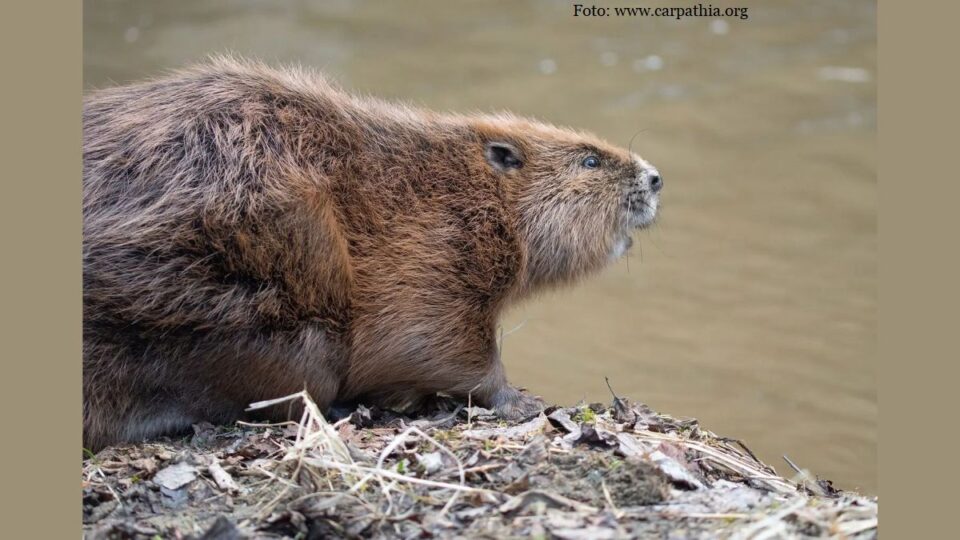
The beaver is also known as “the ecosystem engineer” for the ingenuity with which it builds a mosaic of natural surfaces that retain water and expand wetlands. By increasing the capacity of the land to store more water, the speed of flow is significantly reduced and even the volume of water gets stabilized after heavy rains. This helps mitigate the effects of floods. The beaver ’s activity can also help support an optimal flow of water during periods of drought.
To better understand the history and current situation of this species in Romania, we spoke with Liviu Ungureanu, who works for Conservation Carpathia Foundation. He told us about the process of reintegrating beavers into the wild.
“The beaver disappeared from Romania and many other European countries at the beginning of the 19th century, around 1820-1825. The first attempts to reintroduce it were carried out by the Institute of Forest Research and Management in Brașov. At that time, 184 beavers were brought and released on the Olt, Mureș and Ialomița rivers. Our reintroduction project in the southeast of the Făgăraș Mountains started in 2019, but the first beavers were brought in November 2021. The whole process is quite painstaking, involving a lot of patience, expert knowledge and sleepless nights. Beavers are nocturnal animals, so we have to monitor their activity during the night. We try to capture the entire family from a certain area, so as not to leave any of its members behind. The Făgăraș Mountains are a natural barrier that they could never cross alone. So the only option to have beavers to the southeast of Făgăraș is through assisted reintroduction.”
The constant effort to reintroduce and preserve this species in areas such as the Făgăraș Mountains is driven by the awareness of the huge benefits that the beaver brings to the environment. Ranger Liviu Ungureanu highlights how these animals transform the landscape and support the entire network of local biodiversity:
“The presence of the beaver in a certain area gives us the certainty of the existence of countless other species, because it creates new habitats and places of refuge. When a dam is built on a river, water accumulates to form a small lake behind the dam. Various species of insects and fish begin to live there, as well as insect-eating birds and mammals, such as the otter. During dry periods, these water formations become watering areas for wild animals from the forest.”
Although it plays an essential role in the nature balance, the beaver still faces many challenges. Liviu Ungureanu from the Conservation Carpathia Foundation warns that, besides natural stress factors, some of the greatest threats to this species are posed by humans themselves, through a lack of information:
“If we talk about natural threats, the greatest are large predators, wolves, bears and lynxes. However, the most frequent problem is represented by stray dogs, which cause the greatest damage. On the other hand, a major vulnerability is the lack of public education and awareness, which leads to people holding the wrong information. For example, some people believe that beavers eat fish and chickens, or that they can destroy hydroelectric dams. These things are completely wrong. The beaver is a strictly herbivorous species: from autumn to spring it feeds on tree bark, and in summer it mainly eats herbaceous plants. Therefore, misinformation remains one of the main problems.”
Also due to incomplete information, direct conflicts between beavers and local communities may arise, especially in farming areas near water. However, ranger Liviu Ungureanu assures us that there are modern technical solutions making sure that human activity and beavers can coexist in harmony:
“Sometimes incidents can occur, especially where crops are very close to the watercourse. When beavers build dams on these rivers or streams, damage to crops, such as corn, can result, or, in isolated cases, land can be flooded. However, there are technical solutions for these situations. For example, special drainage systems can be installed on beaver dams, which maintain the water level at an optimal level. We can thus ensure peaceful cohabitation between humans and beavers. There are also isolated cases of poaching, often caused by confusion. Many fishermen confuse the beaver with otter or believe that it feeds on fish. However, following recent talks with fishermen, we have noticed a change in attitude. They now understand that, thanks to the dams built by beavers, lakes have formed where fish populations have grown considerably, which is an advantage for them.”
The long-term solution for protecting beavers remains, therefore, ecological education and initiatives to foster better understanding of nature. Liviu Ungureanu gave us details about the projects intended for the public, but also highlighted a worrying phenomenon of our time, namely water pollution:
“To support conservation efforts, we place great emphasis on education. We opened the Beaver House in Rucăr, Argeș County, an information centre where visitors can discover the biology and importance of this species. We also run the Junior Ranger programme, dedicated to children from local communities. We involve them directly in our projects, and to our surprise, these young people come up with their own solutions, initiating river greening activities to ensure a clean habitat. Although beavers may seem tolerant of physical plastic pollution, the accumulation of waste on rivers has a direct negative impact. They are disturbed by the specific noise caused by plastic packaging carried by the water and leads them to leave the respective areas.”
Reintroducing the beaver to the rivers of Romania represents more than just an ecological success. It means protecting biodiversity and preserving the quality of the waters, on which we all depend. Understanding and respecting the role that this “engineer of nature” plays in the ecosystem are essential steps for a cleaner and more resilient environment in the long term.