The Bear Orphanage
In the Romanian folk tradition, the Carpathian bear is a frequent presence in the folk calendar.
Ana-Maria Cononovici, 27.02.2026, 14:00
In the Romanian folk tradition, the Carpathian bear is a frequent presence in the folk calendar. Like the wolf, the two wild animals have holiday cycles dedicated to them, days that mark important moments in the reproductive cycle of these animals and their periods of maximum activity. In the folk calendar, there are numerous days dedicated to the bear: Macavei (August 1), Martinii de Toamnă (Autumn Bears) (November 12-14), Martinii de Iarnă (Winter Bears) (February 1-3), Bear Day (February 2) and Bear Saturday (a week before Palm Sunday). February is a month in which the bear is celebrated twice worldwide. February 2 is the day of the brown bear and of the marmot, and February 27 is the day of the polar bear.
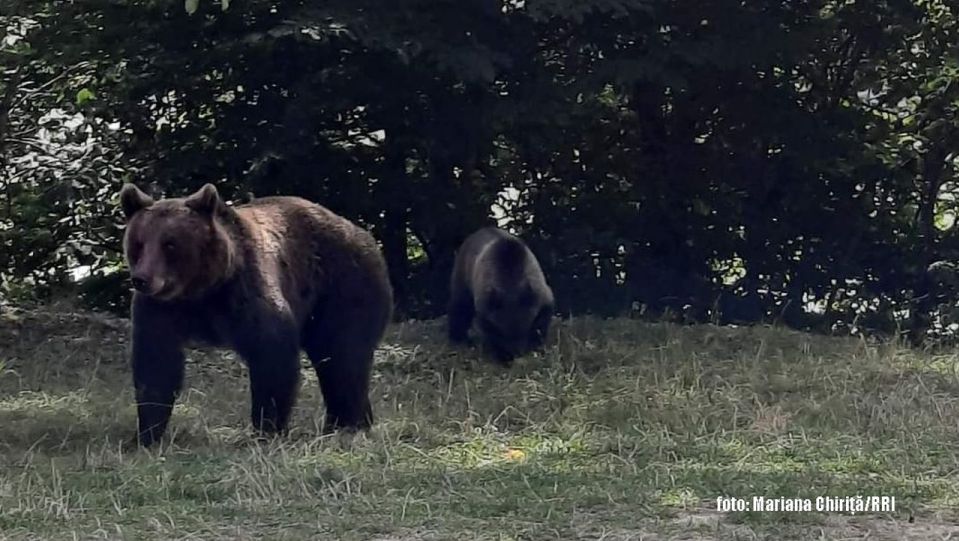
On this occasion, we present to you the situation of orphaned bears in our country. In Romania there is the Center for the Rehabilitation of Orphaned Bears, the only place in Europe where bear cubs, who, for various reasons, are left without a mother, have the chance for a normal life in the wild after they have developed sufficiently.
Cristian Remus Papp, National Manager of the Wildlife and Protected Areas Department, World Wide Fund for Nature (WWF) Romania, explained the situation to us: “The problem of orphaned bears is a real one and unfortunately the authorities do not have a solution for them. It is important to know that every year several bear cubs lose their mother, mainly due to poaching. And most of them, especially if they are a few weeks or months old, have little chance of surviving without human help in this case. And this is where the orphanage comes into play. In Romania there is only one such orphanage, near Bălan, in Harghita County, and in Europe there is only one more, namely in Greece, but below the capacity of our orphanage. The orphanage near Bălan has the role of educating bear cubs given the absence of their mother, of developing skills that will help them survive in nature later and here human interaction with these bears is almost non-existent, during a year and a half, while they are at the orphanage. A single person feeds them, through a system of pulleys and cables, or with the help of a drone, to place the food in various places. And at the end of the rehabilitation program they are released into the wild, being monitored with GPS collars to track the success of this program. In our country there is also a well-known Sanctuary in Zărneşti, but bears are no longer released into the wild from there. Basically, the bears that arrive there remain in that Sanctuary until the end of their lives.”
Without the help the little bears receive in this Orphanage, they would have a cruel life in illegal pens, could end up in zoos, or could even die. We asked Cristian Remus Papp, National Manager of the Wildlife and Protected Areas Department, WWF Romania, if it is not an exaggeration to care about orphaned bears in a situation where it seems that our country has a problem with the large number of bears that threaten the lives of people in mountain towns: “Regarding the large number of bears that Romania has, I would say that we have formed a perception in this sense because of the habitual bears that we can see in many places in the country and the fact that they are constantly present and visible gives the impression that we are a country invaded by bears. Certainly, the numbers are large, but there is a fairly big difference between perception and reality. And if we managed to manage these problematic bears, for example, in four or five years there should no longer be other habitual bears to take their place, conflicts would decrease drastically and the image of the bear population would be different over time. This is the reason why we must care about orphaned bears: to basically give them a chance to become bears that live in wild areas, away from humans. We can basically give them that dignity that regular bears no longer benefit from.”
The bear orphanage exists because nature needs time to heal and animals need people who protect, not disturb. Every gesture of support means food, care, space, safety and the chance for a life as close to the wild as possible until the cubs are ready to face life on their own.
Cristian Remus Papp told us how we can support the Bear Orphanage: “People can help and contribute to the operation of this orphanage through donations and every year approximately 20 bears become part of this rehabilitation program. This is the capacity of the orphanage. And we need human capacity, veterinary assistance, especially when receiving orphaned cubs that in most cases are weakened. And this also includes the supply of food, which is vital, as well as of the equipment for monitoring the cubs, during and after their release into the wild.”
The bear orphanage also has a significant name: Bear Again, transmitting a message that refers to a process of rehabilitation of the bear cubs, who end up back into the wild as true individuals of their species. (LS)