The Green Belt of Bucharest
Bucharest, one of Europe's most congested capitals, is taking steps toward sustainable urban development through a Green Belt project
Daniel Onea, 25.09.2026, 14:00
The initiative aims to create a ring of vegetation around the city to combat pollution and the effects of climate change. Conceived to act as a veritable “oxygen mask” for a city stifled by traffic, the project has an estimated budget of 50 million euros. According to official documents, the first major expropriation and afforestation efforts are expected to begin in 2027, with the vision for full implementation extending to 2050. Beyond merely planting trees, the project aims to create vital ecological corridors and protect wetlands.
Ciprian Gălușcă, Executive Director of the Climate Adaptation Platform, highlights the complexity of this undertaking as well as its vital role for the future of the metropolitan area:
Ciprian Galusca: “The Green Belt is a project that is as ambitious as it is necessary. We are talking about developing vegetation that plays a key role in mitigating the negative effects of climate change, alongside a comprehensive spatial planning scheme for the Bucharest metropolitan area. We also aim to incorporate features that encourage recreation. We can envision a not-too-distant future where we might spend a full weekend near Bucharest within this Green Belt. During the summer, we could escape the city’s urban heat island effect by relaxing just 30 to 50 kilometers away. To bring this infrastructure to life, however, we first need a plan.”
Currently, when we speak of the Green Belt, everyone has a slightly different understanding of the concept. Ciprian Gălușcă, Executive Director of the Climate Adaptation Platform, says that fears regarding a potential economic standstill caused by this ecological ring are completely unfounded.
Ciprian Galusca: “For instance, some mayors in the metropolitan area worry that such a project might hinder local development. This is entirely untrue, as examples from Western Europe demonstrate the opposite: creating this type of infrastructure has spurred economic growth and laid the groundwork for a sustainable economy. A brief example: the Green Belt could become a meeting point where local producers and Bucharest residents—who might visit specific areas of the belt—can do their shopping. We could cycle to the forest or to one of the lakes near the city, stopping along the way at a market featuring local products. In other words, the first item on the agenda is to create a vision for this belt. Here, we need input from all relevant stakeholders: local authorities, businesses, Bucharest residents, and the communities living near the infrastructure. We must collectively define our destination and aspirations for the Green Belt, as this is a long-term process that will not be completed in just a year or two. We can look to the example of Vienna, which has been developing the green infrastructure around its capital for over a century. The Green Belt is a living entity; we need a strong, clear, and coherent development vision for it before moving to the implementation phase.”
The foundation for this project already exists on the ground, but it requires a unified approach to become a functional network, notes the climate adaptation expert.
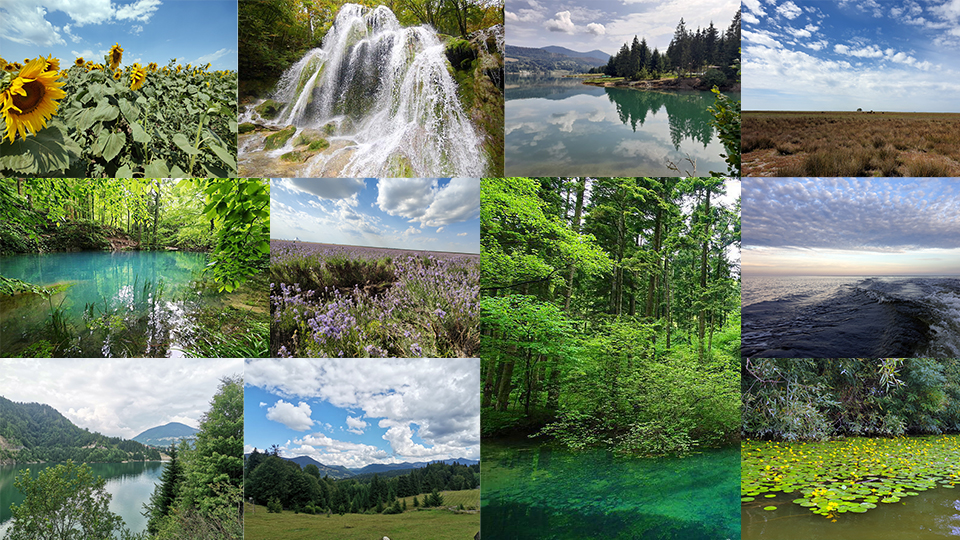
Ciprian Galusca: “In the first phase, we are starting with the approximately 26,000 hectares of forest in Ilfov County. Currently, these are not managed in the way we would like for a ‘Green Belt’—that is, prioritizing social function, resilience, and climate adaptation. We therefore need to rethink the current forestry management model. Then, there is the network of lakes and pastures which, unfortunately, has lost its connectivity with the forests. Due to extensive real estate development and road infrastructure in the metropolitan area, we will need to find solutions to interconnect these natural zones. The goal is to make them accessible—in a sustainable manner—to local residents and all citizens of the metropolitan area. First and foremost, we must create a pleasant experience for those visiting these places. We have enough natural areas to launch this concept and to develop a vision, an operational plan, and an entity to manage this infrastructure. Subsequently, we can discuss expansion and new afforestation campaigns.”
Successful European models demonstrate that environmental protection measures must be accelerated to safeguard the future of major urban centers, emphasizes Ciprian Gălușcă, Executive Director of the Climate Adaptation Platform.
Ciprian Galusca: “Protecting the city is a priority. If we want a livable Bucharest in 20 or 30 years—or perhaps even sooner—we must take action. We should have done so already, but now we need to move much faster. For instance, following the deadly heatwaves of the early 2000s, Paris implemented a series of highly ambitious measures. They expanded urban green spaces and established rapid response plans for heatwaves. Today, they are far better prepared than they were 20 years ago. We do not need to reinvent the wheel. Vegetation, forests, and natural areas within and near communities represent the best and most accessible solutions for adapting to climate change.”
Thus, the success of the Green Belt depends on close collaboration among all stakeholders and the courage of the authorities to transform existing natural spaces into a coherent network. It is a collective effort, essential not only for air quality but also for the future health of all residents in the Bucharest area.
(bill)