Life on an ostrich farm
The first ostriches raised on a farm in Romania appeared after 2000
Ana-Maria Cononovici, 23.12.2025, 12:15
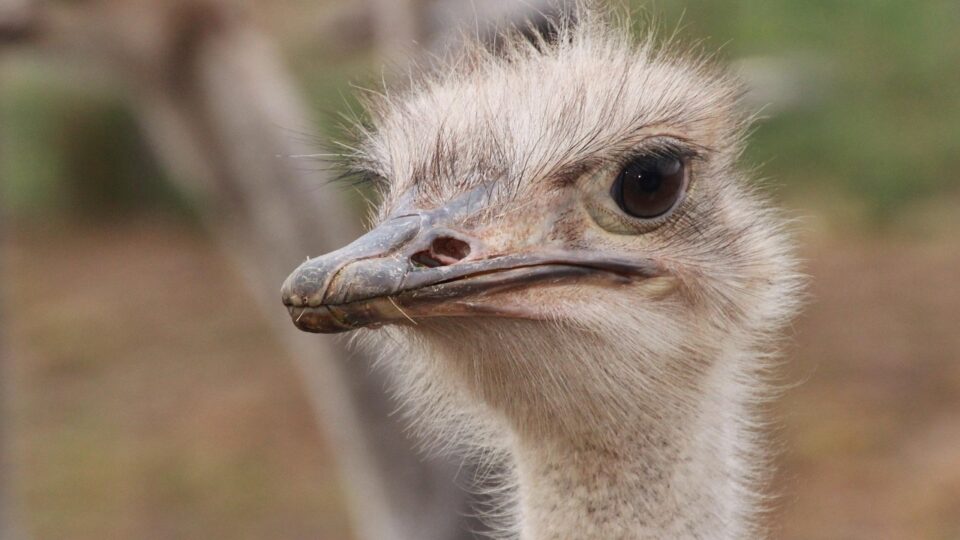
The first ostriches raised on a farm in Romania appeared after 2000. The African ostrich, perfectly acclimatized to Romanian conditions, thrives in both summer and winter, down to -20 degrees Celsius, and loves to “bathe” in the snow. It has an average lifespan of 70 years, of which approximately 50 years are fertile. Ostriches are not picky eaters, but normally their diet must be balanced, consisting of 80% alfalfa, green in summer and dry in winter, passed through the alfalfa mill and a mix of cereals (corn, wheat, oats, soybean meal, and sunflower) and, of course, calcium. At one year of age, an ostrich weighs around 120 kg – of which approximately 30 to 45 kg is muscle. Females lay an average of one egg every two days (between 40 and 60 eggs per season). Ostrich eggs weigh between 1,200 and 2,000 grams, the equivalent of 24 chicken eggs, but with a very low cholesterol level.
A new ostrich farm appeared a few years ago on the outskirts of the village of Izvoarele in Mehedinţi County. The owners are Adriana and Gabriel Brezoi, young people who chose to give up city life and return to the countryside. After serious research, they chose to raise ostriches and are doing so very successfully and in a friendly manner.
Adriana Brezoi told us in an amusing tone about the relationship between humans and ostriches, as she created it, starting with a beautiful male ostrich:
“He is very friendly, I taught him that, I taught them all that, to eat from my hand. Each one has a name here: one is Gigeluş, here are Johny, Suzi, and another one I haven’t found a suitable name for yet, but I keep looking. In general, females are much more docile than males, males are a little more aggressive, but we get along, slowly but surely. I like them very much and they like me. The male is a little more sceptical because he protects his family very well.”
Adriana Brezoi told us why they gave up city life and chose to return home, and how they went from their initial plan of raising chickens to raising ostriches as the best solution:
“We started by leaving the big city, as we had lived in Timişoara for a while. After finishing our studies, we wondered what we could do, to escape the crowds and chaos of the city. We did a lot of research, read a lot, visited large farms, and that’s how we ended up developing the business. We did it out of passion. It’s very good! Compared to the city, the crowds, and all the hustle and bustle, it’s much quieter here. You come to the farm in the morning, and the village is quiet.”
They started by buying a few chicks, and the surprises were not long in coming, so learning and adapting to the new activity continued until they came to understand the needs of ostriches. Gabriel Brezoi:
“Today we have six mature families, that is 18 birds, and we currently have 25 chicks between two and three months old. We kept these chicks for ourselves, to raise them and form families with them.”
Adriana Brezoi added:
“Ostriches cannot be raised in small spaces, simply because they are very large birds and therefore need a lot of exercise, meaning they run a lot. They are usually very claustrophobic, and it is said that they do not like small spaces. The ostrich is known as the ‘hen with the golden egg’. It is a large bird from Africa that has acclimatized very well here in Romania.”
We also learned that the only impediment during winter is a smaller quantity of eggs. The two are determined to expand their business and sell meat as well as eggs and chicks, with their meat also reaching restaurants.
Gabriel Brezoi: “We manage to make a profit by selling eggs and chicks, and in the future we will also raise birds for slaughter. From Izvoarele, ostrich eggs have reached Cluj and Bihor, and through an acquaintance, Germans have also tried our products. They are very pleased! Ostrich eggs have much more protein, are of better quality than chicken eggs, are much easier to digest, and contain Omega and many other proteins that are good for us. The meat is also in high demand, it is very healthy, contains Omega 3, 6, and 9, is somewhat similar to beef, but contains less cholesterol.”
Domestic demand for meat is growing, but the greatest demand still comes from outside the country. Many consumers have discovered the qualities of ostrich meat, and some farmers have begun to replace pigs with ostriches, which are much easier to raise. The meat is much cheaper and rich in Omega 3, Omega 6, Omega 9, and vitamin E.