
RRI Live!

Listen to Radio Romania International Live

Anarchism in Romania

The emergence of socialist ideas in Romania in late 19th century was accompanied by a surge in anarchism.
Anarchism in Romania

, 02.08.2014, 14:20

The emergence of socialist ideas in Romania in the second half of the 19th century was accompanied by a surge in anarchism, particularly among intellectuals. Like socialism in a non-industrial country, anarchism was also successful with the educated classes and less so with the working classes. Despite its limited appeal, anarchism was in the limelight because of its rhetoric, its ultra-radical programme and the methods to be used in carrying out its goals.


Romanian anarchists were inspired by the writings of classics such as Pierre Joseph Proudhon (1809-1865), Max Stirner (1806-1856), Mikhail Bakunin (1814-1976) and Pyotr Kropotkin (1842-1921). Russian anarchists were a particularly important source of inspiration for radical Romanian intellectuals coming from Bessarabia and Bukovina. However, the Romanian anarchists such as Panait Muşoiu (1864-1944) and Zamfir C. Arbore (1848-1933) adapted the classic anarchist texts to the Romanian reality of the time.


Despite being a marginal trend, anarchism was the centre of attention because of the methods it employed to achieve its goals, namely violent attacks, something we may today describe as “terrorism”. Such anarchist attacks were common in Europe in the last two decades of the 19th century and their most famous victims include the Austro-Hungarian Empress Elisabeth, known as Sissi, who was killed by the Italian anarchist Luigi Lucheni in 1898.


As anarchism was gaining ground, socialist thinkers such as Romania’s Constantin Dobrogeanu-Gherea (1855-1920), started to dissociate themselves from it and reject it.


In Romania, anarchist attacks were not very common. One better-known example is the attack against the Liberal prime minister Ionel Bratianu. On December 8th, 1909, he was walking home after a meeting in the Senate when he got shot in the back, one of the bullets going through his chest and another hitting him in the shoulder blade. The attacker was caught by passers-by and handed over to the police. His name was Gheorghe Stoenescu and he was a railways worker with anarchist-unionist leanings. Trying to explain his action, Stoenescu blamed the prime minister for the soaring prices and the low living standard. He was sentenced to 20 years hard labour, being found guilty of attempted murder. According to speculations in the socialist newspapers of the day, Stoenescu did not in fact shot the prime minister, but he was framed by the Safety Police, as the secret services were known at the time.


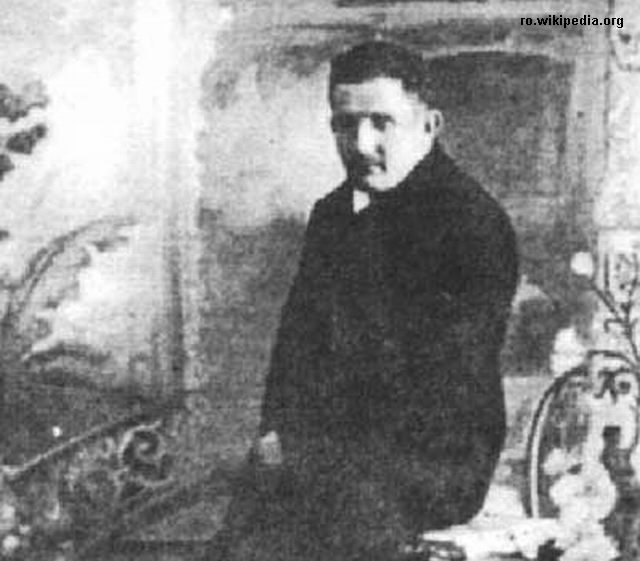
Another attack, committed by Max Goldstein (1898-1924), a Jew born into a family of traders, had a deeper echo in Romania’s history. Goldstein was an anarchist who embraced the ideology of the Communist International, the Comintern, in 1919. His main goal was to destroy the bourgeoisie. He even served time in prison for attempted attacks, but managed to escape. He went to Russia and came back with money, instructions and a hook instead of a hand, as a result of mishandling explosives. After a failed attack against interior minister Constantin Argetoianu in November 1920, Goldstein and two other men, Saul Osias and Leon Lichtblau, planned another attack. The bomb they set off in the Romanian Senate on December 8th 1920 killed the justice minister Dimitrie Greceanu and Demetriu Radu, a senator and Greek-Catholic bishop, and MP Spirea Gheorghiu, and wounded the senate speaker Constantin Coanda. Arrested in 1921, Goldstein received a life sentence and died of pneumonia in Doftana prison at the age of 26.


Sergiu Celibidache (1912-1996)
RRI Encyclopaedia Sunday, 31 May 2026

The archaeological site in Nufăru, Tulcea County

The archaeological site in Nufăru, Tulcea County (eastern Romania), is one of the most important medieval and Byzantine settlements at the mouth of...

The archaeological site in Nufăru, Tulcea County
Dacia-România Palace (Source: Muzeul Municipiului Bucureşti - MMB)
RRI Encyclopaedia Sunday, 24 May 2026

The Dacia-România Palace in Bucharest

Bucharest’s old city centre is an area bordered geographically by Regina Elisabeta Boulevard to the north, Halelor-Splaiul Independenței Street to...

The Dacia-România Palace in Bucharest
RRI Encyclopedia
RRI Encyclopaedia Sunday, 17 May 2026

Prof. Dr. Nicolae Minovici

Prof. Dr. Nicolae Minovici was born in Râmnicu Sărat (central Romania), and grew up in a large family, marked by an interest in science. He studied...

Prof. Dr. Nicolae Minovici
RRI Encyclopedia
RRI Encyclopaedia Sunday, 10 May 2026

Bernhard Stolz

One of the foreigners who arrived in Bucharest in the 19th century was a German journalist and teacher named Bernhard Stolz. At that time, Romania...

Bernhard Stolz
RRI Encyclopaedia Saturday, 02 May 2026

The Cuțescu-Storck House

The Cecilia Cuțescu Storck and Frederic Stork house is one of the most exquisite artist houses in Bucharest. Part of the Bucharest Municipal Museum,...

The Cuțescu-Storck House
RRI Encyclopaedia Sunday, 26 April 2026

Virgil Madgearu

The economist and sociologist Virgil Madgearu, the theorist who bet on the development of industry and industrialized agriculture, shaped economic...

Virgil Madgearu
RRI Encyclopaedia Saturday, 18 April 2026

Romania’s Philatelic Collection at the National Museum of History

Romania’s Philatelic Collection, preserved at the country’s National Museum of History (MNIR), includes some of the most valuable Romanian...

Romania’s Philatelic Collection at the National Museum of History
RRI Encyclopaedia Sunday, 12 April 2026

Frédéric Damé

Frédéric Damé, born in 1849 in Tonnerre, in northern France, was one of the Frenchmen living in Romania in the 19th century. He was a journalist,...

Frédéric Damé

Partners

Muzeul Național al Țăranului Român Muzeul Național al Țăranului Român
Liga Studentilor Romani din Strainatate - LSRS Liga Studentilor Romani din Strainatate - LSRS
Modernism | The Leading Romanian Art Magazine Online Modernism | The Leading Romanian Art Magazine Online
Institului European din România Institului European din România
Institutul Francez din România – Bucureşti Institutul Francez din România – Bucureşti
Muzeul Național de Artă al României Muzeul Național de Artă al României
Le petit Journal Le petit Journal
Radio Prague International Radio Prague International
Muzeul Național de Istorie a României Muzeul Național de Istorie a României
ARCUB ARCUB
Radio Canada International Radio Canada International
Muzeul Național al Satului „Dimitrie Gusti” Muzeul Național al Satului „Dimitrie Gusti”
SWI swissinfo.ch SWI swissinfo.ch
UBB Radio ONLINE UBB Radio ONLINE
Strona główna - English Section - polskieradio.pl Strona główna - English Section - polskieradio.pl
creart - Centrul de Creație Artă și Tradiție al Municipiului Bucuresti creart - Centrul de Creație Artă și Tradiție al Municipiului Bucuresti
italradio italradio
Institutul Confucius Institutul Confucius
BUCPRESS - știri din Cernăuți BUCPRESS - știri din Cernăuți

Affiliates

Euranet Plus Euranet Plus
AIB | the trade association for international broadcasters AIB | the trade association for international broadcasters
Digital Radio Mondiale Digital Radio Mondiale
News and current affairs from Germany and around the world News and current affairs from Germany and around the world
Comunità radiotelevisiva italofona Comunità radiotelevisiva italofona

Providers

RADIOCOM RADIOCOM
Zeno Media - The Everything Audio Company Zeno Media - The Everything Audio Company
























