Soroca Citadel
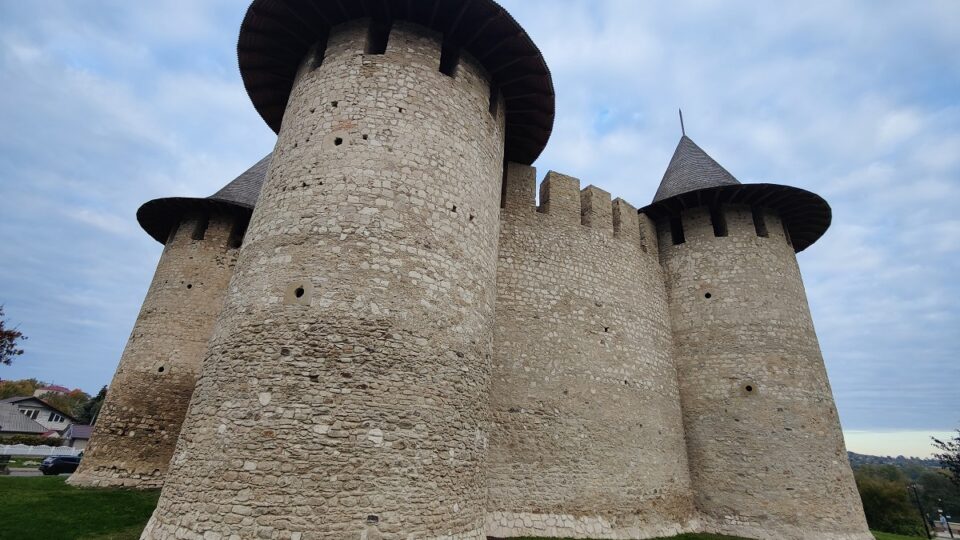
Soroca Citadel is a Moldavian fortress located in the Republic of Moldova, near the town of Soroca, dating from the 16th century and believed to have been built during the time of Stephen the Great.
Eugen Cojocariu and Ion Puican, 25.01.2025, 14:00
Soroca Citadel is a Moldavian fortress located in the Republic of Moldova, near the town of Soroca and in the district bearing the same name, dating from the 16th century. The few existing archaeological and documentary evidence about the citadel tells us that it was built by the Moldavian ruler Stephen the Great in 1499 and rebuilt in stone by Petru Rareș in mid 16th century. It was a strategic stronghold in mediaeval Moldavia, acting as a trading centre defended by the fortified walls of the citadel, as well as an economic centre for the entire Soroca area.
The name “Soroca” itself has its own history and significance. According to some documentary sources, it means “poor”. It also means deadline by which an action can be performed say by which an obligation is to be fulfilled; limit, border. Other sources says it may come from “Sora”, “Sorița” or Soare”, the alleged names of the first owners of the estate located in the Nistru floodplain where the citadel was later erected. Dumitru Ungureanu, a museographer and guide at Soroca Cidadel, tells us more about the origins of the citadel and the archaeological speculations in respect of this:
“History is partially hidden, because the first time the princely seat was mentioned it was 12th July 1499 in a peace treaty signed between John Albert and Stephen the Great. The Letter of Hârlău also mentions the administrator of Soroca, Coste, which means that the citadel had been built by this time, but unfortunately, there is no information as to how old it was. What we do know is that before the stone fortress we see today there used to one made of wood and clay, a pretty large structure. Historians’ views are split when it comes to the age of the stone construction. Some says the citadel mentioned in 1499 was the old one made of wood and clay, with the stone structure to be built after 1543. There is a letter by Petru Rareș, the son of Stephen the Great, sent to a loyal master builder from Bistrița and asking him to work on the citadel in Soroca. I personally don’t agree with this interpretation. Archaeological finds include coins from the reign of Bogdan III, before the time of Petru Rareș, which mention the citadel in Latin: Castrum nostru Soroceanu, our Soroca citadel that defends us from the pagan. So, in 1512, Bogdan probably knew about the low size of Soroca and the fact that it looked more like a castle than a fortress. And now we have to ask yourselves, how often do you castles made of wood? It would not have been called a castle if it was made of wood. It can only mean that by 1512, the stone structure was already built, but no one yet known was exactly it was built. There are records of a priest called Răuțu Melete who says that during a visit by some dignitary to Soroca, he took a commemoration stone on which was inscribed the year when the citadel was built and the name of the master builder. There is, however, no trace of the stone in question or its whereabouts.”
Soroca Citadel has a very distinctive shape and a layout that was innovative at the time it was built. Dumitru Ungureanu tells us more:
“The way in which the Soroca Citadel is built is unique in the world. Its architecture is very similar to what we see in Italy. First and foremost, in term of its dimensions. The size of the Soroca fortress is equivalent to a hundred paces, which is very common in Italian architecture. Moreover, it uses the golden ratio. The towers are 13 meters apart from each other. In addition, a series of works seen at the Soroca Fortress were innovative and seen in no other medieval Moldavian fortresses. For example, in each of the circular towers the citadel has five towers, one of them being prismatic or rectangular, the other four being circular; in each of the circular towers there is a bathroom, for the comforts of the soldiers, with regular sewage system. Sewage systems only appear in the architecture of medieval Moldova in the 17th century, two hundred years later. On the upper floor of the Soroca Citadel we have the passage of the guards, which is another innovation, because no other fortress features a 360-degree guard road. This meant that archers could shoot from up high, making it almost impossible to approach the citadel. They could also fire cannons from above. The stone from which the Soroca Fortress is built is a very fine marl stone, which was very hard to break with a cannonball. That’s why it’s still in such good condition after such a long time. The fortress of Soroca never fell into ruin. It is still 70-75% authentic, which makes it the best-preserved citadel from the time of medieval Moldavia today.”
After the exit of the Republic of Moldova from the Soviet Union, the Soroca Citadel has been restored. Dumitru Ungureanu explains:
“Both restoration projects were conducted in the period after the end of the Soviet Union. Carried out between 2013 and 2015 and between 2021 and 2023, they have been financed by the European Union. In the first stage of restoration, the rectangular entrance tower was completely restored and roofs were added to all the towers. In the last restoration stage, the masonry of the Soroca Citadel was strengthened by recreating the mortar in the stonework. The masonry was then cleaned, which is why everybody says it looks like new. It is not new, it has only been washed after a fire that blackened its walls.”