RRI Live!

Listen to Radio Romania International Live

The Flamanda Slum in Bucharest

The history of one of the oldest parts of Bucharest.
The Flamanda Slum in Bucharest

, 19.07.2014, 14:08

Romanians use the Turkish word mahala to describe slums, the dirty and poor areas that could be found in every city in the past. Slums marked a historical stage in the development of many Romanian cities. Bucharest was no exception, as the city itself was initially made up of several slums, that is small urban communities very much like the rural ones. One of Bucharest’s first slums, infamous for the abject poverty of its inhabitants, was suggestively called Flamanda, which means hungry in Romanian. It was located in the area of today’s Union Square, near the Metropolitan Cathedral Hill. The emergence of this slum is closely connected with the life and role of the church within community, as Edmond Niculusca, head of the Romanian Association for Culture, Education and Normality explains:


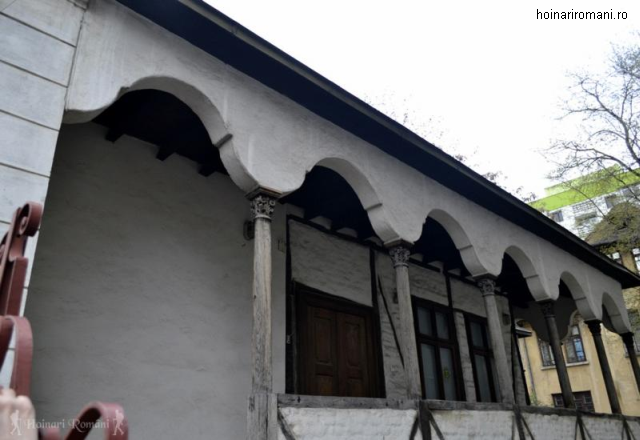
“The Flamanda Slum is tightly linked to the Metropolitan Cathedral Hill. This slum had formed, just like many others, around a church, in this case, the Flamanda Church, which still exists today. The church was erected in 1766, by a man named Dumitru. Its construction it’s believed to have taken a long time, although the church is very small. Starting 1782, the church was rebuilt, this time of stone, and construction works were completed only around 1800, with the help of the tailors’ guild in Bucharest, who then settled on the eastern side of the slum. A map of Bucharest in 1770 shows without a doubt that beyond the eastern side of the Metropolitan Cathedral Hill there was nothing more than vineyards and gardens. The land was the property of the Hungarian-Wallachian Bishopric, as it was called at the time, and it was home to a large number of Gipsy slaves, who worked for the church. So there was no mention of Flamanda Slum on the oldest map of Bucharest. In spite of the fact that it was set up in 1766, it was only much later that Flamanda Slum was mentioned by documents as an established community. In 1800 there were around 59 houses in the area.”


Edmond Niculusca tells us more about the name given to this slum:


“Some historians say that both the slum and its church had been extremely poor. There were only 59 houses, and very few families. There are also historians who say that it was mostly beggars and people suffering from chronic diseases that were sent to the Flamanda church to ask for food and money. There was a strict hierarchy within every slum. The main road usually boasted the church and the bar, and also the houses of the community’s elite, such as the priest and his family, the policeman and, in some cases — if the slum was not the poorest one — some civil servants. “


In time, the social structure of Flamanda slum changed and after 1920 even the administrative term of ‘slum’ had disappeared. And this was not the only change. Edmond Niculusca explains:


“By mid-19th century, when Bucharest began to expand, the Flamanda area became part of the city centre. Beautiful houses, some of which can still be seen today, were erected. One of them was built by the architect of the Peles Castle, who had received a plot of land there. The house is impressive and tells of the city’s historical identity. Unfortunately, it is now bordered on each side by large boulevards that have suffocated the city and changed its identity. And I’m talking about the communist times, especially the 1980s, when new buildings and boulevards were erected in this area to isolate the slum.”


The Flamanda slum continues to be an identity oasis of Bucharest, miraculously saved from communist destruction. A whole district full of historical streets and buildings was demolished in the 1980s to make room for monstrous communist buildings. Behind them, however, the Flamanda slum continues to exist.

Lo scultore Frederic Storck
RRI Encyclopaedia Sunday, 15 March 2026

Princely and Royal Thrones

  A symbol of royal authority, thrones held a central place in the representations of power in the Romanian space. Before 1945, they were a...

Princely and Royal Thrones
RRI Encyclopedia
RRI Encyclopaedia Sunday, 08 March 2026

The George Severeanu Museum

The George Severeanu Museum is located in Bucharest, in a house built at the beginning of the 20th century and forms part of the Bucharest...

The George Severeanu Museum
Sergiu Celibidache (1912-1996)
RRI Encyclopaedia Sunday, 01 March 2026

Diplomat Grigore Gafencu

Grigore Gafencu served his country without reservation and sought to promote its interests both in his official capacities and during his exile after...

Diplomat Grigore Gafencu
Lo scultore Frederic Storck
RRI Encyclopaedia Saturday, 21 February 2026

A Scholar of international repute – Traian Săvulescu

Traian Săvulescu used to be one of the leading figures of the Romanian science in the 20th century, a biologist, botanist, professor and president...

A Scholar of international repute – Traian Săvulescu
RRI Encyclopaedia Sunday, 15 February 2026

General Henri Cihoski (1871-1950)

The history of the Romanians was also written by foreigners, just as Romanians are present in the history of other nations. Although a numerically...

General Henri Cihoski (1871-1950)
RRI Encyclopaedia Saturday, 07 February 2026

The ancient city of Callatis

Callatis was an active commercial, cultural and spiritual center for over a millennium, spanning the Greek, Roman and Roman-Byzantine periods....

The ancient city of Callatis
RRI Encyclopaedia Saturday, 31 January 2026

Romania’s Strongest Trade Bank before WWII

Marmorosh-Blank used to be one of Romania’s strongest banking institutions before 1945. It functioned under two generations of bankers, the first...

Romania’s Strongest Trade Bank before WWII
RRI Encyclopaedia Saturday, 24 January 2026

Archaeology in Glina, near Bucharest

Under the visible layer of today’s Bucharest and the capital’s surroundings lie much older traces of human habitation, which predate the...

Archaeology in Glina, near Bucharest

Partners

Muzeul Național al Țăranului Român Muzeul Național al Țăranului Român
Liga Studentilor Romani din Strainatate - LSRS Liga Studentilor Romani din Strainatate - LSRS
Modernism | The Leading Romanian Art Magazine Online Modernism | The Leading Romanian Art Magazine Online
Institului European din România Institului European din România
Institutul Francez din România – Bucureşti Institutul Francez din România – Bucureşti
Muzeul Național de Artă al României Muzeul Național de Artă al României
Le petit Journal Le petit Journal
Radio Prague International Radio Prague International
Muzeul Național de Istorie a României Muzeul Național de Istorie a României
ARCUB ARCUB
Radio Canada International Radio Canada International
Muzeul Național al Satului „Dimitrie Gusti” Muzeul Național al Satului „Dimitrie Gusti”
SWI swissinfo.ch SWI swissinfo.ch
UBB Radio ONLINE UBB Radio ONLINE
Strona główna - English Section - polskieradio.pl Strona główna - English Section - polskieradio.pl
creart - Centrul de Creație Artă și Tradiție al Municipiului Bucuresti creart - Centrul de Creație Artă și Tradiție al Municipiului Bucuresti
italradio italradio
Institutul Confucius Institutul Confucius
BUCPRESS - știri din Cernăuți BUCPRESS - știri din Cernăuți

Affiliates

Euranet Plus Euranet Plus
AIB | the trade association for international broadcasters AIB | the trade association for international broadcasters
Digital Radio Mondiale Digital Radio Mondiale
News and current affairs from Germany and around the world News and current affairs from Germany and around the world
Comunità radiotelevisiva italofona Comunità radiotelevisiva italofona

Providers

RADIOCOM RADIOCOM
Zeno Media - The Everything Audio Company Zeno Media - The Everything Audio Company