The Ploiesti of Old
Ploiesti was named, according to local urban legend, after a shepherd called Mos Ploaie
Christine Leșcu, 24.02.2018, 13:53
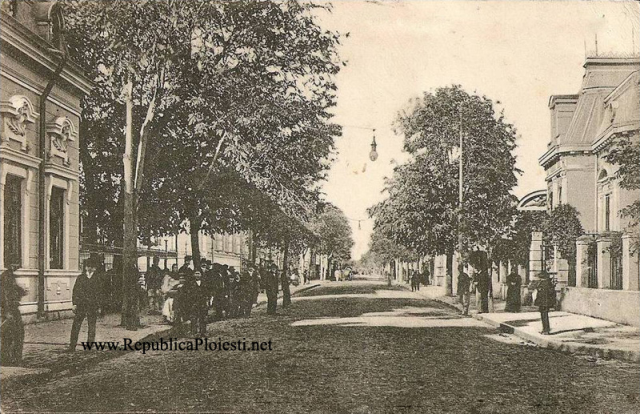
Located 60 kilometers from Ploiesti, on the road to the Prahova Valley, the most popular mountain area in Romania, Ploiesti got its name, according to a local urban legend, from a shepherd called Mos Ploaie, ploaie being the Romanian word for “rain. Ploiesti was also the capital of the first Romanian republic. The city is known as the capital of black gold and also as “the most beautiful ugly city in Romania.
This description is related to the title of a book published by the Association for Education and Urban Development “How Beautiful this Ugly City Can Be. The book comprises memories of several inhabitants of Ploiesti which tell of the particular charm of a city that was faced with many difficulties over the years. “Ploiesti might seem a city without history. In fact, its history was fatefully tied to oil and the oil industry. Oil was behind the citys boom in the early 20th century and it was again oil that brought its downfall, historian Lucian Vasile, one of the editors of the book, told us. Still, the early days of Ploiesti werent tied to the crude oil deposits the area was so abundant in. What had the city looked like before the oil industry flourished?
Lucian Vasile: “The city was at the junction of several trade routes, which is why trade was an important source of income for the city dwellers in the 19th century. Then, with the development of infrastructure linking Bucharest to Transylvania, Ploiesti became an important postal and rail hub. The Southern Station was the main rail junction, as the tracks separated here, headed either to Transylvania or to Moldavia. It wasnt just one city, there were several cities in one. Each of its slums developed its own identity. Today the word preserves only its pejorative meaning, but I disagree. Each of the slums had a church at its center, which gave the name for that particular slum: the St. Friday slum, the St. Demetrius slum, the Princely slum, the St. Elijah slum and so on.
In the mid-19th century, after the first oil refinery was set up in Ploiesti in 1857, the city saw an era of prosperity. It was around that time that an anti-monarchy movement declared Ploiesti the capital of the first Romanian Republic in August 1870. Although the city remained the de facto capital for just one day, that didnt stop the city from seeing the most flourishing chapter in its history in the early 20th century. This is transparent in the architecture of the city, as historian Lucian Vasile told us:
Lucian Vasile: “There was a fairly peaceful competition between architecture in Neo-Romanian style and modernist architecture with an ArtDeco touch. However, the two trends coexisted and architecture in Ploiesti, just like in Bucharest, stood out through contrast and diversity. Next to a building in Neo-Romanian style, there was a smaller, modern block and farther on, a 19th century villa and next to it, another building in Neo-Romanian style. Ploiesti was not a unitary city, but that was actually its charm. It had crooked, twisted and narrow streets, which was quite unpleasant for the residents at that time. However, for us, today, that is picturesque and fascinating, stirring our nostalgia.
Naturally, prosperity brought about demographic growth and diversification in Ploiesti. Historian Lucian Vasile explains:
Lucian Vasile:“This architectural competition was also an outcome of demographic eclecticism. Jews made up the largest ethnic community in the city, which today is much smaller than in the interwar period. At that time, Jews accounted for about 5% of the citys population. There were also German, Italian, Dutch, British and French communities. In the 19th century in particular, there were not many experts in pharmaceuticals, architecture or constructions in Romania. That is why, a large number of ethnic Hungarians came from Transylvania, as well as many Saxons and Italians, who raised buildings in Prahova County and in Ploiesti.
Badly damaged during the 1944 bombings, many historical buildings in Ploiesti were not restored and communists preferred to pull them down to modernize the city. That turned Ploiesti into the first planned city in communist Romania; its varied architecture was replaced by the stylistic uniformity of the new blocks of flats that made the city look ugly. However, the old spirit of the slums has been maintained: blocks of flats have coexisted with old houses that have survived along with certain traditions typical of the suburbs, with country and urban influences.
(translated by: Vlad Palcu, Ana-Maria Palcu)