Healthcare in Romania
In Romania, the healthcare system is predominantly public.
Christine Leșcu, 11.03.2015, 13:25
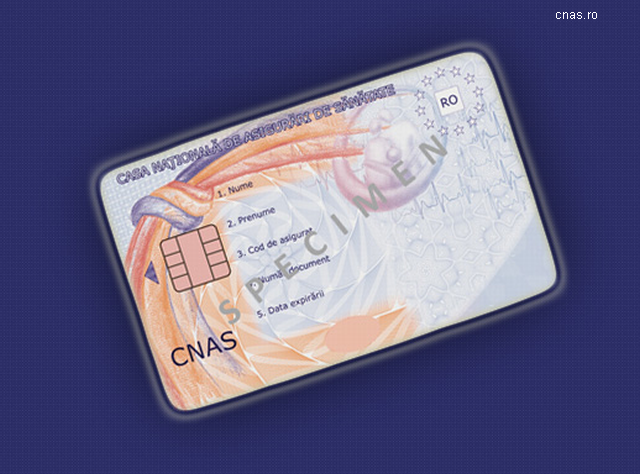
In Romania, the healthcare system is predominantly public. In spite of the emergence of so many private clinics and hospitals, even those are financed largely out of the public insurance system. That means that both employers and employees contribute a percentage of revenue in the system, with the funds centrally managed by the National Health Insurance Authority. The percentage is 5.2% from employers and 5.5% from employees, which provides basic coverage and emergency coverage. In parallel, Romanians can get private medical coverage through a private insurance system, but are not allowed to opt out of the public system.
Recently, GFK Romania has run a study to see how many Romanians hold private insurance. Ana Maria Draganica, group account manager with this company, told us that 93% of Romanians only hold public insurance. She spoke to us about the private insurance situation:
Ana Maria Draganica: “The largest part of the population has public insurance. Only 2% of the respondents said that they have a subscription with a public clinic, paid either by themselves or by their company, and another 2% said they have private insurance. Almost 4% of Romanians, therefore, use the private healthcare system.”
We asked a person insured under the public system why she doesn’t have any other form of health coverage:
“Because it is compulsory. If I could, I would have chosen the private system, but only if it had been ‘either-or’, not the way it is now. Under this system, I would have to pay for private coverage in addition to public. I would have picked the private system because the approach is easier. You can call and make an appointment, and in addition I believe they have more modern care facilities, with newer technology than the public system.”
For analysts of the healthcare system in Romania, the reticence of patients to get private insurance can also be explained in economic terms and by a certain view on the role of the state, according to dr. Gabriel Diaconu:
Gabriel Diaconu: “In Romania we have a monopoly healthcare system, which means that the insurance market is dominated by the state, through the laws that are passed. There are no barriers, at least in principle, to the private market. At the same time, the market penetration of private actors is reduced. It is limited by the fact that the state floods the market. At least in terms of public discourse, health is part of its obligations, and it is not a money making enterprise. In other words, the welfare state invests and redistributes the wealth gathered from people’s contributions.”
We should also look at the public perception of the difference in price between the two systems. Our interlocutor added that she believed that private insurance would cost more. However, things are more complicated when it comes to costs, because of informal expenses, gifts in money or in kind that the patient offers to the healthcare staff in order to ensure proper medical care. Adding to that is the general mentality of patients in Romania, as Gabriel Diaconu told us:
Gabriel Diaconu: “Going to the doctor is seen as a necessity, not as an issue of routine healthcare. The necessity intervenes when pain becomes insufferable and can no longer be alleviated by treatment recommended by friends or pharmacists. Romanian consumers are poorly educated, they will never think of planning an integrated health budget, they don’t think of their health in proactive terms. If we think about the informal payments a patient makes to the doctor for a simple appendix removal, for instance, about the costs incurred by missing work, all these add up to higher costs than what they would give a private insurer. There is also a matter of proximity. In villages and smaller towns, people had a proximity network, the local clinic, family physician, the county hospital doctor whom they knew personally. Things have changed lately, also because of the migration of doctors.”
In addition, the GFK study did not cover another aspect. A lot of Romanians go to private care units where they pay upfront, circumventing the private insurance system:
Gabriel Diaconu: “People go to a private clinic as if it were a supermarket of private services. If someone has a urinary infection, let’s say, they go directly to the private clinic, and, if they looked things up on the Internet, they will just go have a urine test directly, without a physician’s referral. In the public system there is a set chain of procedures, the family physician refers you to the specialist.”
There is one other category of respondents included in the study mentioned above. Here is Ana Maria Draganica from the company that ran the study:
Ana Maria Draganica: “Over 15% of the respondents between the ages of 18 and 34 have no health insurance. They are in an extremely vulnerable situation, and they are a warning signal for the entire public system, as well as the private one.”
We asked Gabriel Diaconu if we can find among them people who pay for medical services upfront. He said he didn’t believe so:
Gabriel Diaconu: “Probably not, because the areas where we see this shortfall in state insurance are areas with high unemployment rates, high poverty, with a high concentration of illness and premature death. No solution has been found for these people, by either the private or the public system.”
It should be said that every government in Romania has promised to address the issue of a healthcare reform, but none can be said to have delivered on its promise.