Romanians are increasingly using AI
The implementation and use of Artificial Intelligence is also growing in Romania, as everywhere else in the world.
Roxana Vasile, 04.02.2026, 14:00
We asked Artificial Intelligence (AI) to describe how it works! And, here, in short, is the answer it gave us: using complex mathematical and statistical methods (algorithms) and neural networks, AI learns from huge data sets, detects patterns and imitates human abilities such as reasoning, problem solving and content generation. At the same time, like humans, Artificial Intelligence also learns from its own experience, automatically adjusting its parameters to minimize its mistakes and to become, over time, increasingly more efficient.
Currently, in the world, Artificial Intelligence is omnipresent. In Technology and IT, there are virtual assistants Siri and Alexa. With the help of AI, texts, images, audio or video productions can be created, facial recognition is possible and cybersecurity is ensured; in Health – medical diagnostics, pharmaceutical research or patient monitoring; in Transport – autonomous cars, traffic optimization or drones; in marketing and sales – content personalization, chatbot, prediction of buyer behavior; in Finance – fraud detection; in Education – e-learning platforms or automatic evaluation… and the list of AI applications can continue.
Mircea Şcheau, president of the Romanian Cloud Cybersecurity Association, talks about the complexity of Artificial Intelligence, but also about the effects of its use in different fields: ʺArtificial Intelligence has no color. The color is given by the nature of the one who uses, exploits and acts with the help of Artificial Intelligence. In the end, we return to that paradigm – do we want Artificial Intelligence to come to the aid of man? Certainly, yes. It depends on the “parents” how they will educate those “children” called Artificial Intelligence modules, whether or not they will leave them unattended in public space! I believe that Artificial Intelligence represents one of the important steps that humanity has taken and I trust both the collective thinking and the critical thinking of each of us. It is written in our DNA to evolve and we will evolve in the good sense of things, without a doubt.ʺ
Nevertheless, what would be the negative scenario of the malicious use of Artificial Intelligence? Mircea Şcheau: ʺThe negative scenario is the one that can lead to the extinction of the human race, I repeat, used in a destructive sense, by groups interested in this purpose or in this direction, which lose control of the Artificial Intelligence. On a positive note, think about what it would be like if any person could be diagnosed with any type of disease in a few minutes, through a simple scan, by an Artificial Intelligence module and injected, if necessary, with the appropriate treatment to eradicate the disease. It’s all about imagination!ʺ
In Bucharest, students from the Polytechnic University, test and develop AI applications. Mihnea Alexandru Moisescu, dean of the Faculty of Automation and Computers, tells us more about it: ʺThe interest is huge, because applications based on Artificial Intelligence algorithms have proven that they can provide solutions to existing problems and can be integrated into many fields. Lately, I don’t think there is any field in which the need and a solution from an AI application have not arisen. Our students are interested, they are captivated by these opportunities. Some are moving towards integrating such applications into other applications, others – towards creating applications in AI fields and creating that base, that core around Artificial Intelligence applications.ʺ
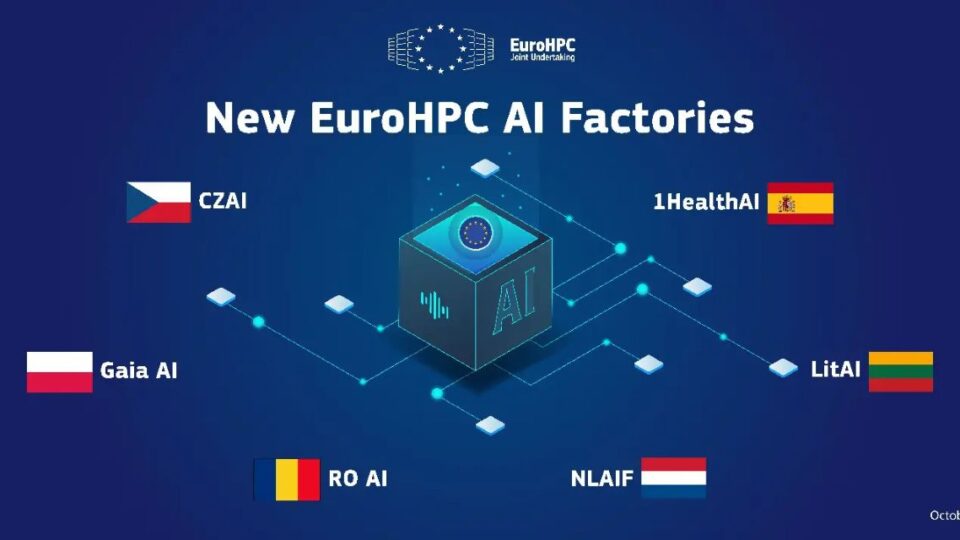
By developing Artificial Intelligence, humanity is moving up one more step on the ladder of the industrial revolution, because, we are witnessing an industrial revolution, says the dean of the Faculty of Automation and Computers, who recalls that the Polytechnic University and the National Institute for Research and Development in Informatics (ICI) in Bucharest are building, through a European Union program, an “AI Factory”, the first national Artificial Intelligence infrastructure. Mihnea Alexandru Moisescu: ʺThere are already several initiatives in the area of AI produced in Romania or trained in Romania. They are working intensively. At the Polytechnic University there is a Romanian Artificial Intelligence hub, a collaboration with many universities with high AI potential in Romania. We now have a new project called «AI Factory», where this is exactly what we want: around a supercomputer with AI capabilities, an ecosystem of companies, start-ups, an ecosystem with the involvement of research actors to create applications based on AI or, why not, competitive AIs created in Romania.ʺ
The goal of «AI Factory» is to develop advanced services and infrastructures dedicated to research, the business environment and the public sector. Among the priority areas in which they will be applied are production and industry, cybersecurity, life sciences, digital public services and autonomous systems.
In a word, the implementation and use of Artificial Intelligence is also growing in Romania, as everywhere else in the world. But – we must admit it – it is still below the global average. According to a PwC Workforce Hopes and Fears 2025 survey, only 44% of Romanian employees have used Artificial Intelligence in a year, compared to 57% global average. The most diligent in using it are the young people of Generation Z, that is, those born between 1996-2012, the first generation of true digital natives, characterized by permanent internet connection and intensive use of social networks. They are followed by Millennials – those born between 1981 and 1995 and raised with the development of the internet. Finally, the last to use AI are representatives of Generation X, the parents of Millennials, the generation of people born around 1961-1980. For employees who have used AI, the impact is clearly positive – the quality of their work has increased and they have had an increase in creativity and productivity. (EE)