The paradox of food waste in Romania
While thousands of Romanians struggle to put a basic meal on the table, millions of tons of perfectly good food end up in the trash. It’s a jarring contradiction that defines our current consumer culture.
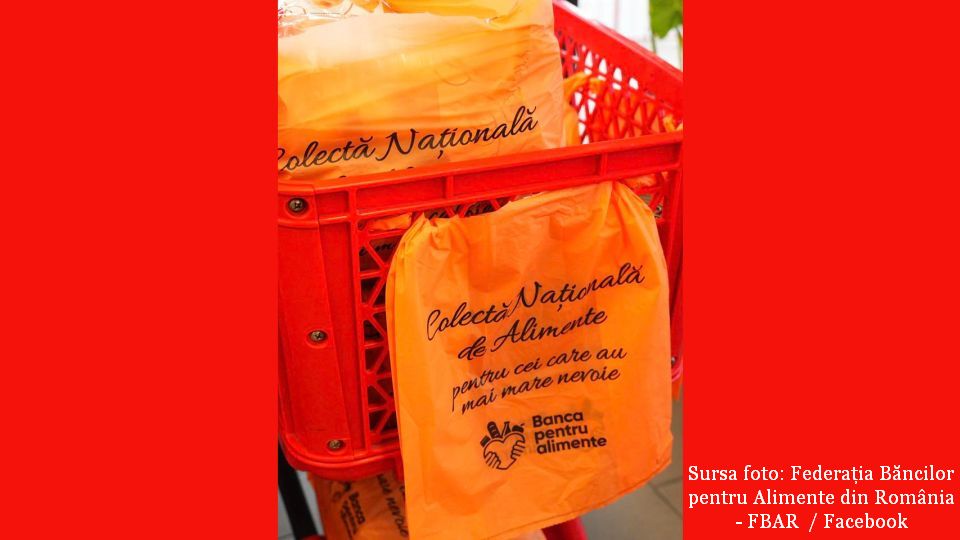
Roxana Vasile, 29.07.2026, 12:00
The numbers are staggering. Every year, Romanians throw away over 3.4 million tons of food. To put that into perspective, that is the equivalent of a full truckload of food being dumped every single minute.
At the same time, the reality for many of our fellow citizens is grim. Over 27% of the country’s population is currently at risk of poverty and social exclusion, facing daily difficulties in securing a complete meal. This painful paradox is being highlighted by the Federation of Romanian Food Banks, which is also working to dispel some common myths about where this waste actually comes from.
Many believe that supermarkets are the main culprits and that household waste is negligible. However, the reality is quite different. Andreea Bobiș, representing the Federation, explains:
“Our social shifts as a people have likely pushed us in this direction, but it’s more than that. We are bombarded by offers; consumerism is encouraged from every angle. We live life at a fast pace, which leads to different choices in how we consume… all of this has pushed waste to these truly alarming levels. There’s also a specific phenomenon: when we talk about food waste, most people immediately think of supermarkets or restaurants. But the truth is, we waste about half of that total amount right in our own homes. We don’t think much of throwing away half a yogurt, a quarter pack of butter, or two slices of bread. But if you sit down and do the math at the end of the month or year, the figures are actually impressive.”
Because households are responsible for such a significant portion of the waste, experts suggest a simple awareness test: the “Waste Piggy Bank.” Put the cash equivalent of every item of food you throw away into a jar. By the end of the month, the total cost of a lack of organization becomes undeniable. So, what are the simple solutions we can apply today? Andreea Bobiș returns with some practical advice:
“The first step is making a shopping list before heading to the store. Check the fridge and use the ‘First In, First Out’ system—whatever was bought first should be eaten first. Creating a ‘Eat Me First!’ zone in the fridge helps, as does freezing leftovers to use later. These are small habits, but they have an incredibly large impact.”
Another major factor is the confusion surrounding labels. It is vital to distinguish between ‘Use by,’ which concerns food safety and is used for meat or dairy, and ‘Best before,’ which refers only to the optimal quality of the product. Items like pasta, rice, canned goods, or coffee can often be safely consumed after the ‘Best before’ date if the packaging is intact.
Then there are the aesthetic standards. Perfectly good fruits and vegetables are often rejected just for being slightly bruised or “imperfect”. Similarly, huge amounts of bread are discarded by bakeries simply because consumers demand it straight from the oven.
Beyond the social cost, there is a heavy environmental price. When food rots in a landfill, it releases methane—a potent greenhouse gas. Furthermore, every discarded item represents a waste of the water, energy, and human labor used to produce, pack, and transport it. In short, food waste is an economic loss, an environmental disaster, and a missed opportunity to help those in need.
So, how do Food Banks bridge this gap? Andreea Bobiș explains their mission:
“Where others saw excess or a management problem, we saw a resource that could be saved to restore dignity and support to people. We collect these items—often moving quickly because of short expiration dates—and redirect them to those in need. Nationally, this redistribution supports over 800 NGOs and feeds more than 300,000 people every week. Our network consists of nine banks, each serving four or five counties, covering almost the entire country.”
What would it mean for the vulnerable if that 3.4 million tons of food stayed out of the trash?
“It would mean meeting their daily nutritional needs. Currently, we only reach a fraction of those who need help—likely less than 10%. And with so many unknowns ahead, we don’t know if the number of people requiring support will continue to grow.”
Since its founding in 2016 through the end of 2025, the Federation of Romanian Food Banks has collected over 41,000 tons of products, saving more than 37,000 tons of food from the bin. That effort has been transformed into over 76 million meals for those who need them most. Small changes in our kitchens can lead to a massive change in someone else’s life. (VP)