Debt, housing and protection: consumer protection for Romanians facing difficulties
Authorities are considering plans to simplify the procedure for applying for personal insolvency.
Ion Puican, 15.04.2026, 14:00
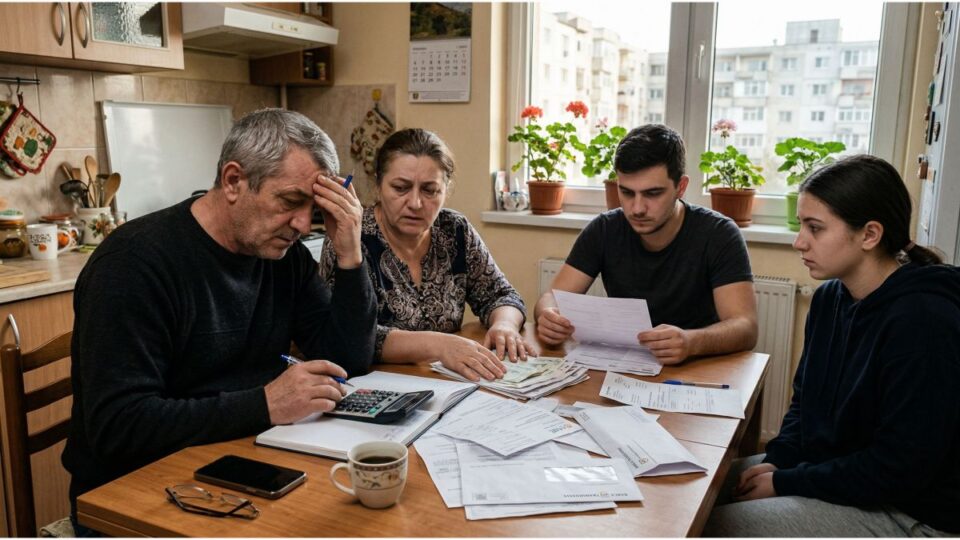
An increasing number of Romanians are facing difficulties in paying their installments, loans or other financial obligations, making personal insolvency procedures an increasingly debated solution. The National Authority for Consumer Protection (ANPC) is preparing significant amendments that could expand access to this procedure and protect family homes from foreclosure. Currently, personal insolvency is regulated by Law no. 151/2015. To access the standard form of insolvency, the minimum debt threshold is set at 15 gross minimum wages, the equivalent to 60,750 Lei in 2026. ANPC proposes reducing this threshold to 10 gross minimum wages (40,500 Lei) to allow more Romanians to qualify for the procedure.
Another major modification proposed by the Authority aims to protect the family home by classifying it as a non-seizable asset, meaning property that cannot be foreclosed upon under certain conditions. The proposed exceptions include homes purchased through the First Home program. Furthermore, ANPC proposes that banks and Non-Banking Financial Institutions (IFNs) be mandated to inform clients who are more than 90 days overdue on payments about the possibility of seeking personal insolvency. These notifications must explicitly include the contact details for the Personal Insolvency Directorate: insolventa@anpc.ro.
In a report by Alina Nechita from Radio Romania Cluj, the president of ANPC, Békési Csaba Lajos, discusses the new legislative proposals designed for individuals who can no longer cope with their debts:
“To improve the conditions for applying and conducting insolvency proceedings, we want to simplify the interaction for those who need this type of support. Consequently, the Central Insolvency Commission has already initiated steps to modify the legislative framework. We are pursuing several vital aspects to improve the personal insolvency procedure. We aim to include the family home in the category of non-seizable assets. This is an extremely important and humane matter, ensuring our family home is not subject to this process, thereby protecting the stability and safety of our families. Redefining the threshold value is another crucial aspect. We intend to reset the level to 10 minimum wages, compared to the current form of 15 minimum wages. By lowering the minimum debt amount required to open this procedure, we facilitate access for a larger number of consumers. Thus, more consumers will benefit from this procedure, and more consumers will have their interests and safety defended against creditors. Another element we wish to insert into this legislative amendment is the obligation for economic operators involved in lending to individuals to inform debtor consumers of the possibility of benefiting from the provisions of Law 151, as well as providing contact information for the Personal Insolvency Directorate within our authority. There are several preliminary conditions imposed by specific legislation for filing these insolvency claims: prior notification of creditors at least 30 days before filing the application; presentation of evidence regarding income or lack thereof; and the attachment of documents certifying income earned over the last 3 years, as well as estimates for the next 3 years. Tax documents, fiscal records, Credit Bureau reports – all of these, along with a proposed repayment plan if required, are necessary preliminaries for filing an insolvency claim”.
The law currently permits three forms of personal insolvency: a repayment plan over a maximum of 5 years, a simplified procedure for vulnerable persons and asset liquidation. ANPC President Békési Csaba Lajos provides the details:
“Law 151/2015 regulates three types of insolvency procedures. The first, the basic procedure, refers to a debt repayment plan aimed at debtors whose debts equal or exceed 15 gross minimum wages (60,750 Lei). This procedure involves paying at least 50% of the debt within a maximum of 60 months. Based on a plan approved by creditors, it offers benefits such as the suspension of foreclosures and interest, as well as the possibility of partial debt discharge. The simplified insolvency procedure is intended primarily for pensioners or people with reduced working capacity whose debt does not exceed 10 minimum wages (40,500 Lei) and who do not possess seizable assets or income. After a 3-year supervision period, debtors can benefit from a full discharge of debts if the conditions are met. The judicial procedure through asset liquidation applies to debtors with debts exceeding 60,750 Lei (the 15 salaries mentioned earlier) who cannot pay at least 50% of the debt within 5 years. This procedure involves the valuation and sale of assets, along with monthly payments for up to 5 years, with the remaining debts being cleared at the end of the process”.
The measures proposed by ANPC come at a time when access to property is becoming increasingly difficult. According to recent data, the number of Romanians in urban areas who own their own homes is decreasing, while more are choosing or are forced to live in rented accommodations. In this new economic context, protecting a family’s financial balance is becoming not just a legal matter, but a social one with a direct impact on daily life. (VP)