The PISA tests: an image of a generation?
In the latest PISA tests, Romania ranked third from the bottom in the European Union
Roxana Vasile, 30.09.2026, 13:30
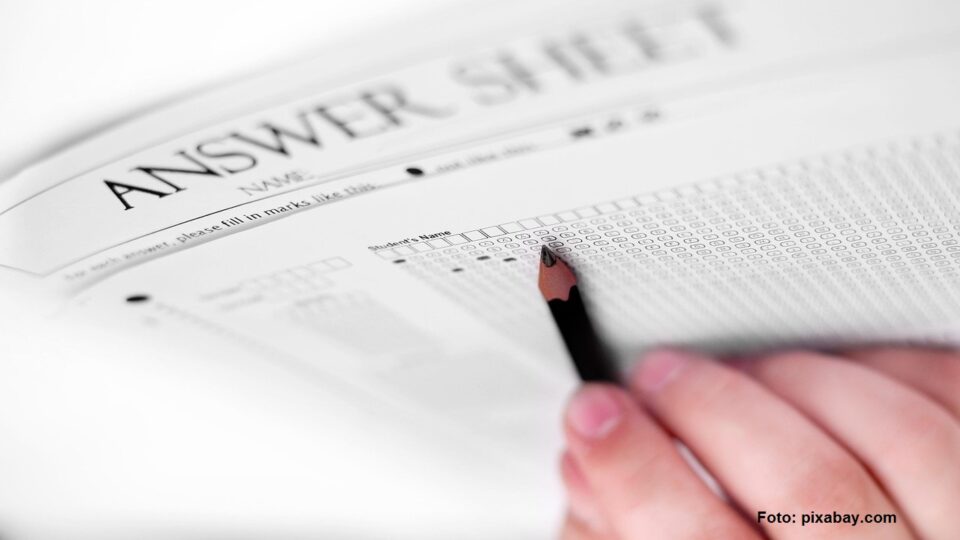
PISA (Programme for International Student Assessment) is the most extensive international educational assessment, a comparative study launched by the Organisation for Economic Co-operation and Development (OECD) to measure the core skills of 15-year-old students in three main areas: Reading, Mathematics, and Science.
In addition to measuring student competencies, PISA collects information on educational practices in participating countries and generates high-quality indicators that enable cross-country comparisons and support necessary reforms in their education systems.
In Romania, 10,000 students aged 15 from approximately 320 schools and high schools across both urban and rural areas took part in the PISA 2025 tests, the results of which were made public early this autumn. Compared to previous years, the results indicate relatively stable performance in Science and Maths, but a sharp decline in Reading. In Maths, only 48% of Romanian students reached the minimum baseline level (compared to the OECD average of 65%); in Reading, the figure was 52% (compared to the OECD average of 69%); and in Science 54% (compared to the OECD average of 74%). At the other end of the spectrum, the proportion of high-performing Romanian students stayed extremely low: just 4% in Mathematics, 2% in Science, and 1% in Reading.
PISA 2025 data also confirmed a stark socio-economic disparity, with disadvantage heavily concentrated in rural schools. Indeed, according to the OECD, Romania ranks among the top 10 countries out of more than 90 where inequality between schools is highest.
Speaking to Radio Romania, professor Marian Staş, an education expert and head of the “Third Millennium Leaders Club” Association, believes that taking PISA tests into account is absolutely essential:
Marian Staş: “Obviously, it is not the grades, the rankings, or the position itself that matter: after all, we don’t go to school just to look good in PISA! However, PISA is a consequence, an effect of a very, very, very deep-seated cause: the fundamental failure of the Romanian school system to align with the realities of the 21st Century.”
The verdict is rather harsh, yet grounded. Although a variety of reforms have been implemented in the Romanian education system over the past four decades or so, few have been effective:
Marian Staş: “Unfortunately, as far as we are concerned, functional illiteracy, i.e. reading without grasping the meaning or understanding the text, and mathematical illiteracy are symptoms of a much deeper issue: the fact that schools are, in fact, actively fostering widespread logical illiteracy. These children do not learn to think in school; their minds are not opened. Statistically speaking, there is a lack of educational components or processes designed to open their minds, to help them distinguish cause from effect, understand how to interpret information, and so on… If I were being cynical, I would say the country wants you to be stupid, and I mean that literally. I am not joking when I say it is a hellish combination of trade unionism, imposture, political incompetence, and flawed public policies…”
A poorly designed system also entails huge socio-economic and demographic disparities and inequalities, as well as imbalances in resource allocation across different environments: urban, small-town, rural, and so on. How can this situation be addressed then, according to Marian Staş, an education expert and head of the “Third Millennium Leaders Club” Association?
Marian Staş: “If you were to ask me how we could do things differently, the two essential interventions would be these: one from within, namely redesigning and structurally transforming the school system itself, and the second, transforming Romania’s administrative-territorial architecture. It is impossible for 21st-Century Romania to work efficiently at all levels with an administrative-territorial map designed 50 years ago. How can it still be valid and yield good results in the economy, healthcare, education, infrastructure, and so on? For God’s sake, this is 2026, the 21st century.”
Without genuine, deep-seated reforms, can today’s 15-year-olds reach a level that enables them to meet the demands of the labour market in the years to come? For Marian Staș, the answer is “no”:
Marian Staş: “Can they become skilled professionals? No, of course not. Sure, 1, 2, 3, or 5% might, but 90% won’t, because they aren’t getting the right kind of schooling. Healthcare heals and Defence protects, but Education is, by definition, the sole generator of human resources, of whatever quality.”
In a word, PISA tests serve as an extremely important academic and social barometer. They indicate whether a generation is equipped with the fundamental intellectual tools required to compete in the labour market. However, it is equally true that these tests cannot define the full human, cultural, or social potential of the young people being assessed, in other words, the “state of a generation.” A generation is far more than just literacy, mathematical, and scientific skills; it is defined by culture, values, emotional intelligence, and adaptability, and these qualities lie beyond the scope of standardised tests. (AMP)