The Romanian activist – a profile
Meet Alina Dumitriu, activist, social workers, influencer
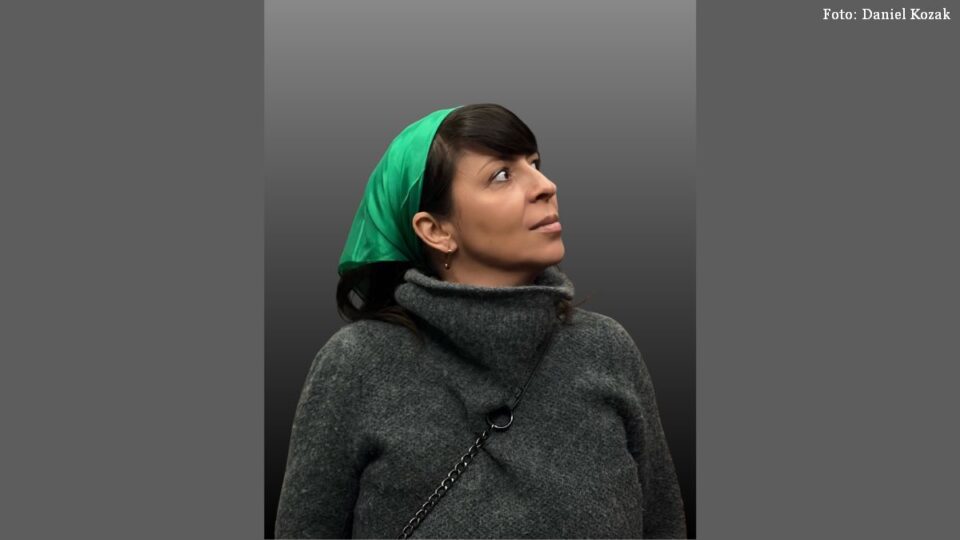
Iulia Hau, 11.02.2026, 14:00
Every time you talk to Alina Dumitriu, her mind is working on something. From animal cruelty and survivors of sexual violence, to expanding neighborhood parks in Bucharest, access to HIV treatment in pharmacies or the struggles of economic migrants, Alina never seems to take a day off.
“Ever since I was little, I remember seeing black children from Africa on TV. Ceaușescu would show us those images from time to time, probably so we’d think things were worse elsewhere than they were here. I’m turning 47 in two months, so I lived ten years under communism. I’d see kids on TV with rickets, malnourished… And when my parents asked what I wanted to be when I grew up, I’d say I wanted to help the black children I saw on TV. That stuck with me, and I really did want to go volunteer”.
For now, Alina says the problems she’s tackling in Romania are too big for her to leave for any long stretch of time. At 16, she joined one of her mother’s colleagues who, besides working at a private bank, also coordinated the activity of an NGO. That’s how Alina ended up volunteering with a group of young girls she initially believed were orphans. She soon realized they had parents, parents who had chosen to leave them in the care of the state. Later, she was invited to teach art at an informal school for teenagers living with HIV.
“Around 1992, (the topic is so taboo that no one agrees on the exact number of children or the exact year, here opinions differ), anyway, during communism, there was this HIV-infected cohort of babies, 14,000 infants, a unique epidemiological incident in the world. And I immediately said I wanted to help. I had also studied at Tonitza, and I was passionate about psychology and psychotherapy. I was doing a lot of reading – while other kids were reading fiction, I was reading Jung and Freud. It was my passion. I loved the idea of art therapy, so I started reading even more about it and tried to combine things, so it wouldn’t just be drawing and painting classes.”
That’s how Alina started having personal conversations with institutionalized teenagers who had been victims of that epidemiological accident, realizing the huge gap between what they were living and what they believed about their lives. First of all, Alina says, they all thought they had AIDS and were going to die.
“When I started reading about the virus, I realized they weren’t actually in the AIDS stage, but in the HIV stage, meaning they were just healthy carriers of a virus. Over the years, even academic literature changed the way it talks about HIV. What they had, what people were living with, was a chronic or long-term treatable condition, not a terminal illness. But they got infected in the ’80s, in hospitals, through nosocomial transmission. And there was no treatment. Around 4,000 of them, from what I understand, died. No one talks about the numbers, no one wants to talk about what the state did to these children”.
Alina says Dr. Cătălin Apostolescu has been a real support throughout her 20 years of working with patients from vulnerable groups and with people who use drugs. She says he was the one who, 21 years ago, encouraged her to start the Sens Pozitiv Association, which supports people living with HIV and groups at high risk of contracting the virus.
Beyond her work with the NGO, Alina Dumitriu is a civic activist and influencer, using her Instagram platform, followed by over 14,000 people.
“I do a lot of calls to action. I ask people to react, file complaints. And they actually do it. I’m incredibly grateful. There was a case where a guy was threatening someone with revenge porn right on my wall. I consulted a lawyer, and it really was a criminal offense, though the police told me it wasn’t. But 200 complaints were filed. (…) It’s a community, people genuinely want to do something. They’re bothered by what’s happening in this country, and yes, they want to be part of the change, to be the change that’s so desperately needed here, to take an active role”.
Alina believes influencers have a huge responsibility toward their followers. She recalls recently sharing a news story from Romanian media that turned out to be fake. She immediately reposted to acknowledge and correct the mistake, something she says not many content creators do.
Asked how hard it is to be a full-time activist in Romania, Alina warns that people in this field often develop psychological conditions. She herself lives with diagnosed secondary traumatic stress, a condition that cannot be cured, only managed with medication. The most vulnerable include people working in pediatric oncology or with drug users, both environments with very high mortality rates. Even so, over the years she has learned to manage her emotions well, and if she could turn back time, she wouldn’t change a thing. (VP)