The fake news threat
The most coronavirus pandemic has become a test on society in terms of its vulnerability to fake news.
Corina Cristea, 11.09.2020, 14:00
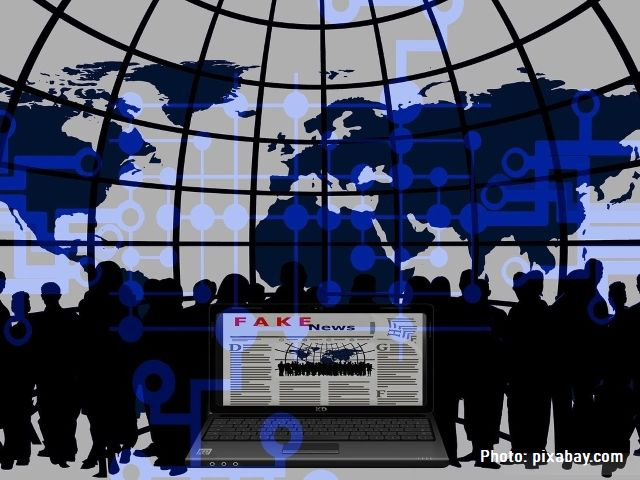
In addition to turning the entire world upside down, the most recent coronavirus has become a test on society in terms of its vulnerability to fake news. Right from the beginning of the pandemic, official messages were put out that it would be closely followed by an avalanche of disinformation which changes outlooks. There are many reasons for which fake news is circulated. Sometimes it has to do with political interests, or those of anti-vaccine activists, other times it is about discrediting or building up an on-line profile. The phenomenon is not new, but it gained tremendous traction with the ascent of digital platforms. What we have to know is that fake news does not necessarily mean a false piece of news.
Digital disinformation has nothing to do with journalism, according to Professor Alina Bârgăoanu, an expert with a group for combating fake news and disinformation with the European Commission. The information ecosystem has fundamentally changed over the last few years, the digital space has mostly dislocated this system, and mainstream news is a collateral victim of this unprecedented rise of digital platforms, according to Professor Bârgăoanu:
“The use of the term fake news is deceptive, because if we use the term fake news, that leads us to the idea of a distinction between truth and falsehood, when in fact the mega-phenomenon of digital disinformation does not necessarily have to do with a fraud perpetrated on truth, but a fraud having to do with the use of our profiles, of personal data, it has to do with the targeting people as users of digital platforms.
The danger lies in manipulation driven by algorithms, which means that fake news are built depending on our interests, and are targeted based on our social media behavior. When seen like this, things become relatively simple, it is easy to influence a person whose profile you know in detail, and to make them spread further information that confirms their fears and prejudices. A major role in this is played by Facebook and Google, which gather data and quickly and easily spread information to a massive amount of users, targeted simply because they are easily profiled. As an example used by Professor Bârgăoanu, there are articles allegedly published by Israeli intelligence agencies saying that they are able to estimate people’s inclination to be suicide bombers based on the amount of chocolate they eat:
“Fake news is neither news, nor is they false. Of course we can talk about this species of journalism, meaning errors in information, about disinformation intentionally thrown out there, but the bad news is that we are not talking about news, but about emotions, memes, videos, cartoons, hashtags, and we are not talking about something fake. A piece of information may be accurate, but if it is amplified by algorithms and search engines, it becomes fake because it comes into an uneven competition with an equally true piece of information that doesn’t get promoted. We are dealing with something I called disinformation 2.0, in order to point out the fact that we are dealing with totally new phenomenon, the explosion of digital platforms, and it has nothing to do with journalism.
In Romania we have fallen in the trap of debating fake news in terms of true or false, which is something that Professor Bârgăoanu warns us about:
“I believe that the fundamental distinction between viral and not viral lies in what can get on search engines and what does not, what is promoted by Facebook and what is taken off of Facebook. There are mechanisms of taking things off of platforms, there are ways in which Google can be made to place your name in first place or in last place. That doesn’t mean you don’t exist, but by using some mechanisms you can either be a star or you can be non-existent. I believe we should not be talking about the widespread phenomenon of digital disinformation in terms of true or false, but that we should discuss the fundamental changes that digital platforms have brought to the information ecosystem.
Most of the time, fake news tries to spread panic by being alarmist, using information that stirs up angry feelings. They can generate tensions, they can render people vulnerable and endanger institutions or social cohesion. Also worrying is the fact that they can continue to play on the interests of the people who created them, even after being debunked. Fake news affects judgment, which makes people more prone to manipulation. This is a major link in hybrid warfare, if it turns out that behind it are state actors. The purpose is to modify the collective mentality of people, exploiting disenchantment, frustration, or hatred for a political purpose, for instance in order to encourage political parties that are against the European Union, against Western society, which is supposed to cause a dramatic change in the geopolitical and security paradigm.
CC