150 years since the birth of Constantin Brâncuși
For Romanian culture, February 19, 2026, is a very important date, as it marks the 150th anniversary of the birth of Constantin Brâncuși
Steliu Lambru, 23.02.2026, 12:56
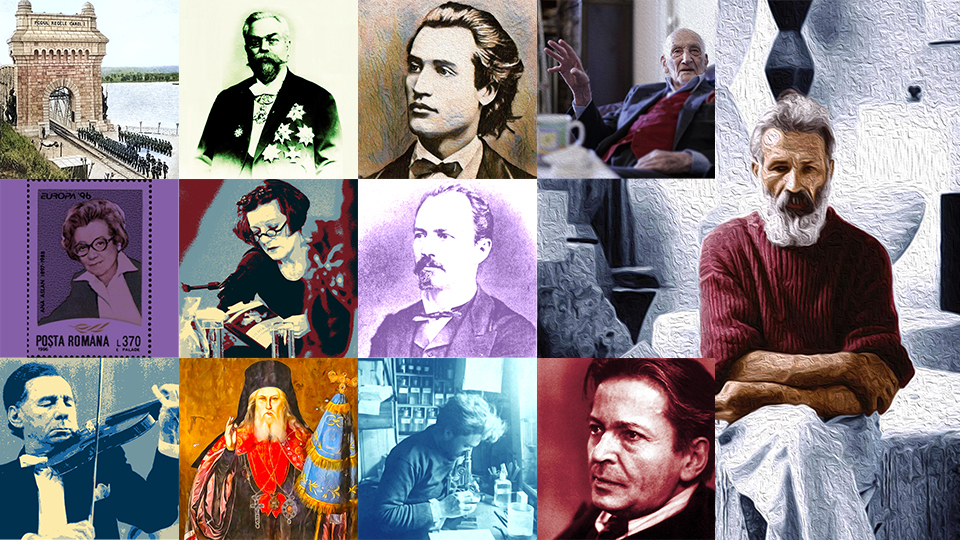
For Romanian culture, February 19, 2026, is a very important date, as it marked the 150th anniversary of the birth of Constantin Brâncuși, a world-renowned sculptor. To mark the occasion, we invited art critic Erwin Kessler, manager of the National Museum of Art of Romania, to summarize what makes Brâncuși so remarkable.
“For us, Brâncuși is great because he is Romanian, and that is a problem. For others, Brâncuși is great because he is from Paris, from the School of Paris. The School of Paris, in the first half of the 20th century, is classical modernity, it is a good part of the avant-garde and represents the period when the gods walked the earth. Let’s say he is Hephaestus among the gods of the Paris School. To us, he is Zeus, to others he is Hephaestus. There are two kinds of greatness or ways of measuring Brâncuși’s stature: from a national perspective and from an international perspective. From an international perspective, Brâncuși’s greatness is not a national greatness. From a national perspective, Brâncuși’s international greatness is a national greatness.”
Although art is a liberal field, value has standards here too, just as gold is a benchmark of value in the material world. Erwin Kessler:
“Speaking of gold, the metal called gold, it has a quality, like other metals, but first and foremost: it has been recognized and valued by everyone, in all corners of the world, at all times, without anyone consulting anyone else. It is a standard of value, it is a standard of wealth, it is probably a standard of beauty. As far as Brâncuși is concerned, his golden side, his quality as a standard of value, is largely due, in addition to the concept through which he enrolled in the Paris School of Modernity and Avant-Garde, to his strictly original contribution, that of stone and wood sculpture, sculpture directly “en taille”: that is, replacement not in form but largely in technique. Of course, form matters a lot, but technique matters just as much to him. It is a perfect, abstract form, apparently rigorously geometric, but in fact it is not rigorously geometric. There is a lot of intuition in Brâncuși’s craft. So we have this perfect form that corresponds to modernity in its almost aseptic sense. But this perfect form is not achieved as it was by his good friend Marcel Duchamp, who came up with a concept even stronger than Brâncuși’s, which is readymade. That is, we are talking about taking a strictly industrial product, which is perfect and rigorously made because it is industrial. The artist places it in another context and then makes it art, and this gives it meaning. Brâncuși did not go that far. Everything he did was non-readymade, it was anti-readymade, it was hyperrmade.
Brâncuși’s excellence meant originality. Erwin Kessler:
“Brâncuși did not and could not reach the readymade because he was, and here again we find ourselves in the so-called Romanian spiritual matrix, extremely attached to craftsmanship, to everything that means the actual creation of works: from the tools, which he made himself in order to create his works, to the materials he used, especially the effort he put into carving the stone directly. It was the effort he put into creating the works and the effort he put in afterwards to make them as brilliant as possible, as attractive as possible to the eye and, through this, to the public.”
In Romania, Brâncuși’s most famous work is located in Târgu Jiu. Erwin Kessler:
“The monumental ensemble in Târgu Jiu was a commission, and Brâncuși’s desire to create monuments dates back much earlier. He made funerary monuments in Buzău for the lawyer Stănescu long before that, which he delivered around 1914. Immediately after delivering that monument in 1914, he wanted to make one in Bucharest, and at the same time he was asked by Minister Morțun to make a monument for University Square. He was supposed to make it for Spiru Haret, but it would not have been the Spiru Haret we have now. The project he made for Spiru Haret, the minister of public education and its founder, was rejected and he never made it. After the war, around 1920, his fellow villagers from Peștișani and Hobița proposed that he create a monument for the soldiers from Peștișani who had died in World War I. He did not create this either, because he made a proposal and it was rejected. So two rejected proposals. In the 1930s, he proposed a large column in Bucharest. This was not wanted either. The commission for the monument in Târgu Jiu was not addressed to him. Initially, the commission was for his student Milița Petrașcu, who had already made the monument to Ecaterina Teodoroiu in Târgu Jiu, a kind of small mausoleum. It was proposed to him by Aretia Tătărescu in 1935, the wife of Gheorghe Tătărescu, who was, not coincidentally, the liberal prime minister of Romania. These liberals proposed that he create a monument. Milița declined the offer and proposed Brâncuși instead, who accepted.
Today, the history of universal sculpture includes the name of a Romanian, Constantin Brâncuși. However, we must not forget that he is a Romanian who belongs to the whole world. (MI)