Political Psychiatry in Communist Romania
Political psychiatry is seen as a soft version of communist repression, which apparently appeared for the first time in the Soviet Union after Stalin.
România Internațional, 20.10.2014, 13:24
Political psychiatry is seen as a soft version of communist repression, which apparently appeared for the first time in the Soviet Union after Stalin. Its aim was not to spread mass terror, as standard repression did, but to isolate and neutralize all those who opposed the regime. The procedure was simple: healthy people, but who were dissidents and opponents, were diagnosed as suffering from schizophrenia or from serious personality disorders. They were forcefully put into psychiatric units where they were given neuroleptics and then they were placed among real patients. Some were asked to abandon their political principles for them to be declared recovered. Australian psychologist Sidney Bloch, who studied repression in the USSR, says that the idea came up when Moscow decided it was time to get rid of the bad international image left by Stalin’s show-trials.
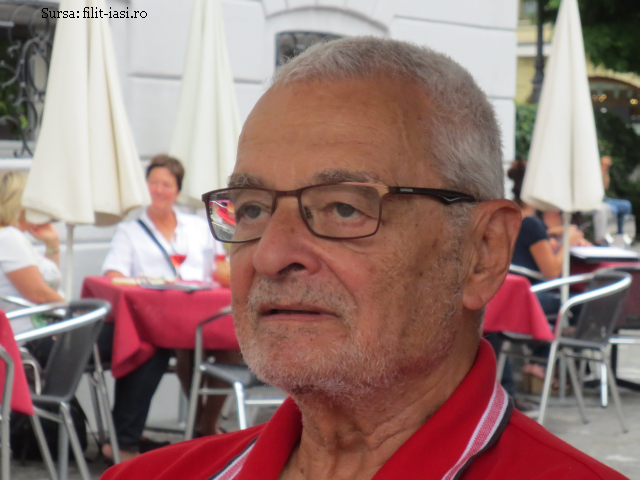
Physician Ion Vianu was one of the first Romanians who denounced this form of communist repression abroad. In 1977, after emigrating to Switzerland, Vianu joined an international group called “Geneva Initiative Against Political Psychiatry”, dealing mainly in soviet psychiatry. Ion Vianu:
Ion Vianu: “ In 1967-1968, when I as an assistant at the Bucharest University Clinic of Psychiatry, I participated in many discussions whose main goal I did not see at first. One day, while in Professor Vasile Predescu’s office, I heard Dr. Angheluta saying that big psychiatric hospitals were about to be built soon, with high barbwire fences and watch dogs, for dangerous patients. It was much later, when I read the files provided by the National Council for the Study of the Securitate Archives, that I found out Dr. Angheluta was both hospital manager and the man of the political police. Although I knew something about Soviet psychiatry and its methods, I did not understand, at that time, what Dr. Angheluta was talking about. I couldn’t understand why the number of dangerous patients had become so high all of a sudden and why they had become so dangerous as to require what was more like a prisoner supervision system.”
Although the Ceausescu regime liked to define itself as “anti-Soviet”, political psychiatry was very much to the liking of the power in Bucharest, so they borrowed it from Moscow. Ion Vianu again:
Ion Vianu: “There followed a meeting in University Square in Bucharest, marking the start of the 1969-1970 academic year, which was attended by Nicolae Ceausescu himself. In a very long speech, as his speeches usually were, he said: ‘only crazy people would imagine that socialist order could collapse in Romania. And for such people we have the necessary treatment methods; not just straitjackets, but other means too.’ And that was the moment when I made the connection with what Dr. Angheluta had said. I realized they were getting ready for it. Actually, the nightmare had already started. The files that I saw later were proof of the fact that people opposing the regime were being hospitalized in such facilities. I even met some of them later.”
Ion Vianu also recalled a case he knew first hand, that of lawyer Haralambie Ionescu from Brasov:
“There was a lawyer from Brasov, in his late 60s. He had sent a letter to the UN saying that human rights were not being observed in Romania. It was quite crazy to say something like that back then. The Securitate, which was paying extra attention to international correspondence, seized the letter, arrested the lawyer and sent him to the Gh. Marinescu hospital in Bucharest for examination. He was declared mentally ill, held in the hospital for a while and then hospitalized at home, with the obligation of paying a visit to the clinic once a week. After that, I left the country and I later I found out he had died. But while I was abroad, he sent me a message asking me not to mention his case, because he had been warned not to use his case against the regime. In another words, he was being blackmailed, and I felt like I was being blackmailed myself. And indeed, I could not use that case for a while. There were other people in that situation whom I met in person, such as writer Ion Vulcanescu. He was not a prestigious poet at the time. I ran into him once, on the hospital’s alleys, as he was involved in a political case. He was by no means mentally ill. Later he would emigrate and become the manager of a big apartment compound in New York. I don’t think a mentally ill person could do that.”
Among those who suffered from the consequences of psychiatric treatment was the famous dissident Vasile Paraschiv. It is hard to estimate the real number of people who suffered from this kind of oppression, and researchers are reluctant when it comes to giving numbers. It is also difficult to talks in terms of damages and who should be held accountable. However, it’s a good thing today that we can talk freely about these people who fell victims to a cruel and criminal regime.