Left to Our Own Devices – The voices of absence
What does adolescence look like when parents are far away, working abroad? How are relationships, trust, and a sense of belonging built when the adults who should be close are missing precisely during the years you need them most? These are some of the questions behind the feature film Left to Our Own Devices (De capul nostru), directed by Tudor Cristian Jurgiu
Corina Sabău, 21.11.2026, 14:00
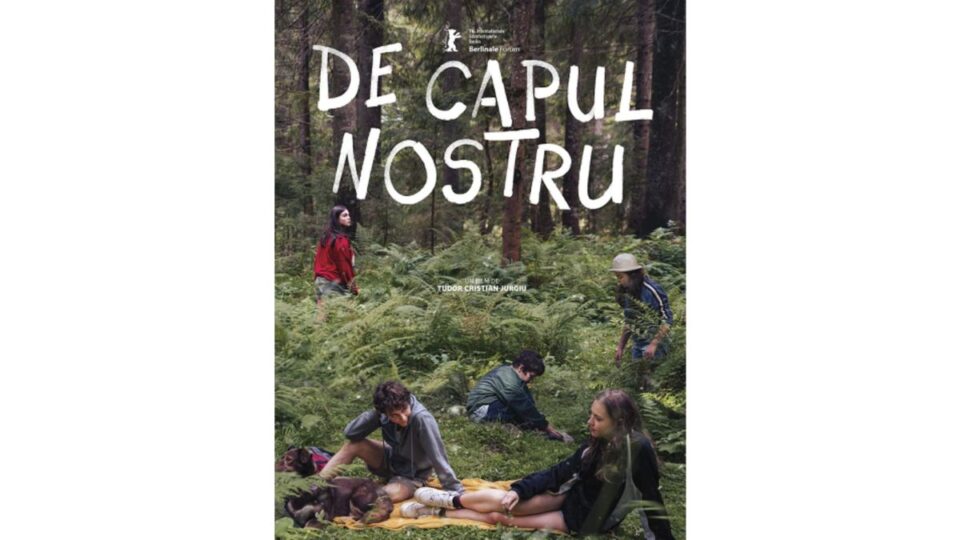
The film was selected and awarded at the Berlin International Film Festival. Left to Our Own Devices film follows a group of teenagers from a small town in Romania, children whose parents work abroad. In the absence of family support, the young people try to find their own place in the world, building an alternative family together. Beyond its international visibility, Left to Our Own Devices speaks to a social reality affecting numerous families in Romania, where approximately 150,000 children have parents working abroad. However, the film does not aim to turn this experience into a simplistic illustration of a social issue. To build the story, Tudor Cristian Jurgiu and co-screenwriter Anca Buja spoke with both teenagers living this reality and their parents.
“The research mattered a great deal, in the sense that I understood a bit more about how these children feel, what they went through, and how they perceive their relationships with their parents. But I also spoke with parents. And I think what made me start writing was the fact that some of the children and adolescents we talked to admitted they were telling us things they had wanted to say to their parents, but hadn’t managed to. That is why I believe fiction, unlike documentary, somehow offers you this opportunity for compensation: a character can say things in your place, and I think that can help like a form of therapy, of release. I heard many stories, but obviously we had to make a selection; it would have been impossible to cover the entire range of nuances and situations. And we chose to focus on a story that carries a greater degree of universality.”
For Denisa Vraja, playing Flavia was not only her first leading role in a feature film, but also an encounter with a character hard to box into a single typology. Flavia is a contradictory character: she desires her mother’s closeness, yet pushes her away; she needs affection, but doesn’t always know how to ask for it. She can be sarcastic and vulnerable, seductive and childlike, and at times even protective of those around her. For the director, the challenge was to find an actress capable of conveying all these nuances without reducing the character to a single explanation. For Denisa Vraja, meeting Flavia also meant a major first work experience and a series of relationships that stayed with her beyond the film.
“I have a feeling this character and working on this film will stay with me for a long time. Naturally, being my first film, I suppose that’s nothing unusual—it happens to many actors—but it sets certain expectations for you. I learned a great deal from working on the movie, from encountering this character and working with the team. I feel like I entered this project knowing nothing and I’m leaving it still feeling like I know nothing, but with a bit more experience and grateful for the encounters I’ve had. What left the biggest mark on me were the people I worked with. I can say it was a very special team that I had a great pleasure working with. A connection formed quickly between us, and that made for a special kind of communication. And Flavia, the character I played, challenged me a great year-round deal. At times, it was genuinely difficult to discover her and interact with this Flavia.”
Following its world premiere in the Forum section of the Berlin Film Festival, where it was honored with the CICAE Art Cinema Award, presented by the International Confederation of Art Cinemas, Left to Our Own Devices has continued its festival run, being selected for several major events. Alongside Denisa Vraja, the cast also features Vlad Furtună, Mara Diaconu-Ducica, Sofia Vasiliu, Dominique Toma, and Steliana Bălăcianu. For director Tudor Cristian Jurgiu, whose previous features include The Japanese Dog (Câinele japonez) and Maybe I’m Still Alive Today (Poate mai trăiesc și azi), the film continues his exploration of fragile human bonds. It is a Romania–Italy co-production produced by Libra Films and Indyca. (VP)