Euro- Atlantic Support for Ukraine
NATO will continue to provide military support to Ukraine in the absence of any certainty regarding peace negotiations.
Mihai Pelin, 04.12.2025, 13:50
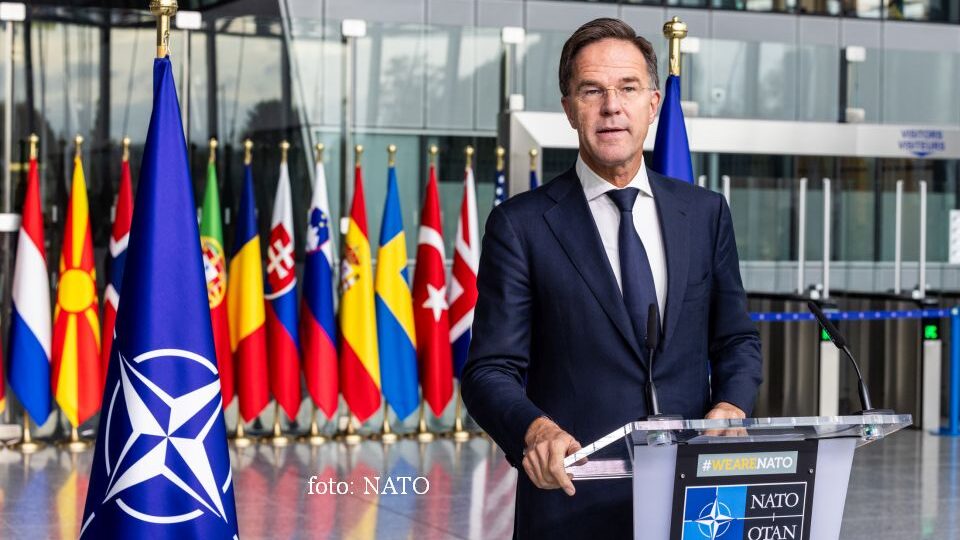
More than two-thirds of the NATO member states have pledged to supply weapons to Ukraine through the so-called “priority requirements list,” which has so far received commitments worth 4 billion Euro, NATO Secretary General Mark Rutte announced at a meeting of the allied foreign ministers in Brussels. He also said that Australia and New Zealand will also contribute to these expenses, making them the first NATO partners to do so.
Mark Rutte stressed that there is an ongoing process of consultation between allies to negotiate peace in Ukraine, but insisted that only US President Donald Trump can unblock the process. As for Vladimir Putin’s threats against Europe, the NATO secretary general said he does not intend to respond to dangerous rhetoric, nor does he want to fuel Russian propaganda. The conclusion reached by the North Atlantic Council was therefore that NATO will continue to provide military support to Ukraine as long as there is no certainty about peace and Russia intensifies its attacks in Ukraine.
Present at the meeting, Oana Țoiu, the Romanian Minister of Foreign Affairs, also had separate meetings with her counterparts from the Black Sea region, Turkey, and Bulgaria. She stated that funding for Ukraine must continue so that it is not forced into a premature agreement. Ukraine also participated in the NATO foreign ministers’ meeting, providing information on the situation on the ground, the equipment needed, and the status of the negotiations led by the United States, given that Europeans’ access to the discussions is limited, as they are not present at the negotiating table. Another guest was the head of European diplomacy, Kaja Kallas, while the European Commission made an essential announcement regarding financial support for Ukraine. The Commission presented the details of the loan for Ukraine, based on Russia’s seized liquid assets.
The plan will be put on the European leaders’ table in two weeks, but Belgium, where the money is located, is yet to be convinced. Belgian Prime Minister Bart De Wever has again rejected the plan by which the European Commission insists to offer Ukraine a loan financed by Russian assets frozen in the EU. “I cannot imagine how the European Commission would dare to confiscate money from a private company against the will of a member state,” he said. Most of the money is in Belgium—about 194 billion Euro in June—and outside the EU, in Japan—about 50 billion USD—but also in the US, the UK, and Canada, where smaller amounts are located.
The Ukrainian Parliament has approved the draft budget for 2026, which earmarks almost 60% of spending to defence. According to experts, Ukraine’s budget and military needs for 2026 and 2027 are estimated at around 130 billion Euro, and the EU has committed to covering this deficit. Since the start of the war in 2022, it has already invested over 170 billion Euro. (MI)