Fiscal measures for 2026
The Romanian government has passed the emergency order that forms the basis of the state budget for next year.
Daniela Budu, 24.12.2025, 14:00
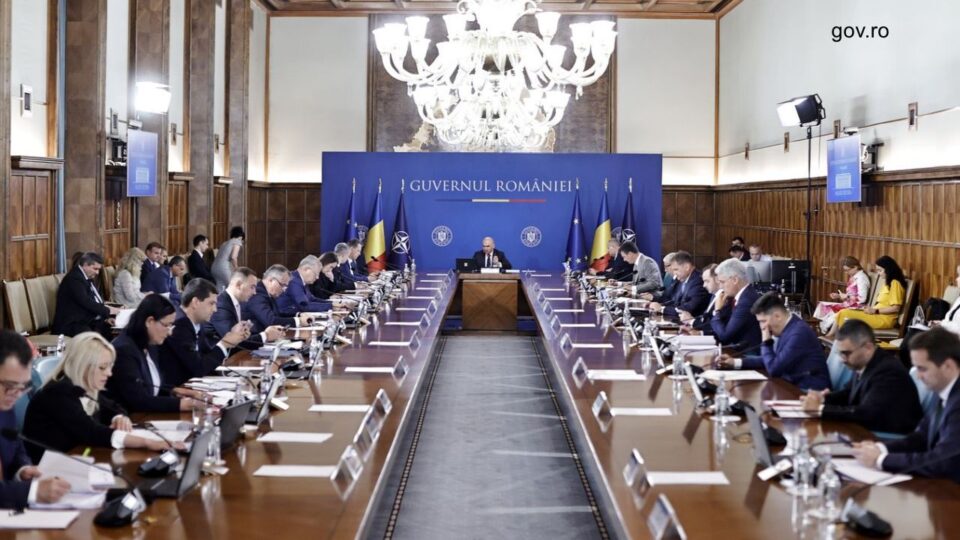
The government in Bucharest adopted, on Tuesday, the emergency order that corrects, eliminates or introduces new fiscal-budgetary measures starting next year and on the basis of which the state budget for 2026 will be built. It provides for spending cuts, economic recovery measures, stimulating private investment, supporting disadvantaged people and combating tax evasion. Thus, the emergency order provides for the freezing, next year, of state pensions and salaries, at the level of this year. The minimum wage in the economy will increase from July 1, 2026 by about 300 lei (60 euros), to 4,325 lei (865 euros). Also from the middle of next year, the amount of money for which income tax and social contributions are not paid will decrease from 300 lei (60 euros) to 200 lei (40 euros). Energy vouchers, granted to vulnerable people for paying their electricity bill, worth 50 lei (10 euros), will also be granted in 2026. In the field of taxes, the turnover tax will decrease to 0.5% next year and will disappear in 2027, while the income of micro-enterprises will be taxed at a flat rate of 1% from January 2026, regardless of income or type of activity. The Bucharest government also announces the elimination of the construction tax, the so-called “pillar tax”, starting in 2027. On the other hand, starting next year, the amounts of money that parliamentarians, political parties and national minority organizations will receive monthly will decrease by 10%.
The Government’s emergency order also contains positive measures, such as the one related to the 1% flat tax rate for micro-enterprises, which will help companies with turnovers below 100,000 euros, says the president of IMM Romania, Florin Jianu. On the other hand, the reduction from 300 to 200 lei of the amount for which income tax and social contributions for the minimum wage are not paid, is not in favor of employees and employers, says Florin Jianu. In turn, the chief economist of the Concordia Employers’ Confederation, Iulian Lolea, criticized the order, saying that it gives the business environment too little time to adapt and affects predictability. He also said that the order does not eliminate the minimum turnover tax for 2026, but reduces it by half and extends the application of the specific tax for energy companies. Iulian Lolea also spoke about positive elements of the new provisions, among which the elimination of the tax on special constructions. He said that the business environment is waiting for the implementation of a plan to optimize public spending, warning that new taxes may lead to recession, unemployment and effects contrary to expectations regarding budget revenues. The first consultations for the drafting of the 2026 state budget will be held in January, and the deficit target for next year will be around 6%-6.5%. (EE)