Government adopts public administration reform bill
The Romanian government issues emergency order to adopt public administration reform bill.
Roxana Vasile, 25.02.2026, 14:00
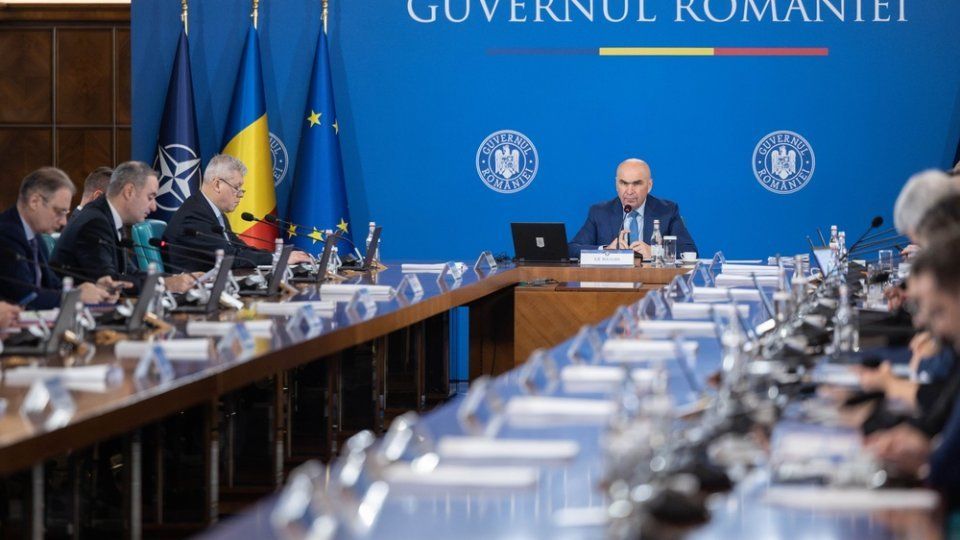
More efficient municipalities, decentralisation, less bureaucracy and stricter tax collection. The government adopted, on Tuesday evening, by emergency ordinance, the public administration reform bill, almost eight months after Prime Minister Ilie Bolojan first spoke about this extensive package of measures intended to improve services to the population. While waiting for these benefits, both central and local public administration will go through a slimming diet. The reform affects over 45,000 posts, but actual layoffs would target approximately 20,000 employees, the rest being vacant positions that will be eliminated from the organisational charts. The reform also supports the decentralisation process and the strengthening of administrative capacity, says Prime Minister Bolojan, who gave a few examples:
“Generating policies in the field of urban planning, in the field of local taxes and duties – it strengthens the administrative capacity of the entire local public administration in Romania, encouraging them, as I said, to be more efficient and more effective.ʺ
Within the framework of administrative decentralisation measures, an important aspect is the simplification of procedures in order to reduce bureaucracy as much as possible. New mechanisms have also been proposed for the occupation of public posts, said the Minister of Development, Cseke Attila:
“Mobility through rotation of public management positions, with a maximum of two 5-year terms, of senior civil servant posts, with a maximum of two 3-year terms. It is a mechanism that works within the European Commission, it works very well with a single 5-year term, not two terms, and we believe that in Romania this can also bring an improvement to the public service.
Again by emergency ordinance, the Romanian Government has also approved a series of measures to support the economy, having focused almost exclusively on austerity measures since last summer. These measures will cost the state the equivalent of 5 billion euros, but, according to the Minister of Finance, they will ensure a strategic transition from consumption-based growth to growth supported by investment and domestic production. Minister Alexandru Nazare explains:
“Romania will be much better placed to attract investments, it will be much better placed to project Romanian economic leadership in the region, through investment banks, Romanian entrepreneurs will be able to demonstrate economic interests in the countries of the region and we will support them in this endeavour, and the measures we have unveiled contain such provisions. Very importantly, tax incentives and measures to increase the liquidity of companies on the market, to help entrepreneurs, are very important. The entire fiscal section of the package remains very important
According to Minister Alexandru Nazare, the economic recovery package does not target the Romanian economy only this year, but until 2032.