More EU funds in Romania
European money is reaching the Romanian economy 5 times faster than before the first half of last year, and its absorption has increased by almost 10%, the Romanian Government says.
Sorin Iordan, 08.01.2026, 14:00
European funds are the most accessible way for Romania to reduce development gaps compared to Western states. The money is granted by the European Commission for investments in infrastructure, digitalization, environment, education, employment and rural development. Since joining the European Union in January 2007, Romania has received 106 billion euros and contributed 35 billion euros to the EU budget. Over the years, however, governments in Bucharest have encountered difficulties in attracting and spending these funds efficiently. However, the situation seems to have changed.
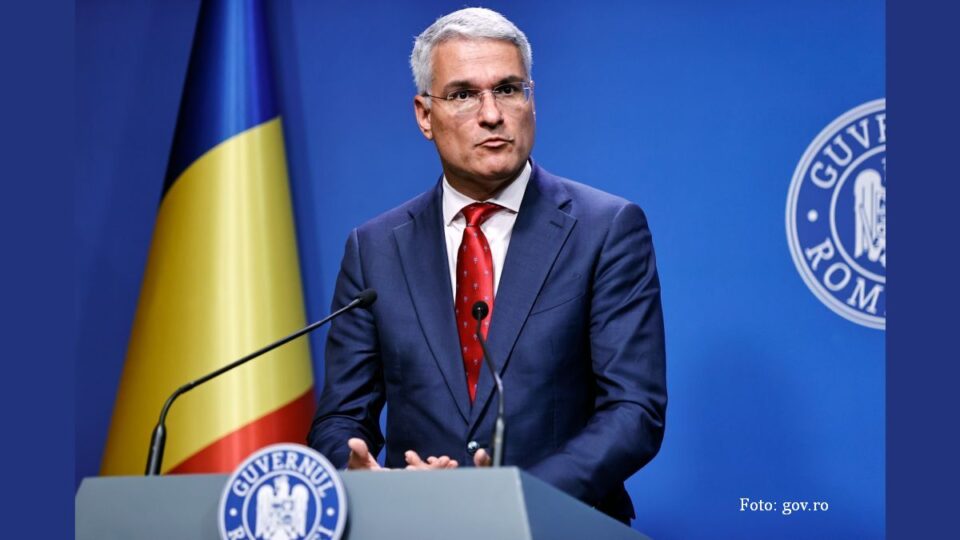
The Romanian Minister of Investments and European Projects, Dragoş Pîslaru, said that, in the last 6 months, European money has started to reach the economy 5 times faster and mechanisms that seemed blocked have been set in motion. In a Facebook post, he said that a comparative analysis of the data highlights a massive and unprecedented acceleration of the absorption process in recent months, compared to the entire period since the beginning of the 2021-2027 financial year, respectively, from 3 billion euros to 6.3 billion euros. Thus, Pîslaru says, the absorption rate of European money has increased from 9.91% to 20.4%. The minister also explained that, before June 2025, the state was paying an average of 87 million euros per month from European funds, and in the second half of last year it reached over 456 million euros per month. Also, the capacity to bring money back to the state budget has also increased, in the previous period the average being approximately 54 million euros per month, while in the current mandate exceeding 374 million euros per month, an almost 7-fold increase in the reimbursement rate.
“European funds are our only real chance to compensate for the budget deficit and to repair the effects of the populist management of national money in the past”, the minister also wrote. He announced that in 2026, the Government aims to attract at least 15 billion euros of European funds, double the maximum absorption level so far. This money will be invested in hospitals, schools, highways, local infrastructure and economic competitiveness, Pîslaru also said.
The next multiannual financial framework, 2028–2034, provides for total allocations of 60.2 billion euros for Romania. As regards the National Recovery and Resilience Plan, the Minister recalled that, in December 2025, Bucharest submitted to Brussels the 4th payment request, worth about 2.6 billion euros, which included 62 targets and milestones. Among the institutions that are to receive money are the ministries of Environment, Energy, Justice, Finance, Health and Labor. Among the projects mentioned in the payment request are the rehabilitation of 13 dams and the modernization of flood protection, the completion of the listing of a package of up to 15% of the shares of Hidroelectrica (the main electricity producer in Romania), the digitalization of the judicial system and the general fiscal reform. (EE)