More security for Romania
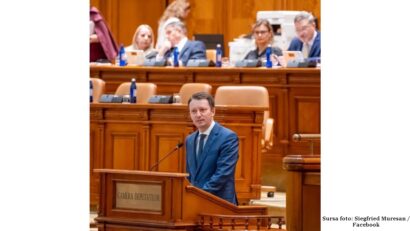
The Chamber of Deputies has debated the European Parliament’s proposal on military mobility.
Ştefan Stoica, 24.03.2026, 13:50
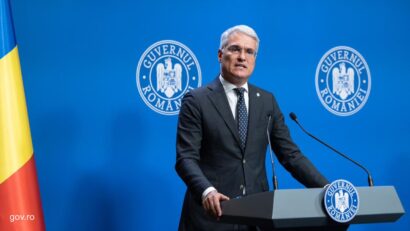
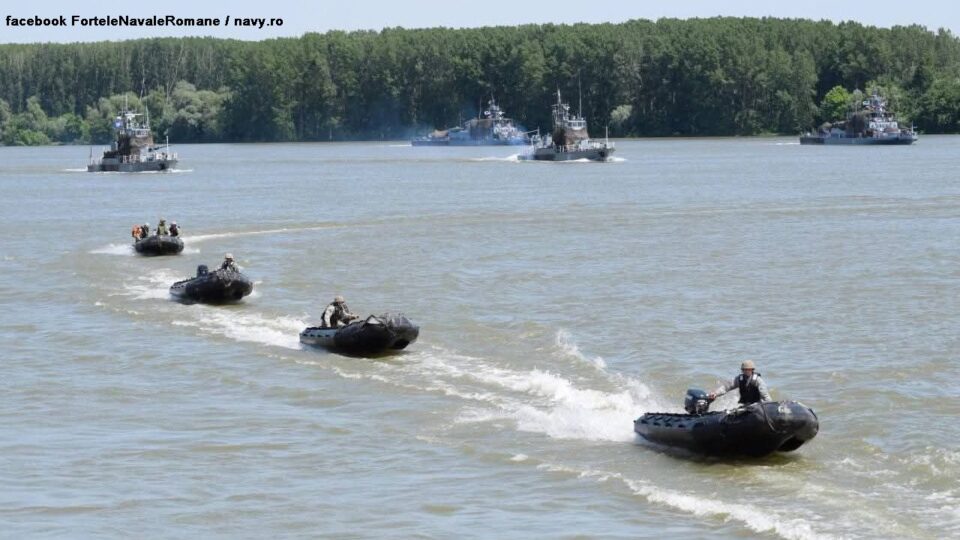
The Romanian Naval Forces are conducting the biggest annual multinational training exercise, entitled Sea Shield 2026, and which is coming to an end next week. The exercise brings together over 2,500 military from Romania and 12 other partner states, as well as 48 ships and boats, 64 combat vehicles, 10 aircraft and 10 autonomous unmanned systems. The goal is to strengthen cooperation and joint action procedures. Defence minister Radu Miruţă told Radio Romania that the exercise sends a strong message, namely that there is interoperability and capacity to act, willingness to learn from others and for others to learn from us and a wish for the military of NATO countries to work and fight shoulder to shoulder in any conditions.
At the same time, the exercise demonstrates that there is capacity to act with respect to any challenges in the Black Sea, as well as a permanent concern to receive training and to work with the best devices available on the market. Speaking about the major conflicts under way right now, one of which is near Romania’s borders, defence minister Radu Miruţă said that it is only natural for the Romanian Army to consider every scenario, as what is happening there can have consequences for regional security.
There are risks, the minister admitted, but Romania is a country that has deterrence capacity, a country that is a NATO member and that interacts with other NATO member countries in order to be able to face such challenges. He added that given the distance between Romania and what is happening in Iran, Israel and the Gulf countries, the consequences are somewhat indirect. On the other hand, such a conflict naturally gives rise to economic consequences, as up to a quarter of the world’s crude oil passes through a strait where a blockage exists today. Romania produces, extracts and refines oil itself, so it doesn’t feel the full power of the consequences, the defence minister believes. However, they can become dramatic, he added, if what is happening in Iran lasts longer, leading to Romania’s using up its own reserves. If, however, it ends faster, the stocks that Romania has are a kind of buffer, allowing it to mitigate the impact.
Along the same lines, the Chamber of Deputies debated the European Parliament’s proposal on military mobility, which provides for facilitating the transport of equipment, goods and military personnel throughout the region. Romania has a strategic role in the region and has requested a distinct financial allocation for infrastructure works in NATO member states on the eastern flank. While the populist, ultranationalist opposition fears this proposal raises questions with regard to national sovereignty, the Liberals (in the ruling coalition) have argued that it responds to the security challenges that the European Union is facing in the region and that it helps Romania develop its own logistical infrastructure.