Romania at the Munich Security Conference
The Romanian defence minister Radu Miruţă and the foreign minister Oana Ţoiu attended the Munich Security Conference
Mihai Pelin, 16.02.2026, 13:50
A defence ministry delegation led by minister Radu Miruţă recently took part in the Munich Conference, one of the most important and prestigious international forums focusing on security and defence issues.
In an international context defined by dynamic developments in the field of global security, this year’s meeting provided a broad framework for reflection on the main trends influencing the international environment. The agenda, structured around areas such as defence, international order, global security, sustainability and technology, included talks on defence cooperation, transatlantic security, managing new risks and the impact of emerging technologies, as well as developments that shape the European and global security architecture.
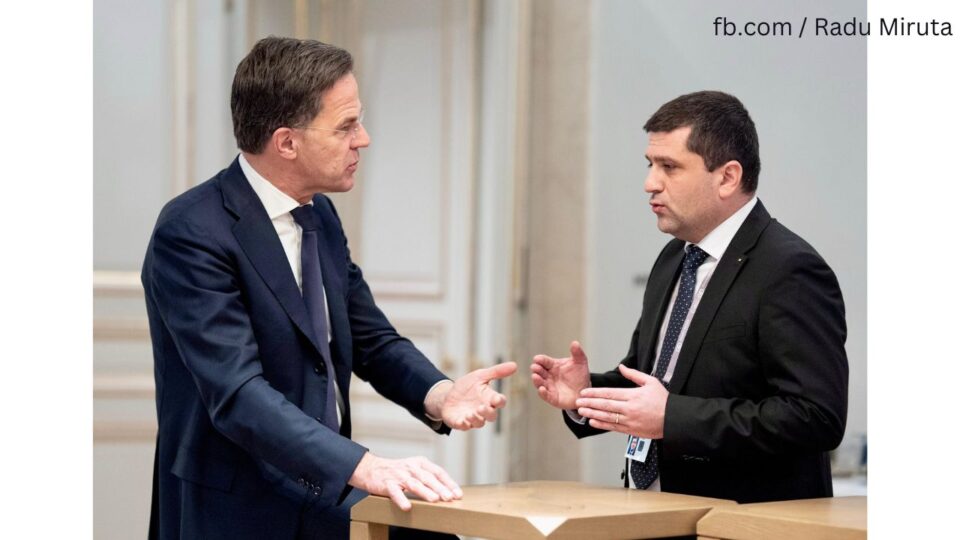
On the sidelines of the Conference, Radu Miruţă discussed with the NATO Secretary General Mark Rutte about strengthening the Alliance’s Eastern Flank and Romania’s key role in this architecture. He emphasised that the Eastern Flank means the entire segment from the Baltic to the Black Sea, and resources must be distributed in a balanced way along this entire strategic axis.
The Romanian official also had talks with counterparts from several states, as well as with officials in the defence industry, technology and strategic analysis organisations. Radu Miruţă emphasised that Romania must not only be a security beneficiary, but also an active provider, a goal that can only be achieved by consolidating a competitive defence industry. The Romanian official reiterated the need for such industry to be integrated into the European ecosystem, and to be able to produce, innovate and attract strategic investments.
The Romanian foreign minister Oana Ţoiu was also present at the Munich Conference, and in turn she stressed the need to use EU funding for NATO defence needs. While attending a working session on the implications of warfare with autonomous systems, including drones, she spoke about the need for increased diplomatic coordination on the Eastern Flank, opportunities for the Romanian and Allied defence industry, and the importance of technological innovation and shortening innovation cycles. NATO is determined to strengthen deterrence and defence in the Black Sea region, within the framework provided by the Allied mission Eastern Sentry, designed to counter violations of Allied airspace, Oana Ţoiu also said.
Also in Munich, minister Ţoiu met with other German officials, as well as with members of the Romanian community in Bavaria, at the Romanian consular office. The economic relationship between Romania and Bavaria has gained major strategic importance, as Bavaria is the driving engine of German investments in Romania: hundreds of companies with Bavarian capital operate in the Romanian market, and bilateral trade has reached a record-high EUR 8 billion annually. (AMP)