Easter traditions of the Romanian Orthodox Christians
Easter is the biggest celebration of the Eastern Christian world.
Monica Chiorpec, 19.04.2020, 14:00
Easter is the biggest celebration of the Eastern Christian world. The last week of the Lent also known as the Holy Week begins after Palm Sunday and culminates with Good Friday, with Easter or the Resurrection of Christ being celebrated on Sunday. Next ethnologist Florin-Ionuţ Filip Neacşu will tell us more about the significance of Easter celebrations for the Romanian Orthodox Christians.
Florin-Ionuţ Filip Neacşu: “Easter is Romanians’ biggest religious celebration and generally the biggest celebration of the Eastern Christians. As compared to the western Christian world where Christmas is considered a more important celebration, the Eastern Christian countries such as Romania, Russia, Ukraine, Greece as well as countries like Syria, Palestine and Egypt give Easter a greater significance. In the Romanian space, starting with the first centuries A.D., the apostles’ disciples reached as far as Dobrogea and other parts of the territory of present day Romania, Easter becoming an important celebration ever since. According to studies by Romanian ethnographers and historians, it seems that Easter coincided with certain spring celebrations marked by the Getae-Dacian and Thracian populations. The essence of Christianity is the Resurrection of Jesus Christ, therefore Easter is the greatest celebration for Christians in eastern Europe and the eastern Mediterranean. Since 1925, when the Romanian Orthodox Church had a patriarch of its own, the Easter Mass has been held at midnight, when the people gathered in churches used to receive lighted candles.”
The main occupations in the Romanian households during this period are egg painting and decorating and preparing traditional Easter dishes. Maramures (a historical region in the north of the country) is one of the most conservative regions in terms of Easter customs and traditions.
Delia Suiogan, an ethnologist with the North University in Baia Mare, will tell us next how the people of Maramures mark the Holy Week that precedes the Easter celebration: “On Monday, the first day of the Holy Week, people take their clothes outside and leave them in the sun, because all clothes need to be renewed, as legend has it that the Sun has purifying powers. The first 3 days of the Holy Week are devoted to cleaning the house, whitewashing the walls, and mending broken floors. Also on Maundy Thursday, people start preparing the meal for the great feast on Easter Day. On Good Friday, women are forbidden to knead dough and bake, therefore they have to prepare the meal on Thursday. Eggs are painted red also on Thursday, when people get ready to give alms to the poor. On that day, people remember the dead, while making efforts to come to terms with everyone they know. Good Friday, also known in the Romanian tradition as the Black or Dry Friday, is a day for rest. It is a day for meditation, when people do not eat the whole day, in a symbolic gesture of assuming the collective sin of contributing to the crucifixion of Jesus Christ. On Saturday, people resume house chores, and continue to prepare the meal for the Easter Sunday feast. The old lady in each household kneads the dough and prepares the sweet cheese pie traditionally called ‘Pasca’ in Romanian. Pasca is a mixture of leavened dough and cheese. Pasca symbolically makes a transfer of power from the vegetal and animal world to the human world. The killing of the lamb on Saturday represents an act of assuming the sacrifice of the Redeemer.”
In the Romanian folk tradition, on the occasion of important celebrations, the food that people put on the table needs to have been previously blessed in church. The Easter basket was therefore a form of blessing of all the foodstuffs that people would eat at the festive Easter lunch.
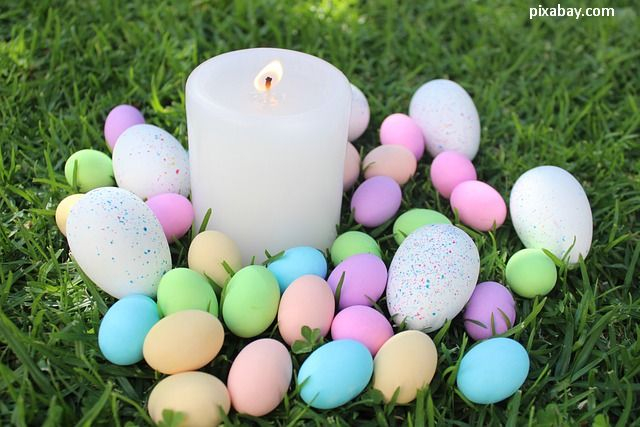
Ethnologist Florin-Ionuţ Filip Neacşu is back at the microphone with more: “In all the regions of Romania people take some of the food prepared for the Easter Sunday feast to church, to be blessed by the priest. They take painted eggs to church to be blessed, eggs painted in red and, more recently, in other colors, which symbolize life and rebirth. This is another tradition taken over from the times of yore, which can be traced back to both the Celts and the Thracians. From an etymological point of view the Romanian ‘Paste’ means Passover in Hebrew, and the word was taken over by Christians to symbolize the passage into the light, through Resurrection. In Bukovina, Bessarabia and Moldavia, as well as in the eastern part of Transylvania, people prepare ‘pasca’, a currant sweet cheese pie with a piece of cross-shaped dough on top, besides pound cake and other dishes specific to Easter such as lamb offal roulade. In central and western Transylvania as well as in Banat, people make special round-shaped breads called ‘Paste’, which are blessed in the church and offered to the believers.”
Maramures boasts a specific tradition which has not been so well preserved in other regions of Romania, namely the blessing of the ‘Paste’ and of the Easter meal. The people of Maramures continue the fasting period until Saturday at midnight. They start eating meat only on Sunday morning, after they bring from church the baskets with traditional food. The blessing of the basket represents a ritual per se. Just image the spectacular view of lots of people staying in line in front of the church, waiting for their baskets, full of traditional food, covered with beautifully decorated towels, to be blessed by the priest. (tr. L. Simion)