Tensions in the ruling coalition
The Social Democrats continue their attacks on their Liberal coalition partners.
Ştefan Stoica, 30.03.2026, 13:50
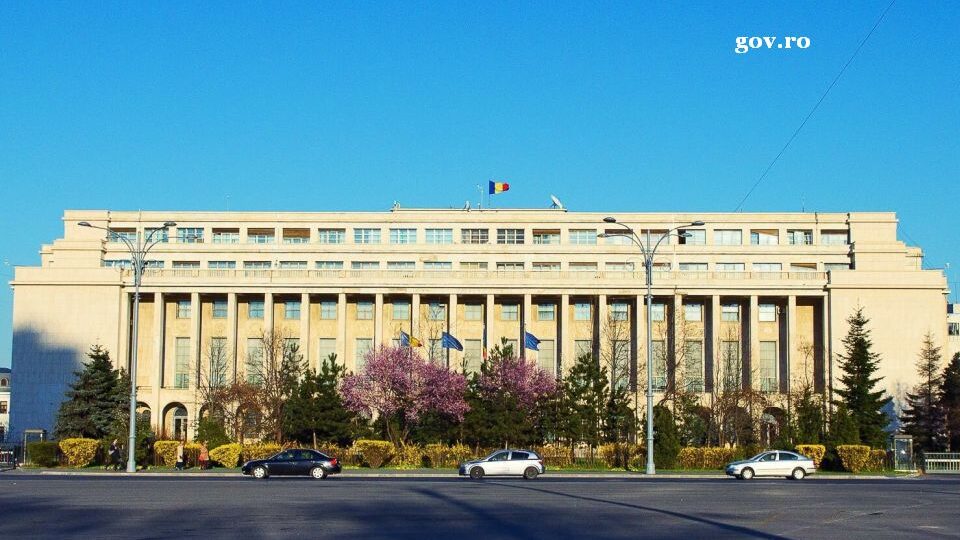
With a record delay of almost three months, the Romanian government adopted, towards the end of March, the 2026 budget. Its cumbersome drafting and heated debates in Parliament have worsened tensions within the four-party coalition. Liberal Prime Minister Ilie Bolojan insisted on a realistic budget, which would no longer contain allocations without clearly specified funding sources and which would respect the deficit reduction calendar, but the Social Democrats fought heroically for some social solidarity measures that could not find financial coverage, constantly threatening not to vote on the budget. In the end, some of these measures remained included in the budget, because money was found for them. However, the Social Democratic Party (PSD) no longer hide their frustration and say they will continue internal consultations on whether or not to stay in power. In fact, PSD does not want a divorce from the National Liberal Party (PNL), but wants PNL to give up Ilie Bolojan, seen by the Social Democrats as too rigid. During a visit outside Bucharest, the Social Democratic leader Sorin Grindeanu has said that a coalition that works poorly should not be maintained only for the sake of stability, if it does not also bring prosperity to the people.
Grindeanu mentioned three possible scenarios discussed during the party consultations: remaining in the current configuration with the current prime minister, moving into opposition and a reconfiguration within the coalition. The PSD announcement regarding the outcome of the consultation will be made public after the Easter holidays, but several branches have already said they are in favour of leaving the coalition. PSD, which complained in Brussels about what it sees as political manoeuvring between the PNL and the populist opposition, has repeatedly stated that it will not support a minority government and will not form an alliance with the self-proclaimed sovereignist party AUR, a scenario that commentators do not rule out. PNL defends its leader who is also prime minister and defines the actions of its Social-Democrat colleagues as a political adventure. Liberals say outright that the breakup of the coalition with the Social-Democrat vote would be tantamount to a definitive political rupture between PSD and PNL.
The third party in the ruling coalition, USR, accuses PSD of violating the coalition protocol by siding with AUR on the simple motion filed against Environment Minister Diana Buzoianu. These three parties – PSD, PNL, USR – which were joined by UDMR, are alledgedly said to be fated to co-govern, in order to stop the populist current. If parliamentary elections were held next Sunday, AUR would obtain 33% of the votes, followed by PSD with 24% and PNL with 16%, indicates a survey conducted by the Center for Urban and Regional Sociology – CURS. Next are USR, with 9% and UDMR, with 5%. In the current parliamentary configuration, but also in a future one, resulting from the early elections, a different coalition formula than the current one, involves the participation of AUR. (EE)