European strategic projects in Romania: economic benefits or ecological risks?
Romania to develop a number of projects to extract raw materials.
Cristina Mateescu, 08.04.2026, 14:00
In 2025, the European Commission published the list of 47 strategic projects included in the Critical Raw Materials Act. The initiative aims to reduce Europe’s dependence on strategic materials, especially those imported from China. The European Union wants to reduce non-EU imports of such critical minerals by 30% by 2030. Three of these projects are to be developed in western Romania, with investments amounting to some 615 million euros for the exploitation of three raw materials: graphite, in Baia de Fier, Gorj county, by a Romanian company; magnesium, in Budureasa, Hunedoara county, by an American company; and copper, in Rovina, Hunedoara county, by a Canadian company. Energy Minister Bogdan Ivan says these raw materials are used in a wide range of fields, including aerospace and aeronautics, electricity, medical equipment, batteries for solar panels and laptops. They are also used in mobile communications, GPS, internet, fiber optics, as well as in automation systems and electronic components, and especially in the defence industry.
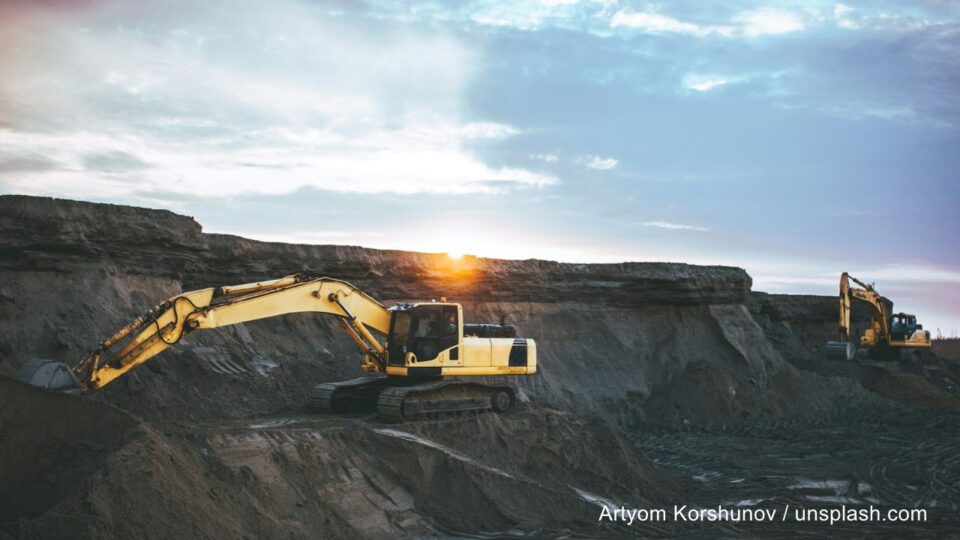
The Rovina copper deposit is considered to be the second largest in Europe and has an estimated value of around 300 million euros. However, it is also one of the most controversial mining projects in Romania, being strongly criticised by environmental organisations. In 2024, following action initiated by activists, the court ruled to halt certain investment projects. The criticism is mainly concerned with the social and ecological impact on the communities in Rovina. Other issues raised by associations such as Ecou Rovina Bucureșci and Declic concern the financial feasibility of the project. The concentration of copper ore is considered low or very low grade, which calls into question the profitability of the whole endeavour. Roxana Pecea, Declic campaign coordinator and associate researcher at Mining Watch Romania, explained: “We already have an operational copper mine in Romania, in Roșia Poieni, which is quite infamous. I think a lot of people have seen the photos of that horrible quarry that goes down hundreds of meters underground and especially the Geamăna tailings pond, which has in time swallowed up the village and , more recently, a church. Those photos have a very strong impact because they reveal to what a copper quarry looks like after a few years and its long-term effects, because the tailings pond contains toxic substances and will be there for hundreds of years.”
Roxana Pecea also raises another important issue, namely, the fact that any mining project, both in Romania and in Europe, will have to navigate free market dynamics because, she says, the minerals extracted in Romania are processed into finished materials that are largely bought by China and not by Romania or another European state: “I think this is extremely important, and is not discussed openly either by the authorities in Romania, or in the European Union. Any project related to minerals in Romania or Europe will have to take into account the free market. And we have no certainty about it. Quite the contrary, I would say. We have a clear example, which tells us something completely different: that these minerals will go to the buyer who offers more. And I think this is the large context that should be taken into account.”
Representatives of the mining company say that the project will bring stable jobs and that the environmental impact will be reduced. They promise that the Rovina mine will not use cyanide and that the area will be rehabilitated as the works progress. Roxana Pecea, however, has a different perspective: “Rovina itself has a long mining tradition, interrupted for at least 30-40 years. It is underground mining, meaning that you do not have, at present, that part of high pollution or other things specific to a mining area. So it is an area covered by pastures, by forests. It is a wildlife sanctuary in the Apuseni Mountains. Turning it into an open-pit mine would have very long-term effects on the local economy, not to mention the environmental problems it would generate.”
Specialized articles show that, throughout Europe, several mining projects considered strategic for the green transition are encountering local resistance, lawsuits and campaigns by environmental NGOs. They denounce the impact on water, biodiversity and farmland, and also the fact that such projects benefit from preferential treatment in terms of legal approvals. Examples include two lithium mines in Portugal, one in the Czech Republic, a mine in Serbia and the Sakatti project in Finland, where the exploitation of nickel, copper and platinum group metals is planned.
In Rovina, the community is also divided. Some of the locals are willing to sell their land to allow the development of the quarry and the extraction of 650 thousand tons of copper and over 300 tons of gold, according to company estimates. Others refuse to leave and oppose the project. (CM/EE)