The Romanian economic model has to be upgraded
Romania must enter a new development stage, which should not be based on cheap labour, European funds and the money sent back home by the Romanians in the Diaspora, says the government in Bucharest
Sorin Iordan, 02.04.2026, 13:50
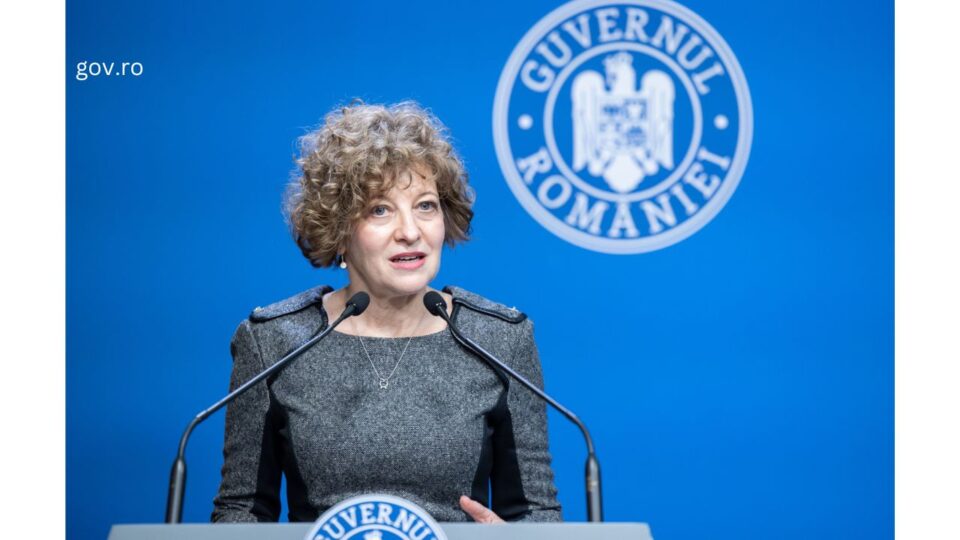
Romania has made significant headway in the past 20 years, but its growth model, based on cheap labour force, the attraction of European funds and the money sent back home by the Romanians working abroad, has reached its limits, the Romanian deputy Prime Minister, Oana Gheorghiu says. Part of this money will disappear this year as the National Plan of Recovery and Resilience ends on August 31.
The money coming from the Diaspora, which in the past decade exceeded 52 billion Euros, is also expected to diminish against the background of the shrinking standard of living across Europe. In this context, the Romanian Deputy Prime Minister says the state has to take major steps towards reforming its structures and for this reason it needs funding.
Oana Gheorghiu: “Romania needs investment and foreign capital. And for this I believe it has to achieve three things: to reform state companies, to enter the OECD and apply what we learn from this organisation, and the third element is the financial-budgetary discipline and stability. The foreign capital doesn’t look only for opportunities; it also takes into account the stability and risks. And here Romania has many steps to take.”
As for Romania’s OECD accession, Bucharest says this project is about to complete this year. The accession coordinator, diplomat Luca Niculescu says the statute of OECD member entails a series of significant advantages.
Luca Niculescu: “More foreign investment and of better quality, because there are big investment funds, which are interested just in OECD members, access to the world’s best statistics and data, higher visibility as we are going to sit at the same table not only with European countries but also with many other states from all over the world, and I would say greater influence for Romania at global level.”
Before its OECD accession, Romania needs to overcome a period of uncertainties and according to Finance Minister, Alexandru Nazare, the real test of the country’s economic leadership is its capability of maintaining the fiscal trajectory and the deficit targets assumed at international level without causing difficulties for companies or social shocks.
The problem of the Executive in Bucharest is that the measures adopted to balance the economy and curb the budget deficit are causing discontent among the people. Only a couple of days ago thousands got involved in a series of protests. Among them there are the employees of the Damen Mangalia shipyard, who hadn’t got their salaries in three months. And also those from the Lupeni mine, disgruntled with the decision to have their contracts’ extended for four months only. Or those from Azomureş, who are afraid of losing their jobs as the aforementioned fertilizers plant is in full process of getting a new owner. All of these are taking place against the background of the latest price hikes caused by the rising fuel prices in a country, which is among those with the lowest incomes in Europe, with the third lowest minimum salary of only 795 Euros and the second lowest average pay of 13.6 Euros per hour.
(bill)