Steps towards a unified salary law
A draft unified salary law is under public review in Romania, as required under the National Recovery and Resilience Plan.

Corina Cristea, 08.05.2026, 14:00
One of the most important administrative and economic reforms in Romania since its accession to the European Union, the Unified Salary Law primarily targets the establishment of a unified and coherent wage system for all employees in the public sector, in order to reduce inconsistencies between public institutions and budget areas.
The first attempts at reform came in 2009-2010, but it was only in 2017 that the Parliament of Romania endorsed the legislation that replaced previous wage systems and introduced a unified grid for employees in the public sector, including education, healthcare, administration and justice.
Medical personnel were among the main beneficiaries of wage increases, in an attempt to curb migration to Western European countries. Teachers are also among those who benefited from significant wage increases after 2017, although trade unions claim wages remain below the EU average and not enough to attract young people to the system. This is just one example of dissatisfaction with the current legislation.
Although it is based on several fundamental principles, such as fairness, transparency, hierarchy and budget sustainability, in practice several difficulties arise, such as persistent salary disparities between institutions, excessive increases of certain bonuses, a major impact on the state budget, inconsistent enforcement and many court cases. Which is why a new salary reform was planned, even included as a milestone in the National Recovery and Resilience Plan (PNRR), which makes substantial funds conditional on this legislation.
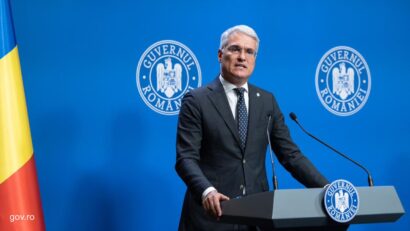
The steps to finalise and promote the new draft, currently under public review, continue even in the context of the political instability in Romania these days, the interim minister of EU funding and labour, Dragoş Pîslaru, promises.
The new law is set to take effect on January 1, 2027, and the minister says the bill needs the broadest possible political support, because it cannot be promoted by an interim government under an executive order, but can only be endorsed by Parliament as a bill:
Dragoș Pîslaru: “Together with a World Bank team, we have drafted a short two-page document with the principles and essential elements as a foundation for this bill, for which, as I have previously announced, I want there to be a broader political agreement to prove that there is a parliamentary majority ready to support it. At this moment, the Government is unable to pass emergency orders any longer. Therefore, the only framework in which we can pass it is a bill or a parliamentary initiative. In terms of time, my hope is that after things cool down, next week we can have a response from the parties on this list of principles.”
He added that once the law is endorsed, the “key equation” is related to the existing fiscal space and the required budget appropriations. What we need to do is to learn from the mistake that Romania made when it endorsed a Pension Law that was not sustainable, with increases that could not be borne by the state budget and which translated into an increase in the budget deficit, Dragoș Pîslaru explained. (AMP)