Shoulder to Shoulder for the Same Mission
In Sibiu, at the Headquarters Multinational Corps South-East, Romanian and Allied troops work side by side to strengthen security on NATO’s eastern flank
Agenția Media a Armatei, 13.05.2026, 14:36
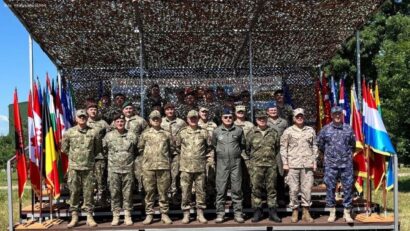
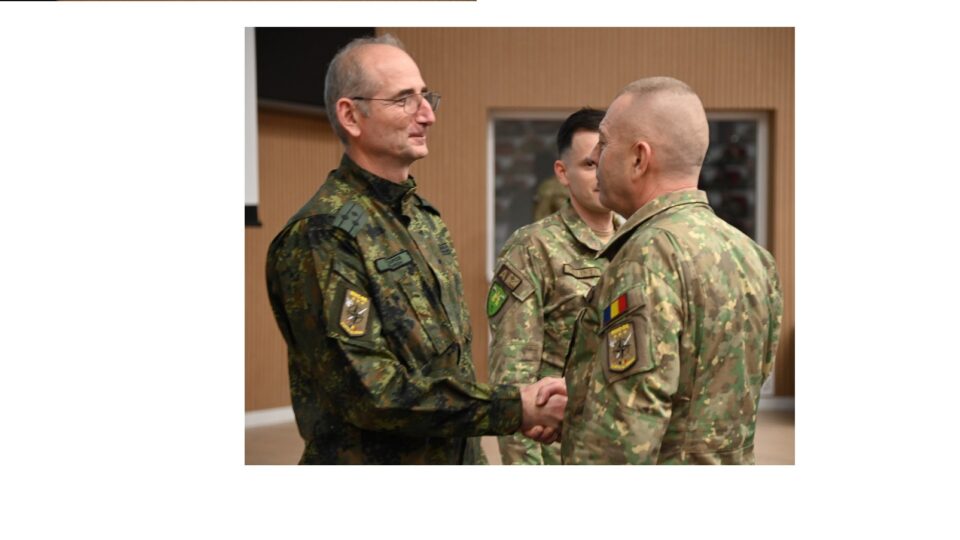
Some partnerships are built through documents and strategies. Others are built day in and day out, in briefing rooms, on training grounds, and in missions carried out together. In Sibiu, central Romania, within the Headquarters Multinational Corps South-East, Romanian and Allied troops work side by side to strengthen security on NATO’s eastern flank. And for those who arrive here from other NATO forces, Romania often becomes more than a place to work. It becomes an experience that changes their perspective.
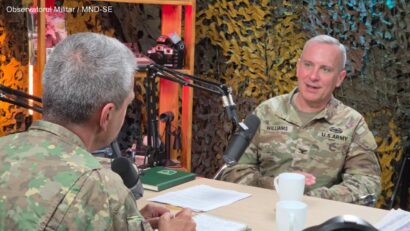
Colonel Gaydarov, from the Bulgarian Army, is on his second tour in Romania and coordinates the training and exercises activity within the Sibiu command: “This is my second tour in Romania and I can say that this collaboration is excellent. It is based on the professionalism of the Romanian military, on their desire to learn and improve themselves permanently. It is a true honour to train together and fight shoulder to shoulder with the Romanian military.”
The Eastern Flank today means more than just Allied troop presence. It means interoperability, joint drills and the ability of troops from different states to act as one team. “One of the most important assets is the military education system. As a specialist in the field of training and exercises, I highly appreciate the way Romania manages this sector. You have military high schools and universities, and after graduation you continue to provide courses and training programmes for soldiers and officers. Another very important point is upgrading, and Romania consistently carries on in this direction. This is based not only on military leadership, but also on political and social support,” the Bulgarian officer believes.
In an increasingly complex regional context, continued training and the experience gained in Allied structures become essential. And the progress of the Romanian military within NATO is evident, says Colonel Gaydarov: “When I worked with the Multinational Division, I worked alongside Romanian soldiers, officers and NCOs. After three years, many of them were deployed on foreign missions, gained experience in various NATO structures and organisations, and now they are here again, promoted as majors, lieutenant colonels or colonels. The best example is our commander himself: when we worked together he was a lieutenant colonel, then he became a colonel, and now he is a three-star general and group commander. This is how I see the strength of the Romanian Army.”
Beyond the military activity, the experience of a mission abroad also means direct contact with the people, culture and everyday life. And for the Allied soldiers deployed in Romania, this experience leaves beautiful traces, the Bulgarian officer added: “Being deployed here, in Sibiu, is an extraordinary opportunity for me and my family to travel and better discover the culture of this region – Transylvania – but also the south of Romania. Every time we go to Bulgaria we pass through Craiova, an extraordinary city. My children study in a Romanian school, they learned the Romanian language and now they study here. The experience changes your perspective and the way you understand the country and the people. It is a change for the better.”
On the Eastern Flank, Allied cooperation means exercises, training and constant preparation. It means multinational structures, know-how exchanges and soldiers who learn to act together, regardless of the uniform they wear. But beyond all this, there is also the human component. In Sibiu, at the Multinational Corps South-East, this collaboration is seen every day. And for many of the NATO military personnel who arrive in Romania, the professional experience ends up being doubled by a personal one – one that gradually changes their view of the country, the people, and the role that Romania has in NATO’s security architecture today. (AMP)