Political crisis in Romania: PSD will not vote the Mureșan Cabinet
Negotiations to form a stable majority behind Prime Minister-designate Siegfried Mureșan have hit a dead end.
Corina Cristea, 22.09.2026, 13:50
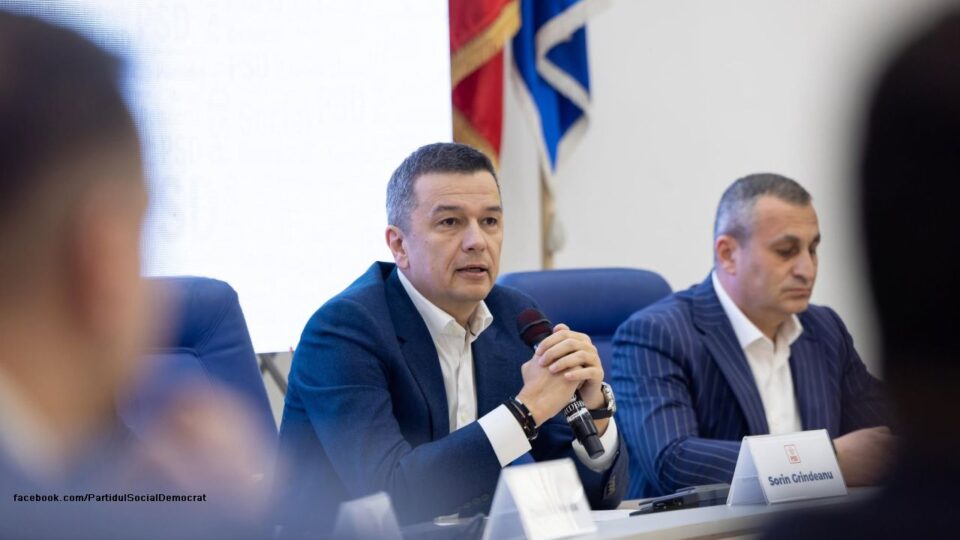
Following a two-hour meeting, the opposition Social Democratic Party, which holds the largest number of seats in the Romanian Parliament, announced it will vote against the government led by National Liberal MEP Siegfried Mureșan. PSD leader Sorin Grindeanu labeled the proposed cabinet “Bolojan 2.0”, pointing to the policies of former Prime Minister Ilie Bolojan. Dissatisfaction with those very policies led the Social Democrats to walk out of the ruling coalition with PNL, USR, and UDMR last spring, triggering the no-confidence motion that brought down the previous government.
Grindeanu said that PSD will not support a cabinet that continues on Bolojan’s trajectory, though he noted a willingness to talk if Mureșan incorporates PSD’s 10-point plan into the government program:
“If he wants to discuss with us, he needs to explain how he can incorporate into the government program the 10 recommendations we voted on in Sinaia. Since his nomination, I haven’t heard Mr. Mureșan mention these things or even indicate that he will consider PSD’s proposals. Our primary concern is policies that serve the Romanian people”.
In a swift response on social media, the Prime Minister-designate argued that PSD has no interest in resolving the country’s political crisis, noting that the party rejected his cabinet before even reviewing its program or engaging in dialogue.
Despite the opposition, Siegfried Mureșan remains determined to present his government program and cabinet list to Parliament, even without the 233 votes required for confirmation:
“We will seek Parliament’s vote for several reasons. First, so the public knows what we are proposing for Romania—a modern state, a reformed central public administration, efficient local governance, and restructured state-owned enterprises. Second, to show citizens how every lawmaker and parliamentary group votes. And third, out of respect for Romania’s Constitution and the President; a nomination procedure must be treated with seriousness”.
Mureșan is currently short by 64 votes, as the three parties supporting him hold just 169 seats combined. The task appears nearly impossible—especially as UDMR warned it will withdraw its support if confirmation relies on votes from extremist parties.
Meanwhile, the Alliance for the Union of Romanians (AUR), which was excluded from coalition talks, reiterated that it will not vote for any government it is not a part of, insisting that early elections are the only way out of the current political stalemate. (VP)