History and tradition in Alba County
Alba County is a destination with a rich cultural heritage
Daniel Onea, 24.09.2026, 14:15
Alba County is a destination with a rich cultural heritage, which includes sites on national cultural routes. The historical richness and diversity of attractions in the region make it a landmark on the tourist map of Romania. Ioana Mirca, an inspector with the Alba County Council’s Tourism Department, gives us an overview of the cultural heritage that attracts visitors:
Ioana Mirca: “The anthropic potential has translated, first of all, into an incredible legacy, with the county of Alba enjoying as many as 4 UNESCO monuments: the Dacian Fortress of Căpâlna, the rural site of Câlnic, the Mining Cultural Landscape of Rosia Montană and the Frontiers of the Roman Empire in Dacia (the LIMES). All of these are destinations in themselves for tourists. The County of Alba also has the advantage of multiculturalism and of important historical meanings that have led to the development of cultural tourism products intertwined with certain tourist sites or destinations. We’re talking about a number of themed routes. The Apuseni Transcultural Route partly overlaps the Trans-Apuseni Highway. The National Unity Route 1848-1918-1922 includes cities of great historical importance, such as Alba Iulia or Blaj. Also, the Icon Road makes a journey through the most representative religious sites in the county. We should also mention the Via Aureae Route, which includes the Roșia Montană Mining Cultural Landscape, as well as the Alba Regalis Route, which traces the footsteps of the former sovereigns of Romania”.
These cultural routes inevitably lead to the historic heart of the region. The emblem of the county remains, without a doubt, the city of Alba Iulia, with its impressive architecture:
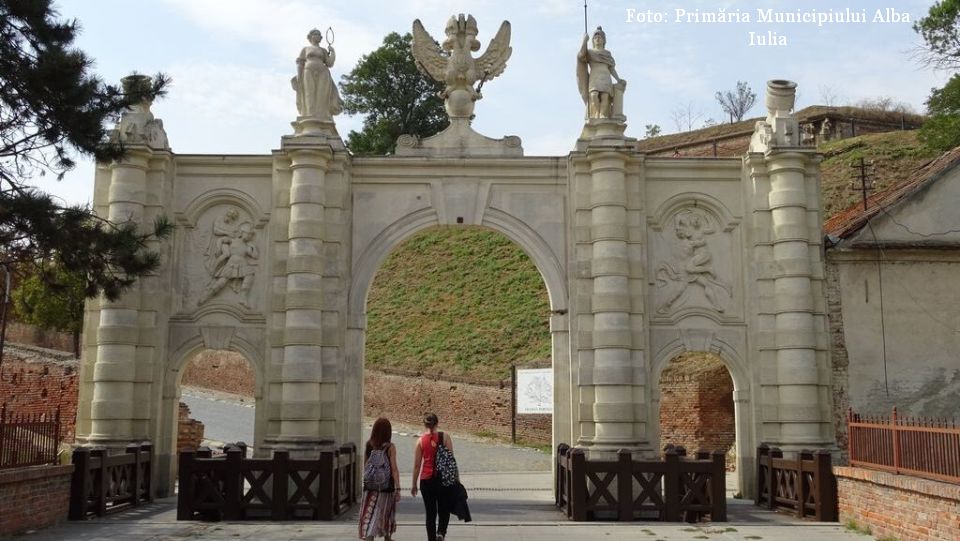
Ioana Mirca: “By far the city’s main attraction is the Carolina White Citadel. Here tourists are fascinated with the history of the largest Vauban fortification in Romania. With a 7-corner star shape and with a perimeter measuring no less than 12 km, the city walls are a kind of red giant, surrounded by ditches that have become an ideal place for a promenade. The fortification’s 7 access gates take pride of place. Four of these are recognized as some of the most imposing and elegant gates ever built in Europe. In fact, the entire fortress is regarded as a unique example of European military architecture. We invite tourists to the fortress to admire and photograph the unique monuments in Transylvania, which today make up the already famous one and a half kilometres long Route of the Gates.”
Beyond the massive walls and ditches turned into esplanade areas, a vast open-air museum is hosted inside the fortification. The concentration of religious and cultural edifices gives visitors a complex insight into the past:
Ioana Mirca: “As for the historical monuments and symbols, most of them are concentrated in the heart of the city, the place most popular among tourists from many countries. Everything here is steeped in history. Two cathedrals of splendid architecture stand out here: the Coronation Cathedral and the Roman Catholic Cathedral. Adding to them are the city’s emblematic museums, namely the Hall of the Union and the National Museum of the Union. Visitors can also discover the Route of the Three Fortifications, viewed by specialists as unique in Europe. The list also includes the Palace of the Princes of Transylvania, along with outstanding statues and monuments. But newer museums are as much a tourist attraction as the old ones. Some examples are the Principia Museum which is, in fact, an excellent use of the Roman castrum of Apulum, and Museikon, a museum of icons, viewed as the most valuable and comprehensive museum of religious art in Romania. Last but not least, Alba Iulia also breathes history through its historical reenactment shows, specifically Roman Apulum Festival which includes reenactments of the battles between Dacians and Romans. At the same time, viewers can witness the reenactment of the Uprising led by Horea, Cloșca and Crișan, the events of December 1, 1918 and the story of the Coronation of King Ferdinand and Queen Marie. All these events attract an impressive number of tourists”.
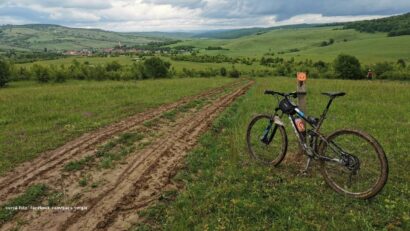
The year 2026 also brought new prospects for visitors. The exhibitions at the Palace of the Princes of Transylvania have been extended and diversified, EU funding has been channelled into spa and leisure infrastructure, and the extensive “Velo Apuseni” cycling route has been developed. These active and sustainable tourism initiatives make the natural transition to the picturesque side of the county, the countryside. An example of good practice in preserving traditional architecture are the communities at the foot of the Trascău Mountains, as explained by Ioana Mirca, from the Tourism Department of the Alba County Council:
Ioana Mirca: “Alba County takes pride in Rimetea, chosen as the destination of the year 2025 in the category of fairy tale villages. Everything here is authentic. From the spectacular landscapes and unparalleled vistas provided by Piatra Secuiului, to the rows of white houses with green shutters and consistent architecture, everything makes Rimetea one of the few villages in Romania that has preserved its original appearance. Piatra Secuiului, the most representative natural tourist attraction in the area, is the ideal place for hikers, but also for the more adventurous tourists, who practice paragliding. Another attraction in this village is the Ethnographic Museum, which houses a whole history of the crafts and traditions of this community, from blacksmithing and furniture painting, to the beautiful folk costumes that have amazed tens of thousands of tourists who have crossed its threshold. The cuisine is one the memorable experiences that Rimetea offers. Local dishes can be served in most guesthouses around here. Rimetea is the monument village in Romania where the locals’ hospitality together with the unique traditions and culture of the community creates the ideal place for an unforgettable experience”.
Whether we are talking about fortifications unique in Europe, cycling routes or the tranquillity of a traditional village with impeccably preserved architecture, Alba County today offers a complete itinerary. A visit here is a chance to discover a living heritage, which is constantly developing and is within reach for both Romanian and foreign visitors. (AMP)