Coliboaia Cave, on the road to UNESCO recognition
Work has been underway to prepare the UNESCO file for Coliboaia Cave, in Bihor County, since 2017.
Ana-Maria Cononovici, 29.09.2026, 14:00
Work has been underway to prepare the UNESCO file for Coliboaia Cave, in Bihor County, since 2017. The documents were finalised and then revised repeatedly, so that, three years ago, it returned to the attention of the National Heritage Institute. The institution submitted the file to UNESCO, which accepted it on April 15 2026 year and published it on the official website. Thus, for Coliboaia Cave in the Bihor Mountains, known for its cave drawings that are over 30,000 years old and being among the five oldest caves in the world, this is the first step towards official recognition as a World Heritage site. Specialists consider the discovery one of the most important in Europe in the field of Paleolithic art.
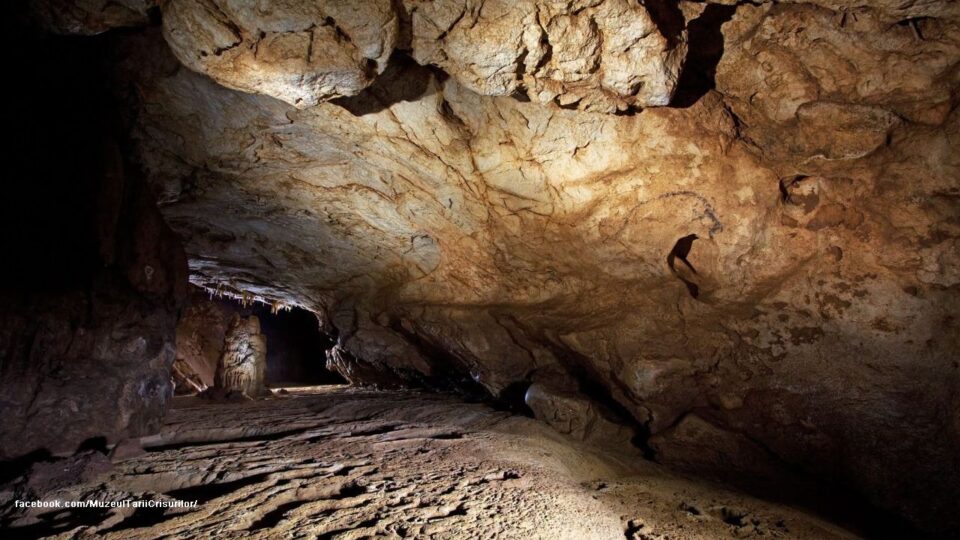
Located in the village of Câmpani, on the upper course of the Sighistel Valley, at an altitude of 550 meters, the cave has over 1,066 meters of mapped galleries and a 15-meter drop. Although mentioned in the specialist literature since before 1900, Coliboaia cave was only explored in 1981. Dr. Călin Ghemiş, archaeologist at the Criş Country Museum, directly involved in explorations, studies and documentation of the prehistoric site, told Radio Romania International:
“The Coliboaia Cave was discovered in September 2009. It contains nine drawings. Practically, from the point of view of art history, seven of them are sketches, more schematic renderings of some prodromes, and two of them fall into the category of drawings themselves, they are of a horse and a bison. From an archaeological perspective, they are extremely important for the prehistory of Transylvania and implicitly of Romania. They are important primarily because of their age, with the oldest dating sometime around 36 thousand years ago. From another point of view, that of art history, they are some of the oldest representations in the world. They are among the first five discoveries of this kind. They tell us a lot about communities whose main means of subsistence was hunting. They tell us about the animals that these communities hunted, with depictions of horses, bison, cave bears, and very probably, a woolly mammoth. There’s also a galloping horse, a very suggestive image. They tell us a lot about the beliefs of these hunting communities and about the fact that this part of the cave was intended for magical and religious practices.”
Although UNESCO’s inclusion could bring fame and funding opportunities for the area, experts rule out the possibility of opening the cave to the general public. Microclimate monitoring has shown that the mere presence of a few people changes the temperature in the gallery and can affect the wall paintings. Dr. Călin Ghemiş explains:
“From a tourist point of view, it depends on the local public administration, the Bihor County Council, respectively the Local Council of the Câmpani village. As we have seen in other cases in Europe, many of these caves are not open to visitors themselves. There is an extraordinary case, that of the Chauvet cave, in France. The cave was discovered in 1994 and for almost 20 years work has been done to reconstruct the cave on a 1:1 scale. This is an exceptional case. But there are also cases where small and elegant museums have been set up near the cave. That would be a starting point. On the other hand, it will not be open to visitors either from the point of view of the microclimate in the cave, because that each cave, whether larger or smaller, has its own microclimate and each change, such as in temperature, creates chain reactions that can a negatively affect the drawings.”
The gallery of drawings, considered the most valuable area of the cave, is approximately 50 meters long and is located about 770 meters from the entrance. Researchers believe that, in the past, a large part of the cave was decorated, but floods and geological changes have erased many of the representations. In addition, because they were sealed for tens of thousands of years, any change risks damaging the drawings. The negative experiences in the Lascaux and Altamira caves, in France and Spain, respectively, where uncontrolled tourism affected the cave paintings, represent a clear warning for Romanian specialists. Dr. Călin Ghemiş, archaeologist at the Criş Land Museum, added:
“It would be preferable to organize such a museum that would mean a lot to the local community. Some of these drawings can be seen in our main exhibition, in the Criş Country Museum Exhibition in Oradea, precisely in order not to negatively impact these small but spectacular works of art.”
Like other caves of this type. Coliboaia Cave remains closed to the public to protect the heritage. Instead, researchers propose the creation of a visitor center or museum near the Sighistel Valley, where the drawings and atmosphere inside the cave would be recreated. Such a project could transform the area into an important cultural and tourist spot, following the model of some communities in France that developed around Paleolithic sites.