Political expectations from the new Prime Minister
The main political forces in the Romanian Parliament are awaiting the program and the cabinet's structure before they can decide whether to give their vote of confidence to the newly Prime Minister-designate.
Ştefan Stoica, 07.10.2026, 14:00
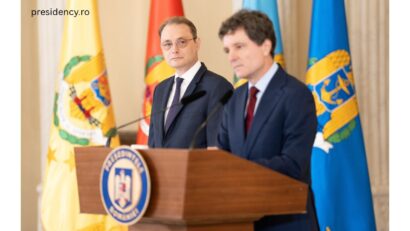
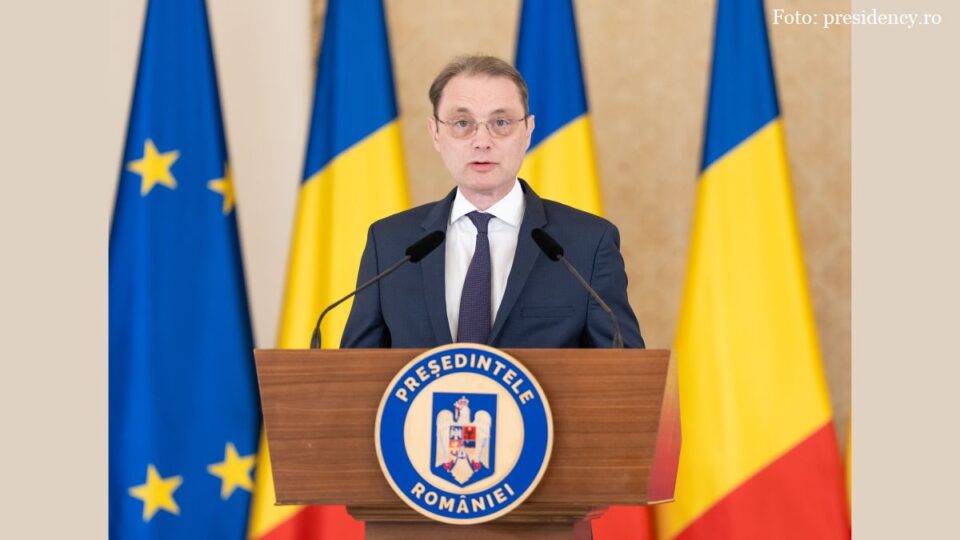
The designated Romanian Prime Minister, Luca Niculescu, a journalist by training and a diplomat with no political experience, faces a difficult mission, that of gathering a majority of 233 votes favorable to the governing program and the list of ministers, still undefined. This is so that Romania does not record its fourth unsuccessful attempt to have a fully empowered government, following the dismissal of the PNL-USR-UDMR cabinet led by Liberal Ilie Bolojan, through a motion of no-confidence, five months ago. Luca Niculescu has invited the parliamentary parties to discuss the creation of a majority. He has received a free hand from President Nicușor Dan to negotiate either a political cabinet, a technocratic administration or a mixed formula.
The Social Democratic Party (PSD), the largest faction in Parliament and co-initiator, alongside the nationalist-populist AUR, of the motion that toppled the Bolojan government, has granted its leadership a broad mandate to negotiate with the designated Prime Minister. Disappointed that he was not personally tasked with forming the cabinet, PSD leader Sorin Grindeanu said that his party’s participation in governance depends on the acceptance of measures prepared by the Social Democrats. The primary condition is a fundamental shift in the administration of the country and the economy, Grindeanu said. According to him, the Social Democratic Party cannot grant a blank check, nor can it participate in a political construction lacking solid foundations.
The National Liberal Party (PNL) announced that it is awaiting the governing program and the proposed team from the designated Prime Minister before making a decision. However, PNL has drawn a clear red line, stating it will not accept the participation of PSD in governance.
Similarly, the Save Romania Union (USR) has not yet reached a decision on whether to support the future cabinet, remaining on standby for the program and ministerial team. Nevertheless, party president Dominic Fritz reaffirmed that USR will not vote for a government featuring PSD ministers or one controlled by the party.
The Democratic Alliance of Hungarians in Romania (UDMR) insists on resuming collaboration between PSD and PNL, arguing that neither party can be absent from the structure of a stable future majority. In the view of party leader Kelemen Hunor, the designated Prime Minister will attempt to secure backing from both PSD and the Liberals. For UDMR, supporting any government formula backed by political forces it considers extremist is entirely unacceptable.
The Alliance for the Union of Romanians (AUR), ranking second in Parliament and currently excluded from calculations for a parliamentary majority, announced it will not support a future government and is instead advocating for early elections, noting that recent opinion polls place it in a leading position. On the other hand, AUR argues that the president is overstepping his constitutional prerogatives through the informal safety net he is attempting to impose around the main self-described sovereignist party. AUR is currently gathering signatures for the suspension of President Nicușor Dan. (VP)