The Guilty – when art refuses to pass a verdict
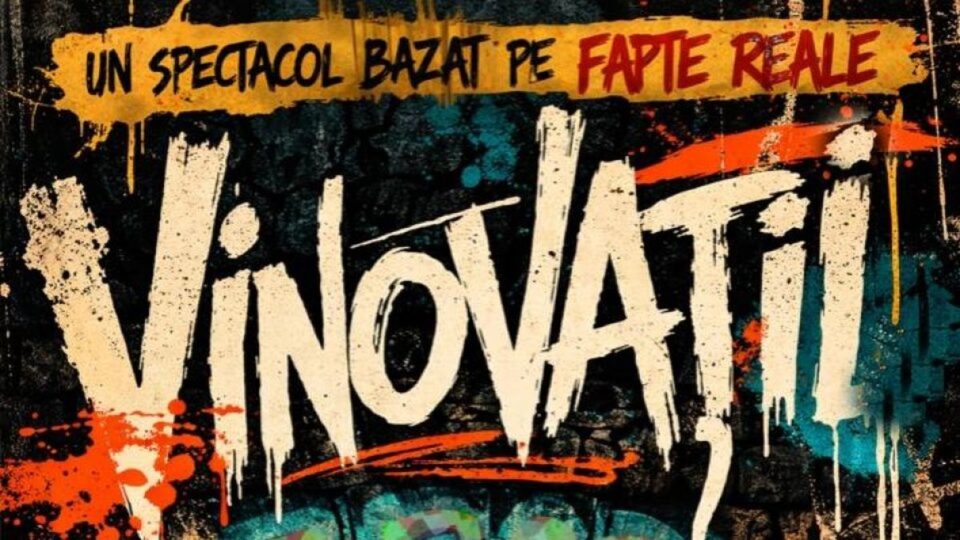
The Guilty, a new production of the National Radio Theatre, is based on a crime committed by a teenager this year and has shocked Romanian society.
Corina Sabău, 14.11.2026, 14:00
“The Guilty” (Vinovații), a new production of the National Radio Theatre, starts from a crime committed by a teenager earlier this year, a case that shocked Romanian society, and explores, from various perspectives, the worlds of both teenagers and adults in an attempt to understand that really happened. The production, created by Ilinca Stihi, has also earned some international attention, being selected for the Prix Europa, and becoming a finalist in the Prix Italia competition, in the Radio & Podcast Drama category. A central theme of the work is the breakdown in communication between generations and the influence of the online environment. For Ilinca Stihi, who wrote and directed the piece, the challenge was finding the necessary distance to examine this case, and, more importantly, the issues it reveals:
“When I began staging the production, the events were still very recent and their impact on me was profound. I was glad that I managed, surprisingly quickly, to achieve a certain sense of detachment. However, what I believed would be the main challenge turned out to be only the first of many. I am very pleased that managed to create an opportunity to engage with the audience. In fact, this was one of my goals when I started working on this production together with my team. We wanted to ensure that an event of such magnitude, which had a significant impact on Romanian society, would not be forgotten too soon. Especially since this subject allows us to discuss many of the issues facing Romanian society today.”
While journalism can present facts and identify those at fault, theater aims to go further, exploring the underlying causes and the questions that lie behind them. This is a point emphasised by the production’s producer, Oana Cristea Grigorescu:
“I believe that when you engage with a theatrical work, whether it’s a stage production or an audio drama for the broader public, you should be left with certain questions. Questions that, above all, encourage you to resist the urge to pass judgment too quickly. In Romanian society, especially on social media, there is a reflex for aggressive expression. It’s not necessarily about anonymity, but rather about a form of indirect communication where we aren’t face-to-face with the other person. This distance seems to make it increasingly easy to abandon empathy and view situations in black-and-white terms, without any attempt at contextualisation. Perhaps this is precisely one of the purposes of art: to challenge us, to pose questions that we carry with us and continue to reflect on. It helps us step into the characters’ shoes, to try and understand what drove someone to act in a certain way or to make a certain decision.”
In order to bring these different worlds together, director and screenwriter Ilinca Stihi also developed a language that would speak about teenagers without looking at them from a distance or condescendingly. This change in language is not, in Ilinca Stihi’s view, just a matter of vocabulary. The way we communicate online is also changing the way we build relationships, emotions, and even the way we perceive reality. Ilinca Stihi
“I set out, in a way, to find a new form of writing dialogue. My initial question was very concrete: if you have a dialogue scene and you transpose it into the online environment, how does it sound? And I wondered how these disembodied voices can develop the dialogue and gradually increase tension. For this was their theatrical purpose. And I realized that an element that I found particularly interesting in this process was the function of the timers attached to the messages. We go from ten hours to eight hours, then we reach intervals of a few minutes. This rhythm contributes to building tension.”
“The Guilty” does not, therefore, try to provide an explanation for an extreme case, but to look beyond the verdict at the way generations communicate, at the influence of the online environment and at the responsibility of adults to stay close to a world that, sometimes, they no longer understand. The show can be listened to online, on the website of the National Radio Theatre.