The Debate over Romania’s Local Government Reform
Nearly 430 localities in Romania now have fewer than 1,500 residents. Many struggle to cover their running costs from their own revenues. They could be merged if the government manages to pass its proposed reform of local government
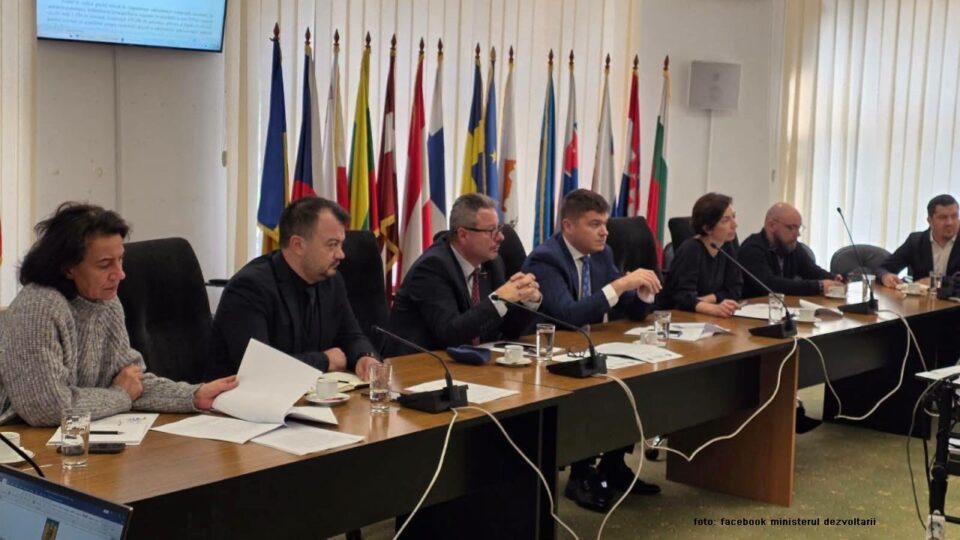
Roxana Vasile, 25.11.2026, 13:24
Nearly 430 localities in Romania now have fewer than 1,500 residents. Many struggle to cover their running costs from their own revenues. They could be merged if the government manages to pass its proposed reform of local government.
Romania needs a major overhaul of the way local government is organised. The current system no longer reflects how people live and work in twenty-first-century Romania, or the country’s place in Europe.
The system dates back to 1968. Since then, the way people move around, the main centres of economic activity and the country’s infrastructure have all changed dramatically.
For a variety of reasons, many communes and small towns now have few residents. Only a small share of local authorities can genuinely support themselves financially. The rest rely on money from the state budget.
Splitting local government into so many small administrative units, known in Romania as UATs, also leaves those authorities with less capacity to do their job. That makes it harder for them to secure funding from national or EU programmes and to manage it effectively.
Merging local authorities could cut bureaucracy and save the national budget billions of lei, according to estimates. That money could go towards healthcare, education or infrastructure. Mergers could also narrow regional gaps. Decades of fragmentation have widened the gap between Romania’s major cities and its villages, communes and small towns. A reform along European lines would aim to bring them closer together socially and economically.
That’s the backdrop to the public debate that has emerged as 2026 draws to a close. The reform is already part of the programme of Romania’s current government, which is dominated by the Social Democratic Party, the PSD.
Dragoș Benea is a member of the European Parliament and leads the party’s working group on the reform.
“We need a leaner system, with fewer town halls and lower running costs. Once the reform is in place, we expect local authorities to be much better equipped to do their job. They should be able to offer better services and qualify for EU or state funding they can’t get under the current system because it’s so fragmented. And perhaps most importantly, we’ll be able to narrow the gap between more developed communities and those that have fallen behind.”
Romania will keep its existing categories of villages, communes, towns, cities and counties. The reorganisation would substantially reduce the number of town halls, with the first mergers focusing on places with fewer than 1,500 residents.
To decide whether a local authority can continue to operate on its own, officials will look at population size and trends, economic development, accessibility, administrative capacity, connectivity and local public services. They’ll consider, among other things, the powers of the local administration, which investment projects it has carried out, how effectively it collects taxes, and how far residents have to travel to reach public services.
Development Minister Alexandru Stoica says the reform would take place in two stages. After 1 March 2027, the government plans to make its bill to reorganise local government a matter of confidence. Under the bill, mergers would become compulsory for the localities concerned. Until then, the government is counting on voluntary mergers and plans to encourage them with financial support, incentives and bonuses. Here’s Alexandru Stoica.
“In the first stage, through to 1 March 2027, we’re talking about voluntary mergers. People in places that choose to merge would get tax breaks of up to 50 percent on buildings and land within the built-up area. There would also be an investment programme covering roads to link communities, water and sewerage, gas supplies, medical centres and schools. Mayors need to go out and talk to people in their communities. They need to explain clearly what the Ministry of Development and the government can do for them if they choose to merge, and how it could help their community develop. It’s the town hall administrations that would merge. Someone would still be based in the local town hall to handle any issues residents bring to them. We’ll take a careful approach.”
Some local elected officials have reservations about voluntary mergers. Alfred Simonis, president of the National Union of County Councils of Romania, or UNCJR, raised those concerns with the government.
“In Timiș County, in western Romania, we proposed a pilot scheme. We set aside between 10 and 20 million lei for each new commune created through a merger. We had some initial talks and took a few tentative steps, but things stalled. There’s no public support for this. People say they’re in favour of mergers in general, but when it comes to their own commune, they don’t want it to happen. We do need some kind of administrative reform, some mergers and some savings. There are several ways to go about it. But a voluntary merger, a voluntary reform, whatever you want to call it, just isn’t going to happen. If we can find other ways to bring prosperity to those communities, good. Otherwise, we should at least make better use of the money the existing authorities spend.”
Hundreds of local authorities in Romania are currently unable to cover their running costs. Some can’t even pay the utility bills for schools and hospitals without extra help. Alfred Simonis says it’s up to the government to find a legal way to fund those authorities or to take the bull by the horns and go ahead with the mergers. Otherwise, it’s local people who’ll be left dealing with the problems. (MI)