
RRI Live!

Listen to Radio Romania International Live

Stray Dogs in Romania

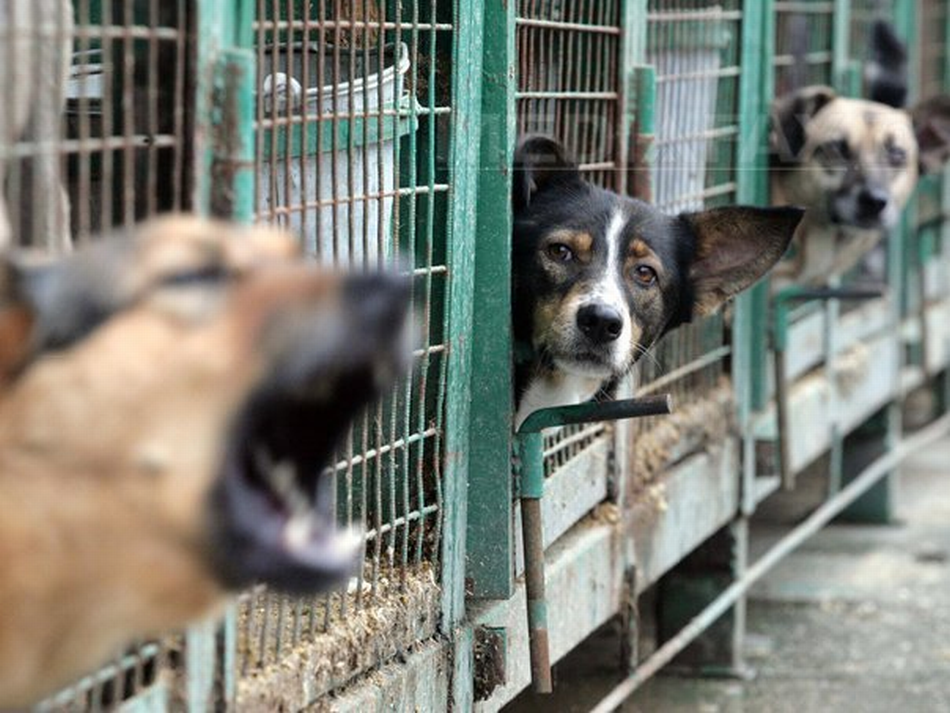
Stray dogs are associated with poor living conditions, disease and unsafe streets.
Stray Dogs in Romania

, 16.09.2013, 14:18

Politically correct language has turned the terms for stray dogs in Romanian into ‘dogs without an owner’ and ‘community’ dogs. Irrespective of the name, they are a still a problem for Romania, starting from the inability of the authorities to properly regulate the issue and the lack of will to enforce them.


Stray dogs are associated with poor living conditions, disease and unsafe streets. The issue was not dealt with even when they killed people. They stayed on the streets, with no one taking responsibility for them. Historian Contanta Vintila-Ghitulescu from the Nicolae Iorga Institute of History in Bucharest told us about stray dogs in the 19th century:


Contanta Vintila-Ghitulescu: “Stray dogs have been an issue for Romania forever, and in the 19th century there was talk for the first time of eliminating them. Until then, the problem was partly due to the fact that households did not have clear limits, such as fences, and so household dogs became everybody’s dogs. Bucharest and Iasi back then did not have clearly delimited households, like now, and that was true of Europe in general. The first document I found dates back to 1810, when the Russians, who occupied the Romanian Principalities after the 1806-1812 war with the Turks, saw the dogs all over the streets and hired people to round them up and kill them. Then they issued announcements to tell people to keep their own dogs chained in their courtyards, lest they be hunted down. After the Russians left in 1812, the measure fell. However, when cities started being reorganized by the French model in 1850, it came back. In the countryside, however, dogs are everywhere people are.”


For foreigners, the sight of stray dogs everywhere was shocking. Constanta Vintila-Ghitulescu says that packs of dogs ruled the cities after nightfall:


Contanta Vintila-Ghitulescu: ‘The consuls of Great Britain and France, present in Bucharest and Iasi until 1859, talk about being unable to walk the streets at night because of the dogs that were everywhere. There is an 1850 testimonial talking about the dogs on the Dambovita. Why there? Because it was the place where there were a lot of slaughterhouses and tanneries. These small businesses threw every piece of refuse in the river, and a lot of dogs ate what they threw away. Taking a walk there was bordering on suicide. In 1852, cities started issuing ordinances against stray dogs. The first shelter was built because the sight of killing them was gruesome. The first humanitarian arguments also emerged against the public killing of dogs.”


Stray dogs have actually killed people in recent history, and the problem was exacerbated by the issue of rabies and the aggressiveness it causes.


Contanta Vintila-Ghitulescu: “You can find in an old newspaper testimonies about rabid dogs, who attack anyone they meet, in cities or villages. You can see how serious the problem was from the many recipes against rabies. The problem was compounded by wolves. In the countryside, especially in the mountains, wolves were a constant presence, especially in winter, in addition to rabid dogs. Dogs are especially aggressive during epidemics, when food is scarce. The spectacle is atrocious, because in times when the plague hit, people were buried even before they were dead. People were so scared that they wanted to get rid of the sick people even before they died of the disease. As I said, the spectacle was horrible: dogs were pulling out corpses out of the ground and dragged them all over the streets.”


In all subsequent historical periods, Romania failed to deal with the problem of stray dogs. During communism, the population of stray dogs exploded as the authorities razed whole neighborhoods to erect blocks of flats, and this issue continues.


History Show
The History Show Monday, 02 March 2026

170 years since the emancipation of the Roma

On February 20, 1856, the Romanian society took a major step towards modernization by freeing the Roma from slavery. A very sensitive chapter of the...

170 years since the emancipation of the Roma
Lo scultore Frederic Storck
The History Show Monday, 23 February 2026

150 years since the birth of Constantin Brâncuși

For Romanian culture, February 19, 2026, is a very important date, as it marked the 150th anniversary of the birth of Constantin Brâncuși, a...

150 years since the birth of Constantin Brâncuși
Union Day (Photo: facebook.com/mapn.ro)
The History Show Monday, 16 February 2026

Union of Romanians

The union of the Principalities of Moldavia and Wallachia on January 24, 1859, was one of the three great moments of Romanian history in the 19th...

Union of Romanians
History Show
The History Show Monday, 09 February 2026

Christian fellowship and survival in prison

The Romanian Church United with Rome, or the Greek Catholic Church, was established in the late 17th and early 18th centuries, during Austria’s...

Christian fellowship and survival in prison
The History Show Monday, 02 February 2026

Romania and Third World national liberation movements 

  The trends in international relations after World War II were decidedly oriented towards decolonisation and encouraging former colonies to...

Romania and Third World national liberation movements 
The History Show Monday, 26 January 2026

The war in Transnistria

The collapse of the Soviet Union in 1991 opened the way for the independence of all its former members, with the Republic of Moldova becoming an...

The war in Transnistria
The History Show Monday, 19 January 2026

The 1960s and the revival of the Romanian diplomatic service

After 1945, Romania entered a period of profound political, economic and social turmoil. Defeated in the war and occupied militarily, it was forced...

The 1960s and the revival of the Romanian diplomatic service
The History Show Monday, 29 December 2025

Women – The Enemy of the People

The expression “enemy of the people” entered Romanian public life with the establishment of the communist regime imposed by the Soviet army....

Women – The Enemy of the People

Partners

Muzeul Național al Țăranului Român Muzeul Național al Țăranului Român
Liga Studentilor Romani din Strainatate - LSRS Liga Studentilor Romani din Strainatate - LSRS
Modernism | The Leading Romanian Art Magazine Online Modernism | The Leading Romanian Art Magazine Online
Institului European din România Institului European din România
Institutul Francez din România – Bucureşti Institutul Francez din România – Bucureşti
Muzeul Național de Artă al României Muzeul Național de Artă al României
Le petit Journal Le petit Journal
Radio Prague International Radio Prague International
Muzeul Național de Istorie a României Muzeul Național de Istorie a României
ARCUB ARCUB
Radio Canada International Radio Canada International
Muzeul Național al Satului „Dimitrie Gusti” Muzeul Național al Satului „Dimitrie Gusti”
SWI swissinfo.ch SWI swissinfo.ch
UBB Radio ONLINE UBB Radio ONLINE
Strona główna - English Section - polskieradio.pl Strona główna - English Section - polskieradio.pl
creart - Centrul de Creație Artă și Tradiție al Municipiului Bucuresti creart - Centrul de Creație Artă și Tradiție al Municipiului Bucuresti
italradio italradio
Institutul Confucius Institutul Confucius
BUCPRESS - știri din Cernăuți BUCPRESS - știri din Cernăuți

Affiliates

Euranet Plus Euranet Plus
AIB | the trade association for international broadcasters AIB | the trade association for international broadcasters
Digital Radio Mondiale Digital Radio Mondiale
News and current affairs from Germany and around the world News and current affairs from Germany and around the world
Comunità radiotelevisiva italofona Comunità radiotelevisiva italofona

Providers

RADIOCOM RADIOCOM
Zeno Media - The Everything Audio Company Zeno Media - The Everything Audio Company
























