Early Romanian statehood
The Romanian medieval state was established in the second half of the 14th century, long after other European states had emerged. Historians say the delay was caused by an unstable political, economic and social context that was highly influenced by migra
Steliu Lambru, 30.09.2013, 15:18
The Romanian medieval state was established in the second half of the 14th century, long after other European states had emerged. Historians say the delay was caused by an unstable political, economic and social context that was highly influenced by migrations.
The Romanian settlements, just like those of the Northern Slavs were constantly exposed to the destabilizing incursions made by barbarian invaders from Asia.The beginnings of the principality of Wallachia, stretching between the Southern Carpathians and the Danube, which will be the nucleus of the Romanian state founded in the second half of the 19th century, are still unclear and quite controversial, because of the lack of information.
The big number of more or less credible theories that circulate simultaneously make it difficult to understand this long and complicated process. The latest theory regarding this issue, supported by Romanian historian Neagu Djuvara, is the one according to which the Cumans, a Turkic nomadic tribe, contributed to the establishment of Wallachia.
Historian Matei Cazacu, a researcher of the Middle Ages with the “Centre National de la Recherche Scientifique” in France and a lecturer with the Paris-based “Institut National des Langues et Civilisations Orientales” has told us more about the archaeological finds that are relevant to the birth of Wallachia.
Matei Cazacu: “Archaeological diggings in Curtea de Arges and Campulung have brought to light houses belonging to the princely family and the nobility as well as a 13th century church. These discoveries helped us learn more about the rulers of that time. They had been living in oral societies, that had not developed literacy until the 13th century. It was only in 1204, when crusaders occupied Constantinople and these territories were included into a huge papal strategy of integrating the pagan and the schismatic inhabitants living North and South of the Danube that we learned about the existence of Wallachian rulers. They were Romanians, Orthodox believers and lived in houses made of wood and stone. The Cumans and the other nomadic tribes lived on the banks of the Danube and of its small tributaries, where they left traces of their existence. A total of 13 graves were found across Wallachia, most of them being grouped in the eastern part of the territory. This is one more proof in support of the theory that the center of the Cuman power was somewhere in the East, in today’s Dobruja and southern Bessarabia. If the Cumans had founded Wallachia, Curtea de Arges, located in the Carpathians, wouldn’t have been its capital city. In another move, the Romanians call this principality ‘Muntenia’, deriving from the word ‘munte’, which is ‘mountain’ in Romanian. Literally, ‘Muntenia’ means ‘the country of the mountain people’. In the same line of thought, it’s very likely that the Cumans would have picked Lehliu or Caracal as their capital city, as these two places were located in the area where the Cumans are supposed to have lived.”
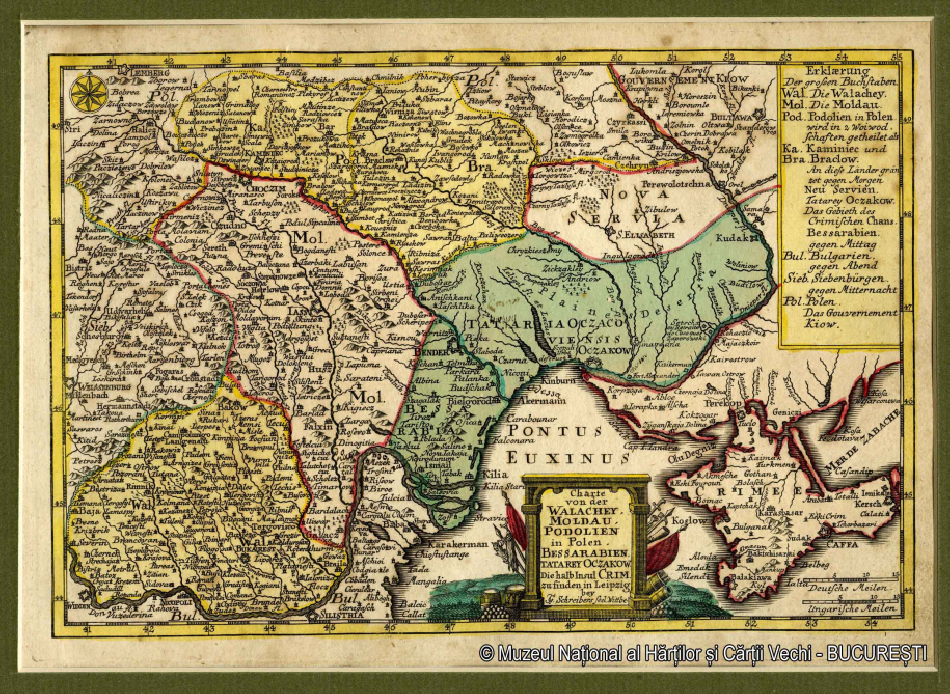
The theory, most historians seem to have agreed on, is that there were two historical states in Wallachia (in the southern part of today’s Romania): the Northern Subcarpathians were controlled by the Romanian elites, whereas the Southern Danubian region was controlled by the Cumans. The maps mention the name “Cumania” for eastern and southern Wallachia.
Historian Serban Papacostea has told us more about this exonym: “The entire area stretching from the Olt River towards the east is named Cumania, in West European geographical documents, written in Latin. It is from the area made up of today’s Arges County and the region of Oltenia that the expansion of the Romanian state, founded by Basarab I, started. We are not talking about its origin, but about the key role it played in the history of the Romanian state. The expansion of the Romanian state started in the 13th century, towards the east, towards an area defined by the Western geography as Cumania. Using the traditional Turkic assignment of colours to the cardinal points, White Cumania was the area located in the west and Black Cumania was the North-Pontic area in the east. The process started in 1211 when the Teutonic Order conquered large territories in the Carpathians. It was continued in the 14th century by the anti-Tartar alliance between the Kingdom of Hungary and the Kingdom of Poland, jointly with the son of ruler Basarab. This alliance pushed the Mongolian Empire from the Russian steppe towards the east. The Wallachian regions east of the Olt river and Moldova were known as Black Cumania.”
The emergence of the medieval state of Wallachia during the last quarter of the 13th century and the 14th century is the result of the influence of the local people and of the barbarian invasions during the migration period.