Romania and Post-Colonial Africa
A focus on Romanias efforts in global efforts to decolonize Africa.
Steliu Lambru, 18.11.2013, 12:59
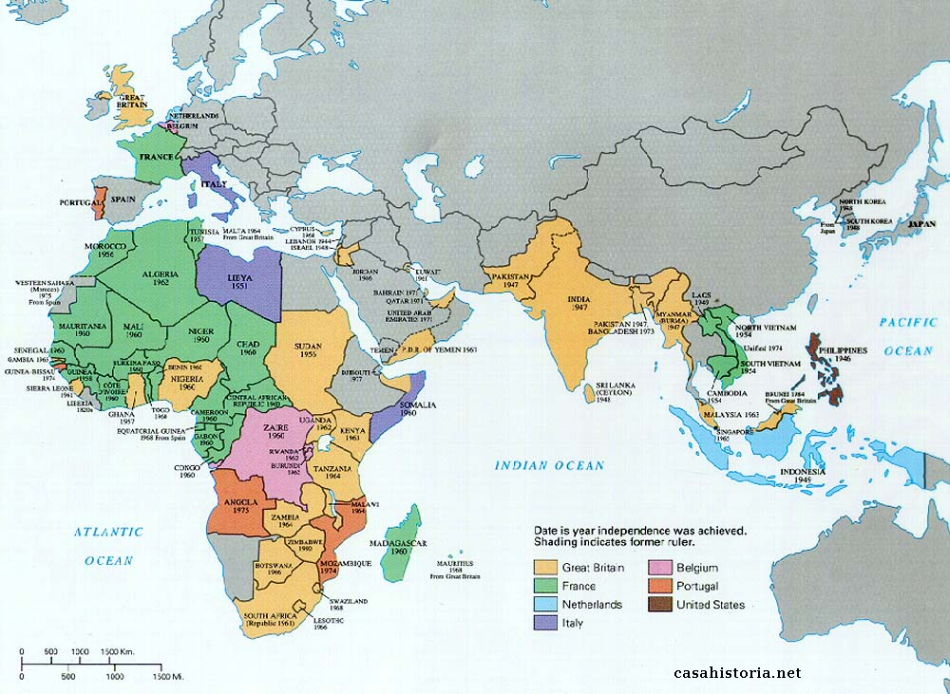
After 1945, decolonization became the main trend in international relations, as colonial domination started falling out of fashion fast. Decolonization, however, sparked violence and civil wars between factions trying to impose their own model of post-colonial development.
Africa’s break with its colonial past was supported by the USSR and China, communist countries seeking to control spheres of influence against capitalism. In most African colonies war was waged between communist guerrillas armed and financed by the communist bloc, who refused to negotiate with the other political groups. Like other communist states, Romania got involved in decolonizing Africa, trying to find an independent solution and betting on the unaligned movement, of which it was a part. Mircea Nicolaescu was ambassador in a few African and South American countries, and was a member of the Romanian delegation to the UN in the Decolonization Committee. In a 1996 interview with the Center for Oral History of the Romanian Broadcasting Corporation, he spoke of this issue:
“Romania’s relations with the former colonies were intense, even before WWII. They became even more intense after the war, especially as Romania tried to present itself to the world as an independent country, with its own politics, seeking alliances and common interests. One of the points in the agreements struck with those colonies, then countries, was their freedom, their right to choose their own path of development. The problem of the domestic system was always a part of our foreign relations documents.”
In case of civil conflicts, the solution chosen by Romanian diplomacy was of equal distance, of not taking sides.
“I Cairo there were few embassies visited by representatives of African freedom movements. All the liberation movements, irrespective of their political color, had a residence in Cairo in 1961-64. Both sides, the communist and the rightists, visited only a few embassies equally, that of Romania and those of two or three other countries. The Soviets had their clientele who supported the socialist regime. The Chinese also had their clientele, not to mention the Americans. The British and the French were compromised, and had less. Romania was the only country to make friends on both sides in civil wars such as in the Congo, Angola, Mozambique, Kenya, Zimbabwe. We always provided an open channel, but told them that it was their own business to sort things out.”
The African independence supported by Romania was not to the Soviets’ liking. It was also not realistic, and proof of that is its reduced impact, as Mircea Nicolaescu told us.
“When Angola proclaimed its independence, the Soviets called a meeting of all socialist embassies to agree on sending greetings to the new president elect. Romania’s representative, ambassador Gheorghe Stoian, was the only one to disagree, and went ahead of everyone to express his support for Angola’s independence. As long as the turmoil in that country lasted, we kept in touch with both movements when called upon, and always advised them to reach an agreement. The Soviets supported one side, the Americans the others, the Chinese sided with the Americans, and that caused a war. That was not the case of Tanzania, where domestic forces were mature enough to keep their distance from either side.”
Mircea Nicolaescu also referred to Africa’s peculiarities, which led to failures such as that in Algeria.
“In terms of the vision regarding the decolonization process, there is a rift between Arab Africa and Black Africa. You cannot say that Africa is strictly black or Arab anywhere. The Saharan area is an area of mutual influence. It is hard to make a historical separation as well. One of the states that proclaimed its independence was Algeria. There are few colonial areas of the world which were included in a country’s national area, such as Algeria, which was removed as an entity, and broken into three departments of France. One of the resounding failures of the communist system was Algeria, because it did not understand that it was about the independence of a people, not of three French departments.”
Romania’s involvement in the decolonization of Africa also meant choosing a direction without a future in diplomacy. In the 1980’s, isolated from the Western political world, and kept at arm’s length by the Socialist countries, the diplomacy of the Ceausescu regime relied a lot on relations with Africa.