The Art and Magic of Cooking in 18th Century
Cooking has a magical component that has been an interesting topic for historians, folklore researchers and anthropologists, who have assigned it cultural value
Steliu Lambru, 20.03.2017, 14:26
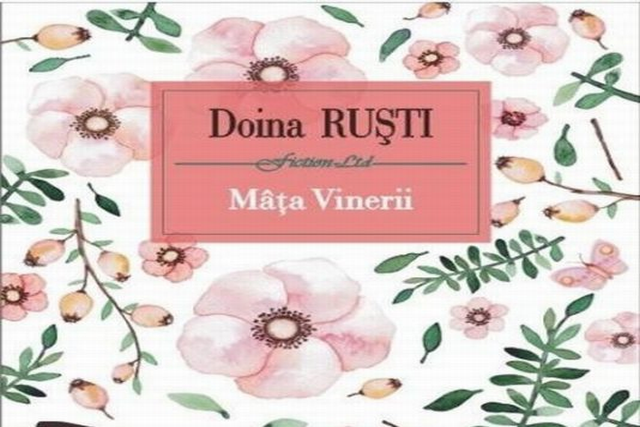
The magical dimension of spices, and culinary art secrets were present in the Romanian late 18th Century and early 19th Century cuisine as well, and their presentation, especially when accompanied by a good storyline, makes a particularly interesting reading today. Doina Rusti writes historical fiction, and her latest book, “The Friday Cat, is about history, magic, collective mind-frames and culinary art at the turn of the 19th Century. As it usually happens, the book is rooted in Doina Rustis archive research.
Doina Rusti “I found a document dating back to the rule of Constantin Hangerli, which mentioned a famous cook, who was so good that people fought over his services. He was a short Gypsy man, a slave owned by Ecaterina Greceanu. His name, according to the document, was Vasile sin Andreica, which means he was the son of Andreica, and born on the Greceanu estate, therefore rightfully owned by this family and impossible to displace. Nonetheless, Hangerli, a foreigner who had taken the throne only two months before, got hold of this cook and refused to let him go. Taking a slave away from his master was unprecedented, and Ecaterina Greceanu, who was an important person herself, started a trial over this. Hangerli brought in witnesses, who told the Metropolitan Bishop, who was trying the case, that the cook was treated very badly and was miserable with the Greceanu family. Hangerli claimed he had only meant to rescue the cook and that he was even willing to trade two other slaves for him.
So what was so fabulous about the food cooked by this Vasile sin Andreica, to make the ruler of the country keep him at his palace and to have his former owner regret him enough to go to trial? There were many documents written about him, he was worth the price of two men, and the Metropolitan Bishop himself got involved in the dispute.
Doina Rusti: “I started to think about the extraordinary dishes he might have cooked, about Ecaterina Greceanu who was left without a cook and was willing to raise money to get him back. And while I was thinking about it, I happened to meet an author who had just written a book on insects, and I remembered my youth, when I used to dive into medieval zoology books. This writers dilemma was this: although he had written a scientific book, he was thinking about including some recipes from naturalist Conrad Gessners writings. And I suddenly realized that many of those recipes were already in my grandmas kitchen. And that, in fact, everything that can be found in witchcraft books is not entirely unknown to regular people. This is how I began working on the list of recipes, called ‘The book of evil dishes that is the core of this book.
The oldest Romanian cookbook is kept at the National Archives and dates back to the rule of Constantin Brancoveanu, in the early 18th Century. Doina Rusti browsed it and was inspired by the old Romanian cuisine.
Doina Rusti: “Romanian cuisine has many interesting dishes, most of which are based on minced meat and nuts and honey for the sweet dishes. During the time of the Phanariot rule and the reign of Brancoveanu, minced meat balls were very popular. Crayfish balls, for example, used to be served sprinkled with plum vinegar or rose vinegar. Moussaka-type dishes were also very popular, and there was a tradition, which we still have, to cook stuffed chicken or duck, with the filling being in fact a kind of meat ball containing all kinds of spices. Meat would always be marinated in honey and cinnamon. Any type of steak would have a sweet ingredient added to it, whether honey or sugar. The mixture of sweet, sour and hot used to be a characteristic of Phanariot and Romanian cuisine.
Doina Rustis character is based on herself, her readings and her own memories. The author thus becomes a narrator, a character, a historian, a witch and a culinary artist.
Doina Rusti: “The main character is a woman who remembers an event that took place when she was young, a recollection reinforced by her cultural background. My intention was to create an educated protagonist who knew Latin and Old Greek, as I did when I was an adolescent. Using her knowledge, she learns magic, Sators magic, and, using her familys inheritance, writes a book of evil dishes that drives the people of Bucharest mad. The cook abducted by Costas, as Hangerli is named in the book, comes into the possession of that book and everything he cooks at the palace is also cooked by the people of Bucharest. Without knowing it, he bakes a rose cake that makes people laugh, but which turns into a disease and drives everybody mad. In this atmosphere of uncontrollable euphoria, all the recipes from the book of evil dishes start floating in the air.
Doina Rustis book is about the encounter between science, fiction and magic.