Romania-Poland Centennial
Romania and Poland had aligning interests after 1918
Steliu Lambru, 18.10.2021, 13:31
By the end of WWI, the map of Eastern and Central Europe looked very different than it had been. The Ottoman, Russian, and Austro-Hungarian empires had broken apart, and national states replaced them. The Great War had left over 10 million dead, and even though it was a detestable war, the losers imagined policies to recover territories lost in the conflict. The winners, on the other hand, tried to form alliances to prevent another war. That failed, and the new war pitted against each other most of the same old adversaries.
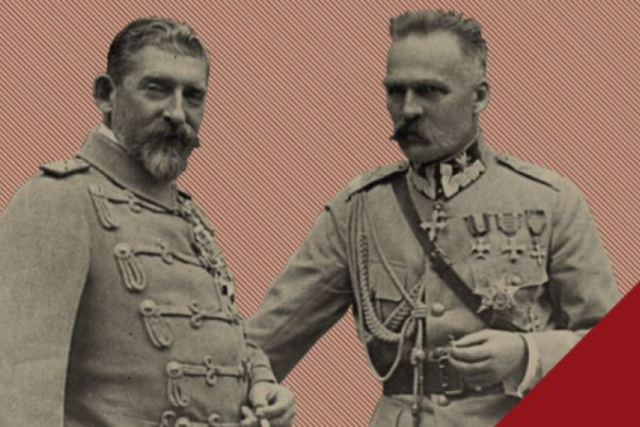
Romania and Poland had aligning interests after 1918. They became even closer, especially since they once again shared a border, easing relations that were going back to the Middle Ages. Historian Ioan Scurtu told us how this closer relationship worked after 1921:
“The 1921 convention was military, and it provided for mutual defense in case of unprovoked attack coming from the Soviet Union. Poland had faced Soviet Russian and Ukrainian forces, and needed such a treaty with Romania in order to gain support, on the one hand. On the other, it needed a friend to the south, and Romania needed one to the north. The two states shared common interests, especially since the province of Moldavia and Poland had long been neighboring states.”
Romania and Poland needed recognition, which could be helped by a regional cooperation policy. The second prop for this recognition was the promotion, in Europe, of the principles of the Society of Nations, which centered on consolidating peace. Based on the idea that peace is safeguarded by preparations for war, this Romanian-Polish cooperation was built around the military convention, which got renewed in 1926. Ioan Scurtu told us what it was about in a nutshell:
“The convention provided for issuing a document regarding military cooperation between the two countries. Several meetings were held between the general staff of the two states in order to lay out the concrete details. In the meantime, in 1926, this convention was renewed in a formula that said that the two states shall support each other in case of unprovoked attack. They removed the provision that explicitly referred to attack from the eastern borders, meaning the ones with the Soviet Union. The discussions went towards finding means to collaborate militarily on all borders.”
However, this cooperation between Romania and Poland would become complicated, as Ioan Scurtu details:
“Poland had a territorial dispute with Czechoslovakia, which had become an ally of Romania under a separate treaty. For that reason, military plans could not be seen through, reaching concrete results, such as joint maneuvers. Poland and Czechoslovakia had been reborn, but the leaders of the two states differed on what it meant to be a first line ally. When Romanian Foreign Minister Take Ionescu proposed in 1919 the formation of an alliance linking the Baltic Sea and the Black Sea, neither Poland, nor Czechoslovakia accepted. The disputed region between the two was very rich in coal deposits. At that time, coal was crucial. Czechoslovakia also had problems on the border with Hungary, while Poland didnt, so the latter had no interest in working with Czechoslovakia in a situation that could have led to antagonizing Hungary.”
The European diplomatic shift in the mid-30s led to shifts in perception, in the context in which France and Great Britain guaranteed post-WWI peace treaties, and tried to appease a more and more aggressive Nazi Germany. Poland sought to secure its borders, as it was caught between Nazi Germany and the Soviet Union, inheritor of Czarist Russia, both countries having previously crushed Poland in 1795. Here is Ioan Scurtu:
“Polish diplomacy explored, and at some point managed, to form close relationships with the Soviet Union, to reach a sort of non-aggression pact. It also managed to form a similar pact with Germany in 1934. The two states, Poland and Germany, committed to operate according to the Paris Convention of 1928, which ruled out war as a means to settle differences between states. Against this background, Polish Foreign Minister Beck ran a lively campaign against Nicolae Titulescu, the president of the Society of Nations, who aimed at forming a collective security system aimed at Germany. In the end, history proved that this policy was a failed one. Poland was attacked by Germany on September 1, 1939, and by the Soviet Union on September 17 that same year.”
Unfortunately, both Romania and Poland would fall victim to the Ribbentrop-Molotov pact, the first in 1939, shortly after the treaty was signed, followed by Romania in the summer of 1940. In honor of the old friendship, Romania helped Poland move to the West the remnants of its army, their political leadership, and their treasury.