Parents and educators against cyberbullying
27% of the Romanian children and teenagers say that, on a regular school day, they spend more than 6 hours online
România Internațional, 09.06.2021, 12:40
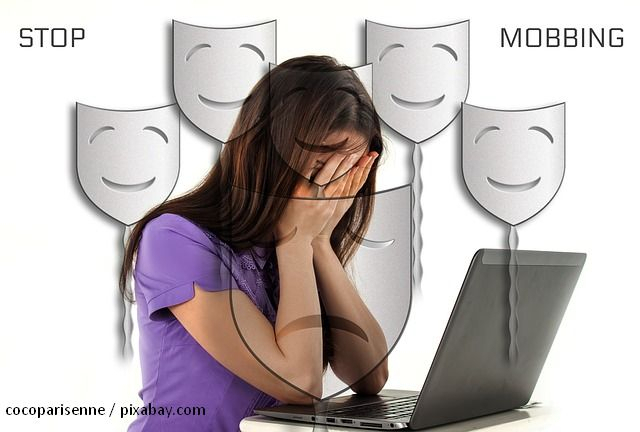
27% of the Romanian children and teenagers say that, on a regular school day, they spend more than 6 hours online and constantly check the devices they use to navigate the internet. The time spent on the internet, however, is not always happy time. On the contrary, one of the sociological surveys conducted by Save the Children Organization shows that 61% of the respondents, mostly girls and high-school students, have experienced uncomfortable situations while on the internet. The main types of information that make children feel uncomfortable are those with violent content, inciting to violence or with explicit sexual content. Many times, such violent content is part of online harassment or cyberbullying.
The phenomenon has proliferated in Romania in recent years, adding to the already existing physical bullying in schools. Starting with mean comments about physical appearance or behavior and ending with stealing and distributing personal photos or videos, the already classical forms of cyberbullying have been affecting Romanian children and teenagers for a long time now. And they are the more dangerous as technology advances, as Razvan Deaconescu, from the Faculty of Automatics and Computers of the Bucharest Polytechnics told us:
I think cyberbullying as a method is the same: with anonymous messages, with posted movies, with theft of private photos. But as technology changes, new means of harassment emerge. For example, until two years ago I did not know about Tik Tok, I don’t know it existed actually, but now it is very present in the virtual environment and is a good way to have things go viral. A message that to some is a joke, for others is not a joke, and it ends up being massively distributed. So, the forms of cyberbullying are about the same, but their range of action is diversified due to new technologies. A new means of transferring images appears, a new way of communication, a new app. All these widen the distribution range, but the forms of harassment are the same, such as, for example, acting anonymously to offend someone on a constant basis. Also, what happens is that as the world is more connected and more present online, viralization is more pronounced and here the difference somehow appears between physical bullying and cyberbullying. It’s a bigger impact: physically, bullying is limited to 3-4 people, while in the virtual environment, the whole world can participate. If you have a very strong viralization potential through YouTube, Tik Tok or other networks, there is nothing left to do.
If the real harassment is easy to notice, the virtual one is more insidious and sometimes, at least at the beginning, it can be mistaken for a joke. How do we differentiate between online jokes and harassment, we find out from Mihaela Dinu, the coordinator of the counseling center for parents and children within the Save the Children Association:
The difference would be this: in cyberbullying there is intention and repetitiveness when targeting a person. It is true that there is an imbalance of power there, as we find it in the phenomenon of bullying in school. That would be the major difference. A joke does not cause long-term suffering, discomfort and trauma, it is meant to make one feel good. Cyberbullying does not have this fun component. Even if some think they make good jokes or if, at first, harassment can be interpreted as a joke. However, if there is repetitiveness and intentionality aimed at someone, it is clearly bullying. At first glance they may seem light, they do not affect us and we can get over them. Adolescents are very vulnerable, but they can distinguish a joke from cyberbullying, they realize when they feel humiliated, uncomfortable and start asking questions. It is often a label assigned to a child or a group of children and which causes discomfort, sadness, social withdrawal and even serious mental problems. As the World Health Organization has warned, bullying along with violence is one of the main factors leading to suicide among adolescents. So things can get very serious.
Online harassment can have other effects too, as Mihaela Dinu told us:
Anxiety is quite common, in various stages. We are talking here about cognitive impairment, low concentration capacity in relation to school, behavioral problems, eating disorders that lead to bulimia, sleeping problems, and many more.
Recently, a law has been adopted to combat harassment by which schools and educators are obliged to take certain measures to prevent and counteract the phenomenon, including its online manifestations. However, it is also up to the parents to intervene at the right time. It’s not easy, though, because, often, even communicating with one’s own children is difficult in such cases. Mihaela Dinu tells us why:
One first reason would be their emotional state. They feel awkward, harassment makes them experience shame, anxiety and sometimes they don’t even know how to tell adults. It’s not necessarily that they don’t want to, they just don’t know how to start the conversation, how to get to that point conducive to communication. Then the children think they can solve their own problems. Even if they do not verbalize this state, from a behavioral point of view there are some changes: they will withdraw, they will avoid talking on the phone or using the computer. Parents should be able to notices these behavioral changes. The child may get shy and reluctant to connect with the online environment. There are other situations in which younger children, pre-teens or older schoolchildren somatize these feelings: they have headaches, stomach aches, sometimes a fever, which do not have organic causes, but emotional ones. The parent should be able to decode them. We need to teach them to surf the internet and tell them about the dangers there. We can’t forbid them, but we can keep an eye on them. There is a difference between supervision and control.
Unanimously, experts believe that there is no magic solution to protect children from cyberbullying. There is no red button on the computer or phone which we can press and stop harassment. What helps is approaching the child and perseverance in communicating with them. (MI)