Pro and Against Nuclear Energy
50 heads of state and government from across the world recently met in the South Korean capital Seoul in an attempt to find means to encourage the use of nuclear energy for peaceful purposes and to restrict the terrorists access to this form of technolog
Eugen Cojocariu, 29.04.2012, 18:35
50 heads of state and government from across the world recently met in the South Korean capital Seoul in an attempt to find means to encourage the use of nuclear energy for peaceful purposes and to restrict the terrorists’ access to this form of technology.
The talks focused on two issues: the safety of the nuclear power plants and their normal functioning in exceptional situations, and secondly, nuclear security and restricting access to radioactive and nuclear material.
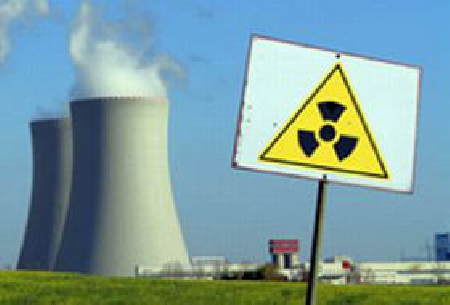
But how does nuclear energy work when used for peaceful purposes? The reactors convert the energy produced by nuclear fission, the process of splitting the nucleus of an atom, into heat. The heat is used to produce steam, which runs turbines to generate electricity. The problems appear when the radioactive material in the reactor core is released into the environment, as was the case in Fukushima in 2011, and on a larger scale, in Chernobyl in 1986. Coal, gas and oil are also not safe, being the cause of tens of thousands of deaths every year. The Romanian expert Teodor Chirica, a member of the executive board of the European Atomic Forum in Brussels, says all forms of producing electricity imply certain risks:
“There is no form of technology, be it nuclear, conventional or renewable, that doesn’t have its risks. Nuclear energy also implies risks, but what’s important is how you control these risks. The use of nuclear energy reduces reliability on the hydrocarbons produced in areas that are either under strong political control or politically unstable. As for environmental protection, nuclear power doesn’t cause carbon dioxide emissions, so it doesn’t contribute to the greenhouse effect. With regard to economic efficiency, this form of energy is the second most efficient after hydropower.”
We asked Teodor Chirica whether the public should worry about radioactive waste:
“We have the necessary technology to store this type of waste in the safest possible conditions. Moreover, the amount of such waste is lower compared to the waste caused by conventional industries. One such example is the waste coal and ash produced by thermal power plants using inferior fuels.”
Borbala Vaida, the head of the National Commission for Nuclear Activities Control, explains that everything is also under control when it comes to nuclear security:
“To prevent the proliferation of nuclear weapons, we wanted that all research reactors and the reactors producing radioisotopes for medicine and industry to use low-enriched uranium which cannot be used to make nuclear weapons. These highly enriched materials must be repatriated to their countries of origin. In the case of Romania, the country of origin is the Russian Federation. There, they can provide maxim security conditions for these materials and, in keeping with international conventions and treaties, they will not allow for this material to be used for destructive purposes, only for civilian use. In Romania we only have low-enriched uranium at the research reactor in Magurele.
We are in line with the European Union policy and guidelines and have carried out all so-called stress tests, which have proved that Romanian reactors are robust and can withstand extreme situations. To improve their security and safety even more, measures have been taken to make reactors cope even better with disasters such as we had in Fukushima. I’m referring in particular to the control of the hydrogen in the reactor.”
The safety of nuclear power stations is constantly improving. Borbala Vaida tells us that nuclear energy is indeed risky, but that nuclear industry is subject to highest regulation and control of all industries:
“There are many bodies working together to prevent accidents. It’s true that a nuclear accident may have disastrous cross-border consequences but this is precisely why there is international cooperation to minimise risks in this sector. There are many states that have not yet managed to convert their research reactors and haven’t signed the treaties and conventions in the field. These treaties contain obligations, which, once accepted, make these aterials secure everywhere in the world and contribute to global peace.”
Romania opened its first nuclear reactor of Soviet production in 1957 as part of the Institute for Atomic Physics in Magurele, in the southeast. In 2002, the reactor was closed down permanently. At the moment, Romania has two working nuclear reactors at the Nuclear Power Station in Cernavoda, in the southeast, which provides about 18% of the country’s energy demand. The plant’s first reactor became operational in 1996, followed by another one in 2007. There are plans to build two more reactors by 2019.