Victory Road, a journey into the history of a princely street
An overview of the history of one of Bucharest's oldest and busiest arteries
Ion Puican, 28.12.2024, 14:00
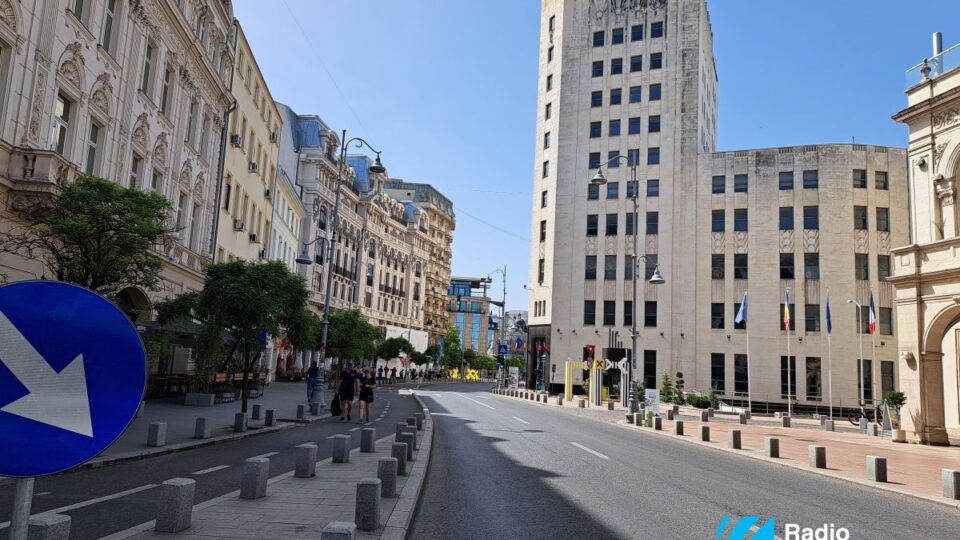
Perhaps the most famous road in Bucharest is Victory Road – an important artery in the center of the capital, which stretches from the United Nations Square to Victory Square (where the Romanian Government building is located) and has a length of 2,700 meters. Victory Road is one of the oldest arteries of Bucharest. Before the reign of ruler Constantin Brâncoveanu (1654-1714, reign between 1688-1714), the artery did not exist, being partly called Brașov Road and another section being known as Big Street. The union of the two roads resulted in today’s street in 1692, opened by Prince Constantin Brâncoveanu under the name of Mogoșoaia Bridge – this was a princely street, ensuring the connection between the prince’s estate in Mogoșoaia and the princely palace near the Old Court, at the end of the street. Thus, the new artery becomes the main road in the capital. It is along this street that boyar houses, churches, inns (which will later become hotels), shops, luxury stores, cafes, restaurants or state institutions would be erected. The street initially had wooden sleepers, and later it was paved with stone. In 1882, the first electric street installations appeared in front of the Royal Palace on Victory Road. The name “Victory Road” was given to this street after the Romanian army made its triumphant entry into the capital on this road on October 8, 1878, after the victory in the War of Independence (1877-1878).
More about the rich history of this old princely street from the coordinator of the Department of Modern and Contemporary History at the Bucharest Municipality Museum, Camelia Ene:
“This name, “Victory Road”, an incursion into the history of a princely street, may seem at first glance, an outdated topic. But it is not, because it is a very important artery of the city, the first south-north axis of this important settlement, loaded with history. Victory Road has a name with a special resonance. It simply refers to the victory that the Romanian armies obtained in 1878, following the War of Independence. But Victory Road is much older. It is the first road traced during the reign of Prince Brâncoveanu, who managed to unite portions of the slums located on winding streets, as foreign travelers said, and go to Mogoșoaia, the place where he built a palace, his personal estate. There had to be a connection between the Royal Court and his house, his residence, but of course it also passed near the houses of his byzades or sons”.
What is the present-day outlook of this road? Camelia Ene compares it to an elegant lady:
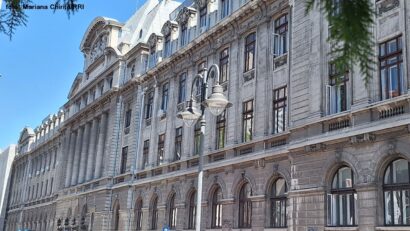
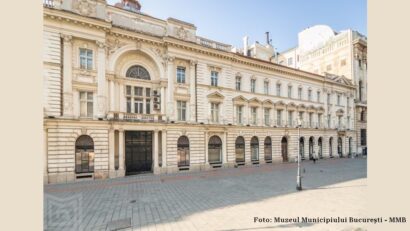
“Today, Victory Road is a street that, when we walk on it, burdened with personal problems, we probably forget to see the beauty of the buildings. I consider it an elegant lady because it shows us so many architectural styles that blend together, the taste that the commissioners had for Western architecture. We have eclectic, French, Art Nouveau, baroque, neo, baroque styles. We have so many buildings that simply overwhelm us with their beauty, but also with the fact that they are imposing. Maybe if we stopped in front of one of them and asked ourselves the question – who lived here? When was it built? This curiosity would lead us to search the archives and find out how Victory Road was born. The road was built from south to north. Great families who created this city are people who built the history of this street through the houses that were built, but you should know that some were built on the site of other houses. The street is formed from the front of the Church of Saint Spyridon, from the United Nations Square to Victory Square. It crosses an area with old houses. This is the place where, during the Revolution of 1821, Bimbașa Sava, commander of the Arnauts, mercenaries of Albanian origin, who protected the ruler and the boyars, was killed. Walking along Victory Road we have the CEC Palace on the left, built in 1900 on the site of an old inn, In 1878, after the Romanian army paraded victoriously on Victory Road on October 8, after the War of Independence, its official name was changed to Victory Road”.
Victory Road remains one of the most important landmarks of the capital, from a historical, commercial, architectural and stylistic, political and cultural point of view. On this road we encounter important buildings at local or national level, including the National Museum of History of Romania, the CEC Palace, the Royal Palace (hosting the National Fine Arts Museum), the Romanian Athenaeum, the National Military Circle, the Museum of Collections, the Enescu House and some of the capital’s most luxurious shops or hotels.