The reel-to-reel tape recorder at Radio Romania
Broadcasting owes an important part of its functioning over time to the reel-to-reel tape recorder
Steliu Lambru, 26.07.2025, 12:00
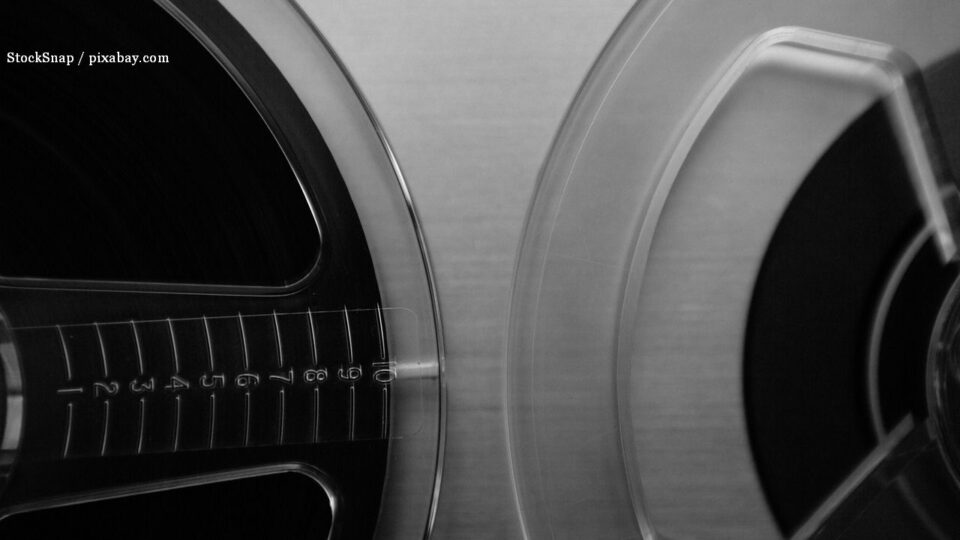
Broadcasting owes an important part of its functioning over time to the reel-to-reel tape recorder. Numerous archives in the world are still on analog media, and the reel-to-reel tape recorder is the equipment to which this huge and invaluable legacy is due. An invention of the first decades of the 20th century, the steel-wire reel tape recorder is the first in the history of broadcasting used to record voices. But the first magnetic tape recorder, produced by the German corporation AEG and first used in 1935, would be the starting point for several generations of magnetic tape equipment that will dominate the audio market in the second half of the 20th century.
Radio Romania kept up with the times, and equipping technicians and journalists with tape recorders to do their job was a priority. A technical history of the Romanian Radio includes in its pages tape recorders of the highest performance. And many stories still unwritten have the tape recorder as a hero. Engineer Ilie Drăgan, who held the position of technical director, was interviewed in 2000 by the Oral History Center of Romanian Broadcasting. He joined Radio Romania in 1958, and was head of the Transmissions department, which operated the technical equipment.
“I remember that we were making transmissions with some equipment on electronic tubes, we called them CN, and in order to have a backup power supply, we used some 110 Volt batteries, so-called ‘bricks’. They were, in volume, the size of two bricks placed one on top of the other. And when we went on trips, the equipment with special cars was not at the level that exists today, we put these bricks, which were two in number, in a bag. We also took a tape recorder that often weighed over 35 kilograms, which ran on paper tape, and we would leave by train somewhere in the province to make recordings. In the conditions in which recordings were made in the agricultural field, the editors and technicians had to go to the field, to the place where the agricultural products were made, there was no electricity on site and the Transmission service was equipped with two or three generator sets that we put in the car. We would arrive at the recording site, fill them with gasoline, start them, power the tape recorders and that’s how the recordings were made in those days.”
In its equipment with tape recorders, there were four periods in the history of Radio Romania. The first was that of the war and the 1950s when tape recorders with steel wire reels were still used. From the beginning of the 1950s, the generation of magnetic tape recorders would replace tape recorders with steel wire reels. The second period was the 1960s and the first half of the 1970s when tape recorders had to be purchased from CAER, the economic association of the socialist states. In the CAER convention, Hungary was designated to produce equipment of this kind. The third period was the opening towards the West, between 1975 and 1985. Western tape recorders were clearly superior in quality and price, and Radio Romania purchased technology from Western manufacturers. The fourth period was the return to purchases from the socialist bloc, after 1985. Here is Ilie Drăgan:
“Hungary was the one recorded in the CAER treaties to produce, only the Hungarians had the right to produce tape recorders and desks. After that, the Germans also proposed a version of tape recorders, and in Czechoslovakia they produced reporting cars. We also purchased some reporting cars on Škoda buses, but they were equipped with Hungarian mixing desks and Hungarian tape recorders. Later, the Czechs managed in Bratislava to replace the Hungarian desks with desks made by Tesla Bratislava. So, in 1989, when Radio Romania bought a reporting truck that is currently in operation, they had Czech mixing desks, but Hungarian tape recorders.”
Ilie Drăgan remembered the evolution of tape recorders at Radio Romania as he encountered them in a long career of 42 years as an electronics engineer: from tape recorders that used paper tape to portable shoulder-mounted recorders.
“They were very heavy tape recorders. They were taken out of service, they weighed about 35 kilograms, two people had to carry a tape recorder to go somewhere to record. It was a pain. When you think that now an editor takes something that he holds in half a palm and makes quality recordings. After these tape recorders, some Philips Juniors appeared that were the size of a slightly larger diplomat’s bag, they also weighed about 16 kilograms. In any case, it was incomparable with the 35-kilogram one. And all the recordings were made in conditions in which the editor could not move alone and always had to take a technician with him. The Uher portable tape recorders appeared later.”
Tape recorders are now museum pieces and still arouse curiosity and attraction among those passionate about the history of science and technology. At Radio Romania, the tape recorder is still present, and coexists with the new generations of digital equipment.