Archaeology in Romania
In Romania, archaeology evolved after World War II
Ion Puican, 28.06.2025, 13:10
Archaeology is the science that studies the human past through the recovery and analysis of material culture and discovered environmental data, such as artifacts, architecture, cultural landscapes, documents. In essence, archaeology attempts to decipher the way of life, beliefs and customs of past times by studying the traces that have been preserved to the present. Archaeology in Romania has been and is supported by institutions and programs, one of the most important institutions that support and promote archaeology being the National Museum of History of Romania (NMHR). Since its establishment, more than half a century ago, NMHR has considered archaeological research as a fundamental mission and a defining activity for its evolution. In June, the European Archaeology Days are celebrated internationally. On this occasion, the science of archaeology, new discoveries or trends are brought back to the attention of the general public.
Ovidiu Ţentea, archaeologist and interim manager of the NMHR, told us the following about the European Archaeology Days celebrated between June 13-15, 2025:
“It has become a tradition for us, especially in recent years, both for archaeologists and for the general public, meaning a period of the beginning of the holiday. Archaeological excavations are in full swing. They are interrupted, for example, to celebrate these days, which are an opportunity to draw attention to the work of archaeologists, to the relevance in society of the projects that are being carried out, to the significance and importance in the end. Because archaeology is beyond Indiana Jones who is an archivist, who finds layer after layer, things in the ground. And many do not think that archaeology is also about the monuments that are standing.”
Archaeologist Ovidiu Ţentea, interim manager of the National Institute of Archaeology and Natural History, tells us about how archaeology has evolved in Romania and what the public perception of it has been in recent decades:
“In Romania, archaeology evolved after World War II, seeing Western models in general, and after the revolution, somewhat opposing progressive trends, because it did not fully realize the value of preventive research, where investments are made. In other words, there was a small gap. And then society perceived that archaeology was blocking development. It evolved on two levels: first, this task of demonstrating that we are not blocking development, but that we are often ahead of it. And trying to maintain as many systematic archaeology projects as possible on school and fundamental research sites. Being chronically underfunded lately, they have big problems. However, our school sites are more numerous than in many Western countries. Precisely because of our conservatism of “we tried to resist more than other professions. And because it is a field in Europe that is connected to history and not cultural anthropology. And then this greater emotional baggage, coming from history, let’s say it increases the pressure a little, especially in recent years, when the discourse is divided between Dacians and Romans, Romanization, cultural value.”
About how archaeology in Romania is currently evolving from the perspective of the National Museum of History of Romania, Ovidiu Ţentea tells us:
“I say that preventive archaeology is going well and very well. You are at the National Museum, which produces a lot of its own income that is reinvested in the museum’s research. It is a large team, which still needs a few more people, and the same people, or mostly the same people, also go on research at large sites, where students, future archaeologists or historians or, why not, just lovers of the past are being trained. In parallel, we also organize the largest exhibitions related to archaeology.”
Ovidiu Ţentea reviewed some of Romania’s important sites that can be visited by the general public:
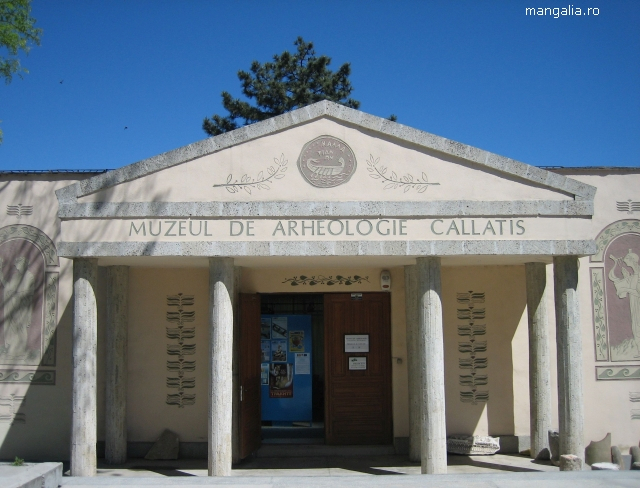
“A site that also preserves the country’s brand is Sarmisegetuza Regia. After that is the first city of Dacia, Ulpia Traiana Sarmisegetuza. So we took them from the brand onwards, not necessarily from the scientific importance. Histria, Callatis, which I’m only giving you the ones that archaeologists from the National Museum of History of Romania are working on, Micia, Tărtăria, now we’re going down to the prehistoric part, a medieval city of Caransebeș.”
Archaeology needs the involvement of young people, specialists who can be trained in this discipline. Thus, the interest of the younger generation in history and archaeology is crucial. The interim manager of NMHR shares his opinion about the interest of the new generations in this field and how they can access information or training in archaeology:
“Young people can mainly reach us by going through some filters on social media, where we are quite present. And when they just have to work up the courage and write to us, we are just a click away and on the steps of the museum we have a fairly large exhibition, where they can see more than 10 sites, gather the minimum of information, do their own search and they will find the people who are in charge, who are right here. … I urge them to read as much as possible, including our magazine “Cercetări arheologice”, where there are interesting links. …. And they only have to contact the authors they see and they will definitely answer them.”