Romania. The Eastern Flank
Portuguese Army Contingent within the Multinational Brigade South-East in Romania
Lăcrămioara Simion, 04.02.2026, 14:00
The rotations of allied troops deployed in Romania are part of a permanent mechanism to strengthen NATO’s deterrence and defense posture on the eastern flank. Soldiers from the Alliance member states arrive for specific periods, train together and hand over responsibilities to the following rotations.
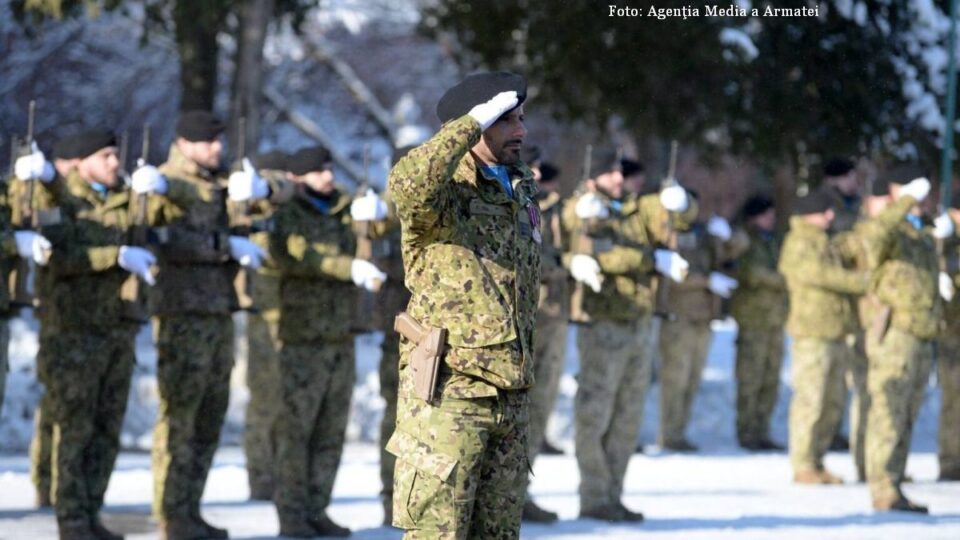
After approximately six months away from home, the 7th rotation of the Portuguese military contingent concluded its deployment period in Romania, handing over responsibilities to the structure that took over the mission. This rotation also included a lieutenant, a platoon commander, on his first international mission, whose experience provides a direct perspective on how allied cooperation works in the field.
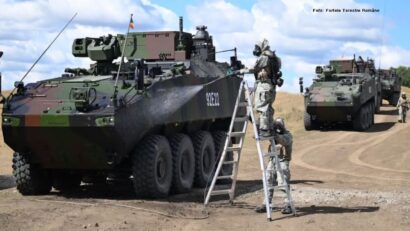
Having arrived in Romania in July last year, the officer went through a training program conducted in several areas of the country, alongside soldiers from other NATO states: “I went to Cincu (central Romania), trained alongside soldiers from North Macedonia, France, Romania, the Czech Republic and Belgium. I was also involved in exercises conducted in the Grohotiș area. It was a complex experience, which allowed us to put into practice interoperability procedures and function as a joint team, regardless of nationality. It was challenging, but I think it was a good experience for everyone.”
The deployment to Romania also involved a prolonged separation from family, a well-known reality in the military career, says our interlocutor: “The most difficult part was, perhaps, the fact that we are away from family for long periods, but this is assumed and natural in the military environment. We all understand how important our presence here is, and for me it was an honor, both professional and personal, to be part of this mission. Even though separation from loved ones can sometimes be a challenge, we and our families know very well how important it is for Portugal to contribute to NATO’s defensive effort on the eastern flank and how important this mission is.”
For the young Portuguese officer, the choice of a military career has a personal component, linked to family history: “My grandfather, on my father’s side, was a military doctor in the 20th century. I think his example has profoundly influenced the way I think. The army is a noble profession, and for me it is an honor to be a soldier and to represent Portugal abroad, within the deployed forces.”
Besides the training activities, the time spent in Romania also involved adapting to the environment in which soldiers carry out their daily activities, outside the strictly military framework. The integration of the Portuguese soldier was facilitated by the support and kindness of the Romanians: “We had several opportunities to go out and discover the culture of Romania, because we were in Caracal (south) and we had direct contact with the people here. It was a very good experience, and with the support of my Romanian colleagues, our integration was much easier. Their advice helped us adapt and enjoy the time spent here.”
Rotations change, the mission continues. The allied presence in Romania remains a constant element of NATO’s effort to strengthen security on the eastern flank. With each deployment, the experience gained is transferred further, contributing to increasing the response capacity and the level of interoperability between the allied armies. (Alexandra Rădescu) (tr.LS)