An OECD report on Romania
An OECD economic survey on Romania, has been launched in Bucharest; it comprises a series of recommendations on fiscal and budgetary reforms, for the labour market and how to increase economic competitiveness

Corina Cristea, 17.03.2026, 13:50
Conducted every other year, the OECD economic reports contain periodic analyses of the economies of the member states as well as the partners and candidates.
Romania opened negotiations in January 2022 and entered an evaluation process of its practices and policies according to the OECD standards in almost all public policy domains and thanks to the combined efforts of the institutions involved it has made major steps in this accession process.
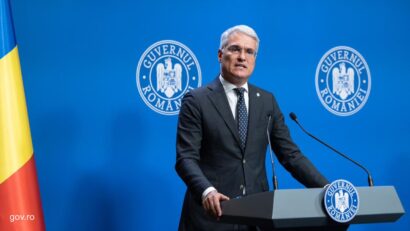
After almost two decades since its two watershed moments, namely NATO and EU accessions, Romania has proposed to meet another objective this year: the OECD accession, the country’s Prime Minister, Ilie Bolojan, has said at the event on launching the 2026 edition of the report of aforementioned organization founded in 1961 to boost economic progress, which now has 38 members.
An invitation for Romania’s accession to the Organisation for Economic Co-operation and Development could be extended this summer, in June, right ahead of the Council’s meeting, the organization’s Secretary General, Mathias Cormann, has said in Bucharest, underlining that in the past decades, Romania has shown a strong economic projection, while in terms of convergence with the OECD standards concerning incomes and living standard has obtained very good results.
The report launched on Monday is ensuring a balanced and useful x-ray of macroeconomic and structural policies comprising recommendations of public policies made by the Organisation concerning macro-economy, the labour market, increasing resilience to climate risks and competitiveness.
The document shows that Romania’s public finances have deteriorated significantly, which is posing risks to the long-term sustainability of public finances and in order to avoid this the organisation says the efficiency of public spending must be increased while the tax base should be broadened and tax compliance improved.
According to the same report, the latest pension reform, mainly through the increase in the retirement age for women, the limitation of the special pensions and the introduction of new indexation rules, is a positive step towards improving the sustainability of the pension system and encouraging labour force participation.
The environment and property taxes are under-utilized and should be consolidated whereas the recent tax cuts for small enterprises are welcome. The report underlines the fact that climate changes are exerting increased pressure on Romania’s economic activity and social welfare. And in this respect stepping up adjustment measures such as improving flood defence, is essential in protecting vulnerable people and vital infrastructures. In another development Romania has registered significant progress in integrating the global market in recent decades and in order to maintain this impulse it must tackle persistent structural challenges – mainly in terms of innovation, digitization, education, business dynamics which continue to limit its productivity and economic potential.
(bill)